
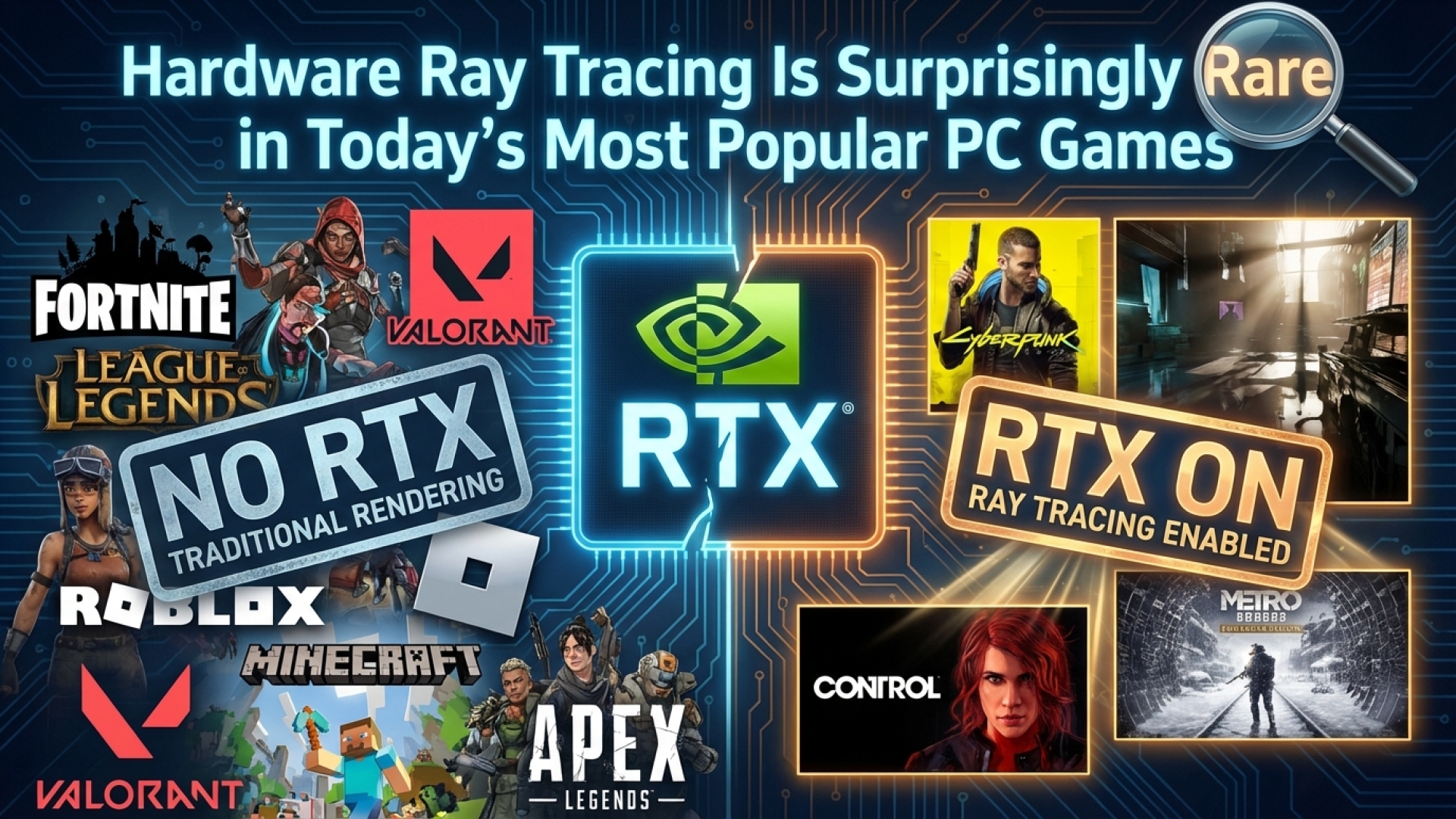
There was a time when the phrase ‘ray tracing‘ was the industry’s ultimate buzzword, headlined in every major game reveal. But as we navigate a persistent memory crisis that continues to inflate hardware prices, the narrative is shifting. At Digital Tech Explorer, we’ve observed that unpredictable performance has turned “optimization” into the new gold standard for a quality launch. Consequently, hardware-level ray tracing is becoming a rarity among the most popular new titles. Over the last 12 months, only a handful of the biggest games have opted for ray tracing, and even fewer have integrated it into the core gameplay experience.
The Shift Away from Hardware-Level Ray Tracing
Analyzing recent Steam player data—including current top 100 titles and all-time peaks—uncovers a revealing trend. Out of 21 of the most popular games currently dominating the charts, only five implement ray tracing. Even then, the implementation is often minimal. For example, Monster Hunter Wilds limits its use to simple reflections rather than full-scene lighting.
Lumen and the Rise of Software-Based Lighting

Many developers are bypassing dedicated hardware cores in favor of advanced alternative lighting methods. Borderlands 4, for instance, utilizes software-based Lumen, a standout feature of Unreal Engine 5. Similarly, Kingdom Come: Deliverance 2 relies on voxel-based global illumination. While global illumination in games like Nioh 3 can technically incorporate path tracing, these methods are incredibly resource-heavy. This intensity explains why many indie-focused, popular titles prefer budget-friendly rendering paths that ensure accessibility for a broader range of hardware.
The industry-wide adoption of Unreal Engine 5 could actually normalize software-based ray tracing. Because Lumen is designed for efficiency, developers can offer impressive visuals without the massive performance tax of hardware-toggled ray tracing—though titles like Arc Raiders still offer the hardware-level option for those with the power to spare.
A Strategic Retreat: Performance Over Flair
One of the most surprising observations is the retreat from ray tracing in established franchises. Elden Ring: Nightreign is expected to launch in 2025 without the feature, despite the original Elden Ring receiving it as a post-launch update. Back when the RTX 20 series debuted, ray tracing was the headline and DLSS was merely a footnote. Today, that relationship has flipped; DLSS is now the essential tool for maintaining playability on mid-range rigs.

The Battlefield franchise once served as Nvidia’s primary tech showcase. However, Battlefield 6 launched entirely without ray tracing. Technical director Christian Buhl noted that the team’s priority was pure performance. By focusing on a “performant without extra stuff” philosophy, Battlefield 6 delivers high-fidelity visuals that run smoothly on most systems, which has directly contributed to its high player retention.
Ray Tracing in 2025: A Deliberate Choice
This trend isn’t a “death” of the technology, but rather an evolution. Ray tracing is moving from a marketing checkbox to a deliberate artistic choice. Below is a breakdown of how several upcoming and recent titles are handling implementation:
| Game Title | Ray Tracing Status | Primary Engine/Tech |
|---|---|---|
| Assassin’s Creed: Shadows | Confirmed | Anvil Engine |
| Doom: The Dark Ages | Path Tracing (Post-Launch) | id Tech |
| Black Myth: Wukong | Core Feature | Unreal Engine 5 |
| Battlefield 6 | None (Focus on Optimization) | Frostbite |
The Core Design Element

While some retreat, others are leaning in. Games like Stalker 2: Heart of Chornobyl and Indiana Jones and the Great Circle treat ray tracing as a non-optional, fundamental part of their world-building. For these titles, the lighting isn’t just an “effect”—it’s the foundation of the atmosphere.
Conclusion: A Win for Accessibility
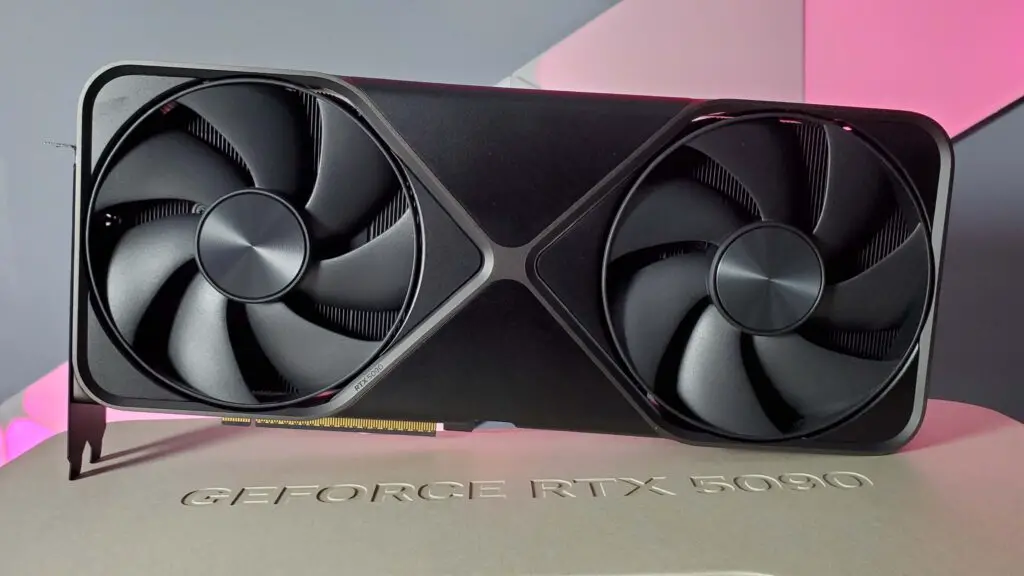
It remains a paradox: we have millions of Nvidia graphics cards in the wild capable of ray tracing, yet fewer games are making it mandatory. However, as TechTalesLeo, I see this as a positive turning point for the industry. Developers are prioritizing optimisation and accessibility over photorealistic puddles.
In the midst of a global hardware supply strain, choosing alternative rendering paths ensures that games remain playable for the many, not just the few with high-end GPUs. Whether you’re playing a massive RPG or a stylized indie like Mewgenics, the shift toward smarter, more efficient tech is a trend that benefits every level of the gaming community.