
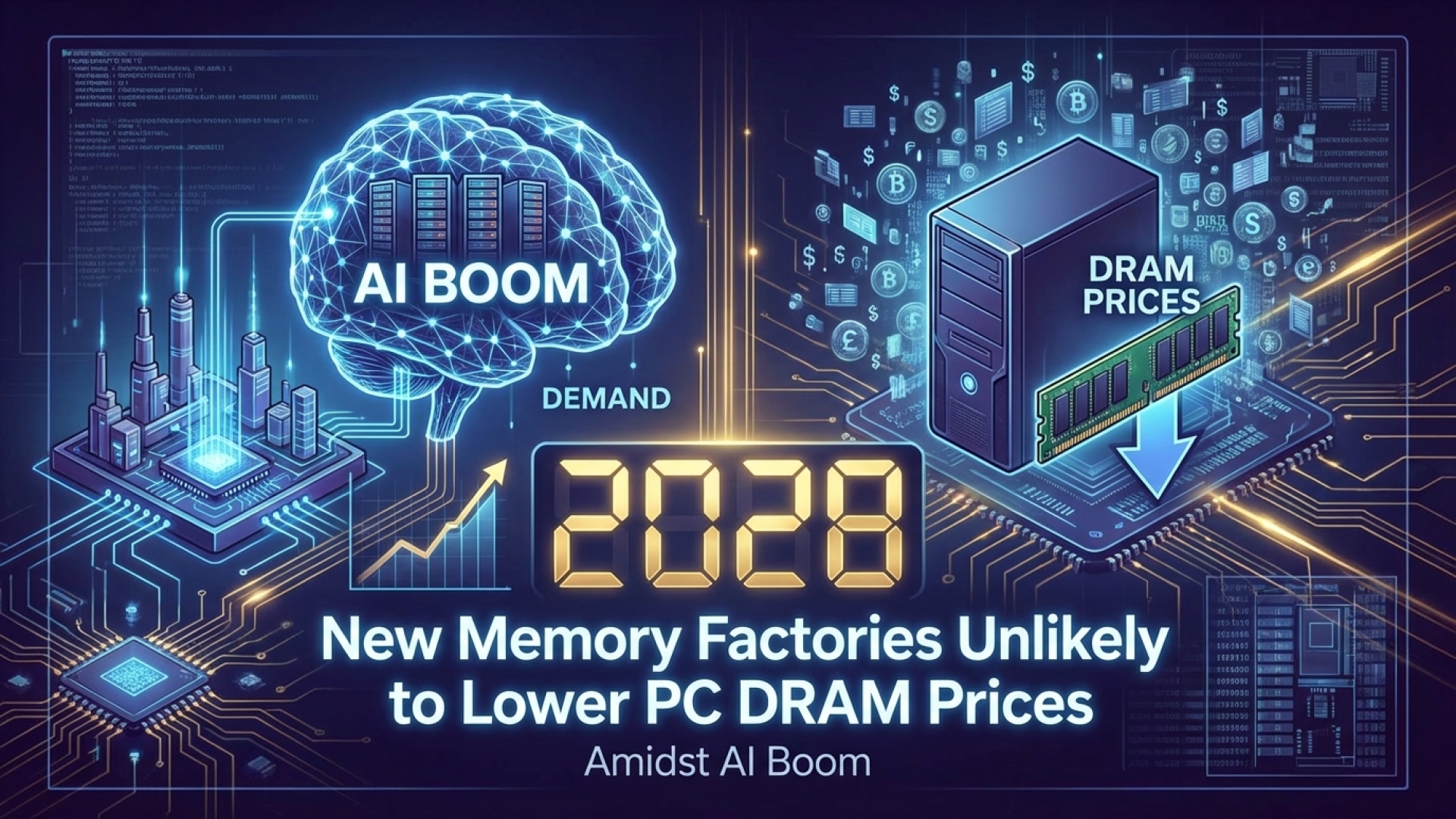
The global landscape of computer memory is shifting beneath our feet, driven by a perfect storm of unprecedented AI demand and massive infrastructure investments. Here at Digital Tech Explorer, we’ve been tracking the trajectory of component costs closely. While industry titans are breaking ground on new facilities, the narrative for consumers and developers is sobering: relief for spiraling memory prices likely won’t arrive until 2028, as the tech world pivots to feed the “black hole” of artificial intelligence compute.
The Fab Expansion: Micron, SK Hynix, and Samsung’s Strategic Plays
The “Big Three” of the memory world—Micron, SK Hynix, and Samsung—are currently engaged in a high-stakes game of expansion. According to recent industry analysis, these investments are less about lowering your PC’s gaming performance costs and more about securing the backbone of next-gen machine learning.
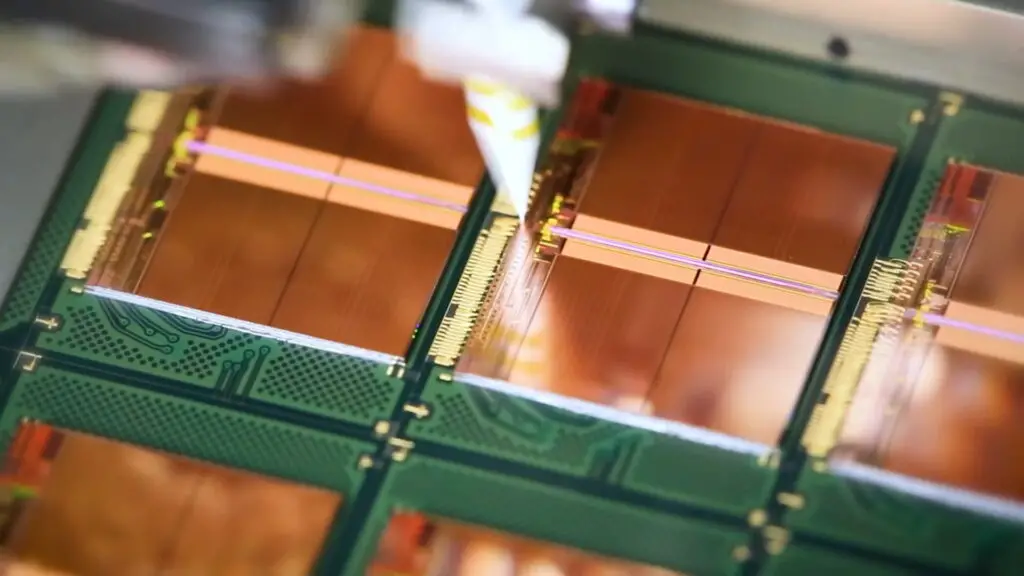
Micron is leading the charge with a multi-pronged approach. A new facility in Singapore is scheduled for 2027, while a repurposed site in Taiwan is expected to begin production in late 2025. However, these sites are laser-focused on HBM (High Bandwidth Memory)—the specialized tech that powers high-end GPUs. While a dedicated DRAM factory is planned for New York, it won’t hit full stride until 2030.
| Manufacturer | Location | Expected Production | Primary Focus |
|---|---|---|---|
| Micron | Taiwan / Singapore | 2025 / 2027 | HBM (AI-Specific) |
| SK Hynix | Indiana (USA) / China | Late 2028 | HBM / Advanced Packaging |
| Samsung | Pyeongtaek (S. Korea) | 2028 | Next-Gen DRAM / HBM |
| Micron | New York (USA) | 2030 | Consumer DRAM |
SK Hynix is mirroring this strategy, with new factories in Cheongju and Indiana both eyeing a late 2028 debut. Samsung’s Pyeongtaek facility follows a similar timeline. The common thread? A pivot toward the high-margin HBM market, potentially leaving standard PC DRAM supply in a state of prolonged stagnation.
Why the AI Boom is a Double-Edged Sword for Hardware
The story of memory in 2024 and beyond is fundamentally a story of AI’s hunger. As TechTalesLeo, I’ve seen many tech cycles, but the scale of current AI infrastructure investment is unprecedented. McKinsey consultants estimate a $7 trillion investment in data centers by 2030, with a staggering $5.2 trillion of that earmarked specifically for AI-driven hardware.
Economists like Mina Kim of Mkecon Insights warn that memory pricing follows a “feather-down” trajectory—rising like a rocket but falling like a leaf. With HBM projected to become a $100 billion annual market by 2028—matching the value of the entire DRAM market today—manufacturers have little incentive to oversupply the consumer sector and drive prices down.
The TechTalesLeo Perspective: Preparing for the Long Haul
For the developers and tech enthusiasts who call Digital Tech Explorer home, the message is clear: if you are planning a high-spec build or a server upgrade, don’t wait for a price crash that may be years away. The strategic pivot toward AI-centric HBM means traditional computer RAM will likely remain a premium commodity through the end of the decade.
While the construction of these “mega-fabs” is a testament to the growth of our industry, the lead times are significant. We are entering a period where hardware patience is a necessity. Stay tuned as we continue to monitor these production cycles and provide the real-world testing results you need to make informed decisions in this high-cost era.