
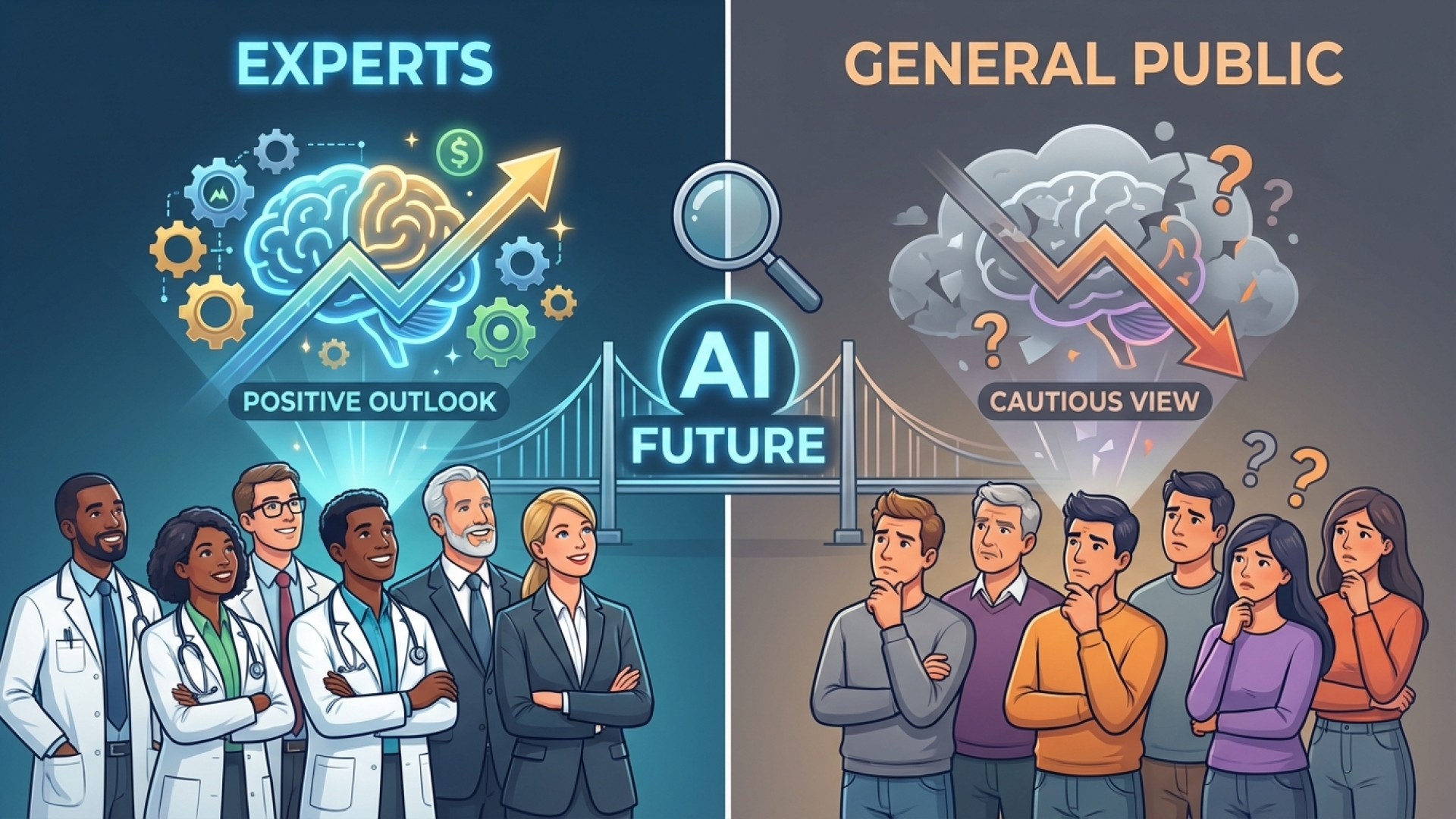
At Digital Tech Explorer, we’re always tracking the pulse of digital innovation to help our community stay ahead of the curve. According to the latest report from Stanford University’s Human-Centered Artificial Intelligence group, a massive gap has emerged between those building the future and those living in it. The findings reveal a significant discrepancy in optimism: while 73% of AI experts believe the technology will be beneficial for the job market, only 23% of US adults share that same confidence.
Defining the AI Expert Landscape
To understand these figures, we have to look at the methodology. The survey, conducted by Pew Research, defined “AI experts” as professionals whose work or research directly relates to artificial intelligence. These are the individuals presenting at major industry events like Nvidia GTC—the same stages where cutting-edge hardware and software, such as DLSS 5, are unveiled to the world. Their optimism stems from a deep-rooted understanding of the technology’s potential to solve complex problems, a perspective that hasn’t yet permeated the general public.

Global Sentiments and the Disclosure Debate
Public sentiment varies wildly across the globe. While the US population displays skepticism toward government regulation and corporate transparency, other regions are embracing the shift. For example, AI optimism is currently highest in Southeast Asia. Below is a breakdown of how different regions and demographics view the evolving landscape:
| Metric | Key Finding | Source |
|---|---|---|
| Highest Optimism | Malaysia, Thailand, Indonesia, and Singapore | Stanford AI Index |
| Highest Skepticism | United States, Australia, and India | Ipsos / Pew Research |
| Transparency Demand | 79% believe companies must disclose AI use | Ipsos Monitor |
| Investment Growth | Private investment more than doubled year-over-year | Stanford AI Index |
This demand for transparency highlights a growing friction point in the tech industry. While 79% of the public wants clear labels on AI-generated content, industry leaders like Epic CEO Tim Sweeney have suggested that platforms like Steam should reconsider their strict AI disclosure policies. At Digital Tech Explorer, we believe transparency is the cornerstone of building trust in any new software solution.
Technical Progress vs. Safety Protocols
The full Stanford AI Index Report isn’t just about public opinion; it delves into the technical realities of Large Language Models (LLMs). While these models are achieving record-breaking scores in solving advanced mathematics, they paradoxically continue to struggle with simple tasks like telling time.
Furthermore, the report notes that while US companies remain the dominant force in private AI investment, the state of global safety protocols remains “spotty.” As we continue to cover the intersection of hardware, machine learning, and gaming, these insights provide a crucial roadmap for developers and enthusiasts alike. For those looking to dive deeper into data center development and the technical evolution of AI, the full report is an essential read for staying informed in this fast-paced digital era.
Disclaimer: All content on Digital Tech Explorer is for informational and entertainment purposes only. Some of the links on our site are affiliate links, which help support our research and testing at no additional cost to you.