
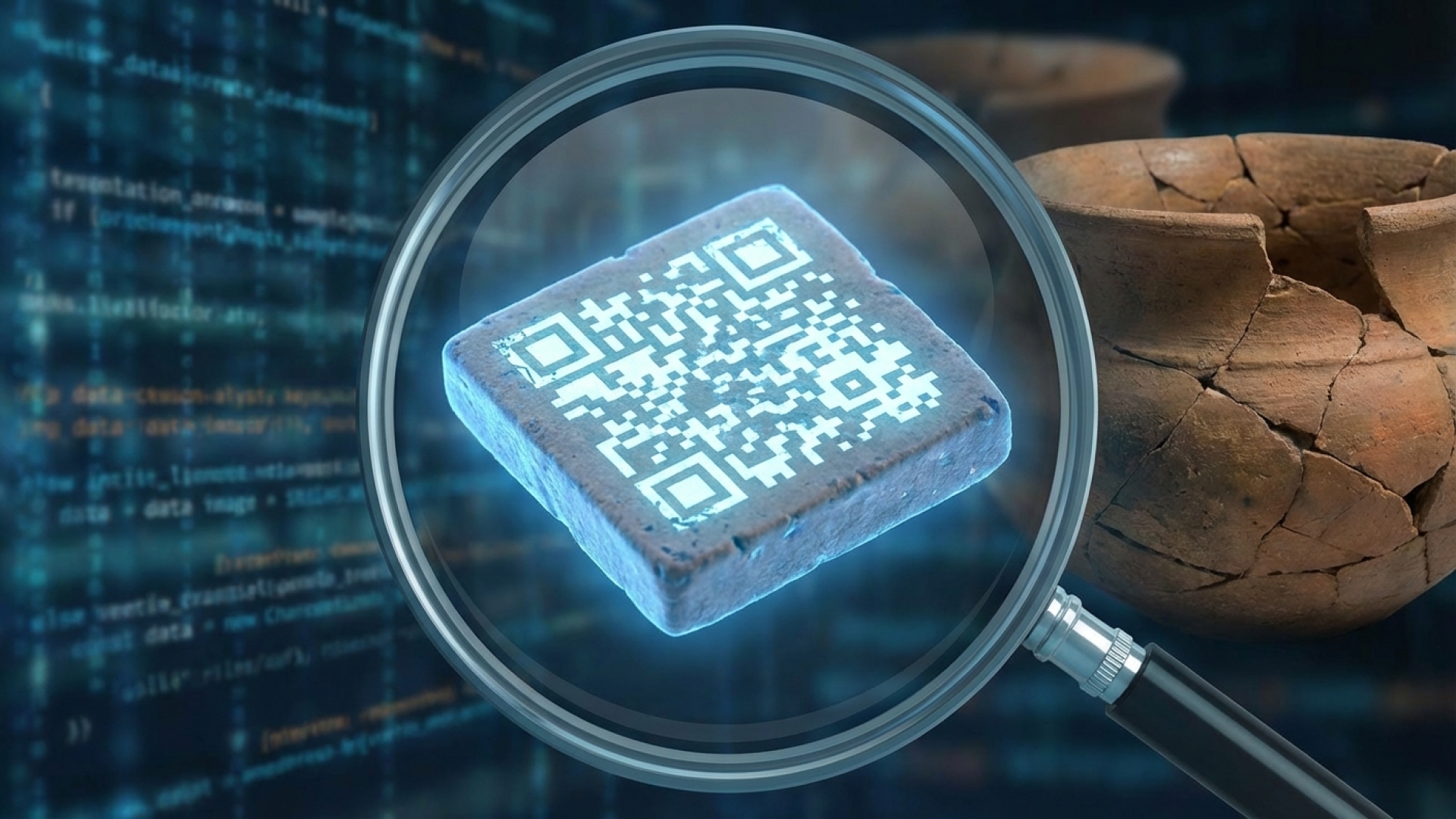
In the world of digital innovation, we often see technology shrinking in size while expanding in capability. However, researchers at TU Wien in Vienna, alongside the ceramic-based data storage experts at Cerabyte, have taken this trend to a microscopic extreme. They have successfully engineered the world’s smallest QR code—a feat of nanoscale hardware engineering so minute that it is officially recognized by the Guinness World Records.
The Science of the Nanoscale: Invisible to the Eye, Readable by Tech
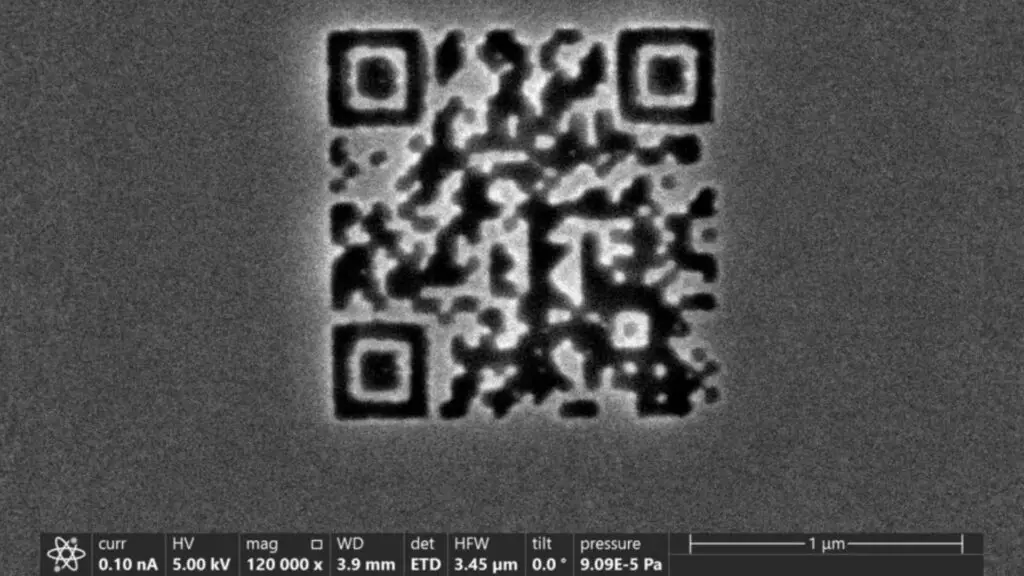
To understand the scale of this achievement, one must look beyond what the human eye can perceive. This QR code measures a mere 1.98 square micrometers. For context, it is smaller than a single bacterium. The “pixels” or modules that make up the code are etched into a specialized ceramic layer at just 49 nanometers each. To put that in perspective for our fellow tech enthusiasts, 49 nanometers is roughly ten times smaller than the wavelength of visible light.
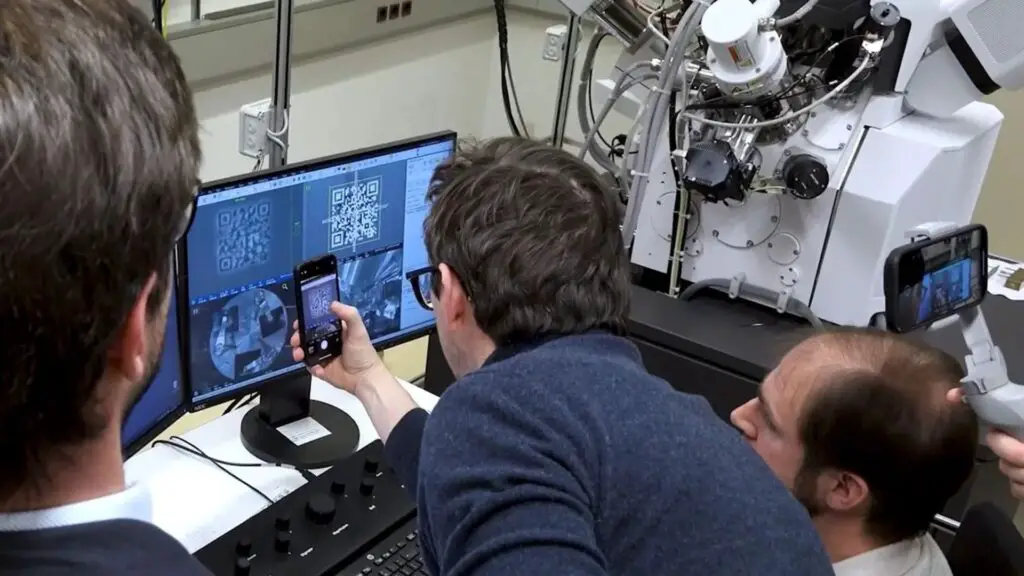
Because the code is smaller than light waves themselves, it remains completely invisible under a standard optical microscope. To bridge the gap between this complex technology and usability, the team utilized an electron microscope to visualize the data. Once the image was magnified and projected onto a screen, the researchers proved its functionality by scanning it with a standard smartphone.
| Feature | Specification |
|---|---|
| Total Dimensions | 1.98 Square Micrometers |
| Pixel Size | 49 Nanometers |
| Storage Medium | Ultra-thin Ceramic Film |
| Recognition Tool | Scanning Electron Microscope (SEM) |
Ceramic Storage: A Modern Approach to Ancient Longevity
At Digital Tech Explorer, we focus on how emerging trends solve real-world problems. This microscopic QR code isn’t just a novelty; it is a proof of concept for the future of data preservation. By etching information into stable, inert ceramic materials, the team is creating a medium that can survive for thousands of years without the degradation common in magnetic or optical storage.
Alexander Kirnbaure of the Thin Film Materials Science Division at TU Wien notes that this approach mirrors the inscriptions of ancient cultures that we can still read today. Unlike modern data centers that require massive amounts of energy for cooling and maintenance, ceramic storage is passive. It requires no power to maintain the data and can withstand extreme environmental conditions, offering a sustainable, carbon-conscious alternative for long-term archival needs.
Practical Applications and the Road Ahead
While you won’t be scanning microscopic codes at your local grocery store anytime soon—given the current requirement for an electron microscope—the implications for secure data marking and high-density storage are vast. This technology is currently positioned for specialized industrial and scientific use, specifically where data longevity is non-negotiable.
As we continue to explore the frontiers of digital media and technology, the collaboration between TU Wien and Cerabyte serves as a reminder that the most significant breakthroughs often happen at the smallest scales. For tech professionals and developers, this highlights a shifting focus toward materials science as a solution for the global data storage crisis.
For more insights into the latest hardware breakthroughs and tech stories, stay tuned to Digital Tech Explorer, where we make the complex world of technology accessible to everyone.