
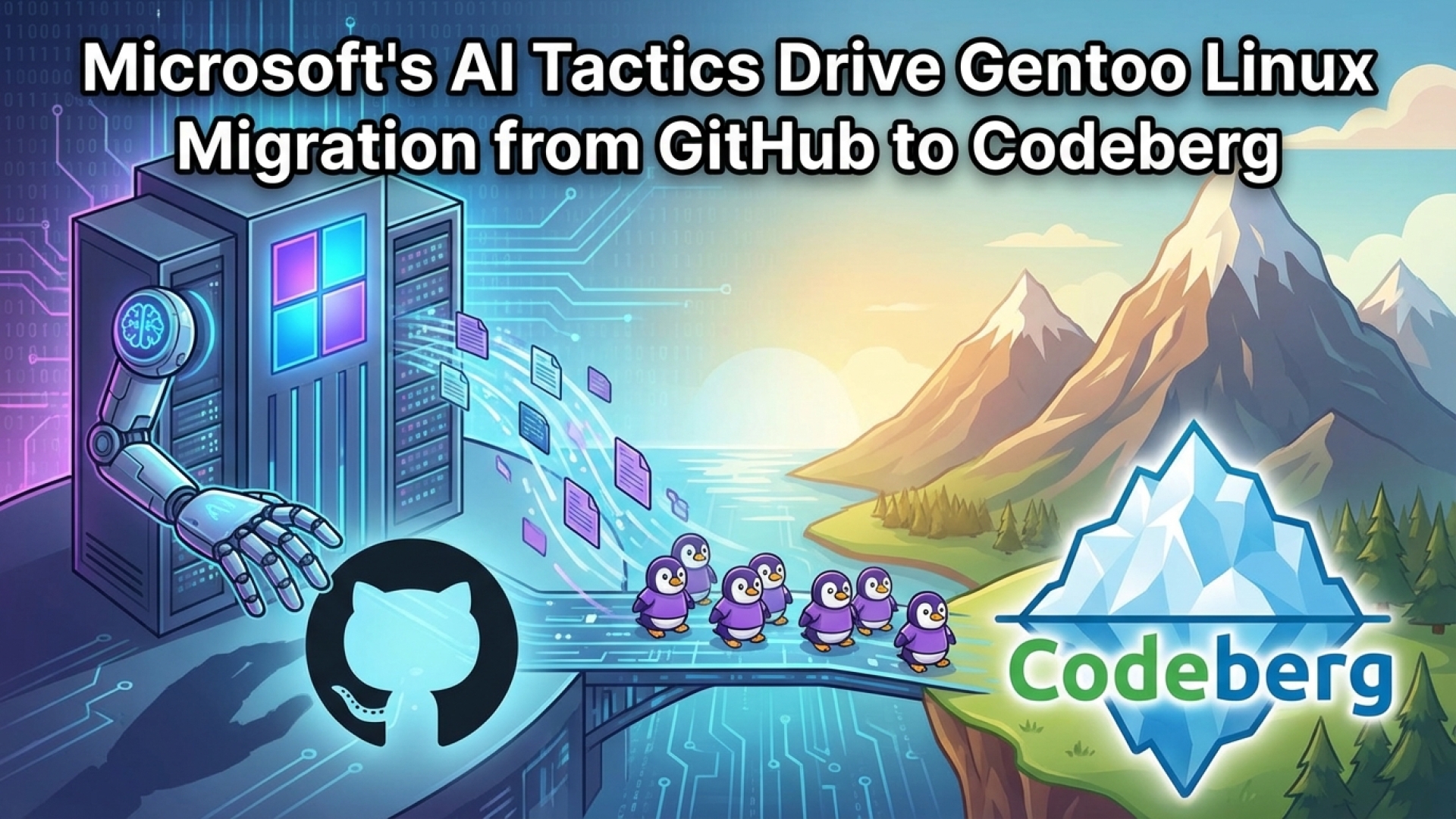
In an era where tech giants are increasingly weaving artificial intelligence into every facet of the development lifecycle, the open-source community is beginning to draw clear lines in the sand. At Digital Tech Explorer, we keep a close eye on these shifts, and few are as significant as Gentoo Linux’s recent decision to migrate its operations away from Microsoft’s GitHub to the Berlin-based non-profit platform, Codeberg.
The Core Conflict: GitHub Copilot and Data Autonomy
As TechTalesLeo, I’ve watched many migrations, but Gentoo’s departure is a narrative of digital sovereignty. The primary catalyst for this move is Microsoft’s aggressive integration of AI tools, specifically GitHub Copilot, across its hosted repositories. Since acquiring GitHub in 2018, Microsoft has increasingly utilized the platform’s vast wealth of public code to train its large language models (LLMs) through machine learning processes.
Gentoo’s maintainers expressed frustration in their 2025 retrospective, citing “the continuous attempts to force Copilot usage for our repositories.” This sentiment highlights a growing rift between community-driven projects and corporate platforms that monetize user-generated code for proprietary AI development.
A Strategic Migration to Codeberg
Codeberg offers an alternative built on Gitea, providing a Git-hosting service that prioritizes privacy and open-source principles without the commercial weight of AI-driven data harvesting. Gentoo has officially launched its presence at codeberg.org/gentoo/gentoo.
This isn’t a hasty exit; rather, it is a calculated, long-term migration. While contributions are now encouraged on Codeberg, Gentoo will maintain its own internal primary infrastructure to ensure maximum control over its source code. To help you understand the landscape of this shift, here is a comparison of the environments:
| Feature | GitHub (Microsoft) | Codeberg (Non-Profit) |
|---|---|---|
| Primary Focus | Enterprise Scalability & AI Integration | Open Source Privacy & Community |
| AI Interaction | Aggressive Copilot Integration | No AI Data Harvesting |
| Governance | Corporate (Microsoft) | Non-profit (Codeberg e.V.) |
| Infrastructure | Proprietary Cloud | Open Source (Gitea-based) |
Why Gentoo Matters to the Ecosystem
For those who follow our coding scripts and deep dives here at Digital Tech Explorer, Gentoo represents the pinnacle of customization. It is a distribution where users compile software from source code rather than downloading pre-built binaries. This allows for extreme optimization tailored to specific hardware.

Gentoo’s influence is profound—it was the original foundation for ChromiumOS, which evolved into Google’s ChromeOS. By moving to Codeberg, Gentoo is not just changing its hosting; it is setting a precedent for how open-source projects can resist the “forced” adoption of AI technologies that may conflict with their core philosophies.
What This Means for Developers
If you are a developer looking to contribute to Gentoo, the transition offers a more transparent and community-aligned environment. While GitHub mirrors will likely remain for the short term to maintain accessibility, the heart of Gentoo’s collaborative efforts is shifting. This move underscores our mission at Digital Tech Explorer to help you stay ahead of trends and make informed decisions about where you host your code and how your data is used.

As we continue to monitor the intersection of AI development and developer rights, Gentoo’s migration stands as a landmark story of principles over convenience. Stay tuned to TechTalesLeo and the Digital Tech Explorer team for more insights into how the evolving tech landscape impacts your workflow.