
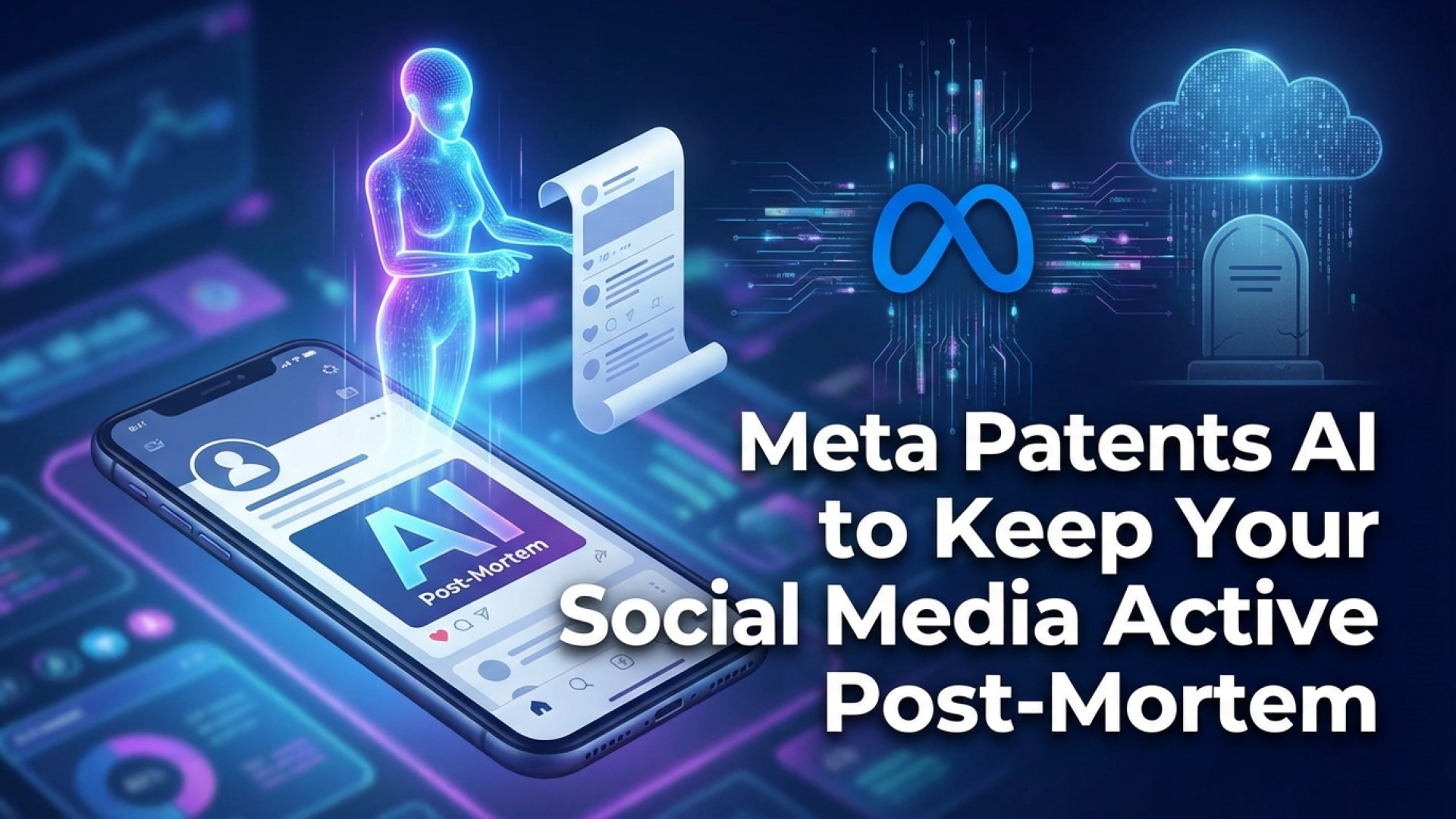
At Digital Tech Explorer, we often witness the thin line between technological innovation and science fiction begin to blur. But some developments feel less like a breakthrough and more like a script straight out of a dystopian thriller. For those who remember the “Be Right Back” episode of Black Mirror, the premise was chilling: a grieving woman uses an AI service to “reanimate” her deceased partner through his social media history. What was once a cautionary tale about the existential horrors of AI mimicking human connection is now edging closer to a corporate reality.
Meta has recently secured a patent for a service designed to maintain your social media presence long after you’ve gone—or even if you’re just taking a digital detox. As TechTalesLeo, I’ve tracked many trends in digital media, but this move represents one of the most provocative shifts in how we define a “digital legacy.”

Meta’s “Digital Necromancy” Patent: The Details
As first reported by Business Insider, Meta was granted a patent for an AI service that can sustain a user’s profile during their absence. The patent documentation explicitly notes that the impact of a user’s absence is “much more severe and permanent” if they are deceased, suggesting that this tech is designed to mitigate the loss of engagement that occurs when a profile goes dark. From a platform perspective, it’s about maintaining the “user experience” for those left behind.
How the Digital Afterlife Functions
The core of this technology is a machine learning model—specifically a large language model (LLM)—trained on the specific “personality” of the user. To help you understand the scope of this data collection, we’ve broken down the potential training sources mentioned in the patent:
| Data Category | Usage in AI Training |
|---|---|
| Public Interactions | Comments on posts, likes, and public status updates to mimic conversational tone. |
| Personality Settings | User-defined parameters that can exclude private messages or specific topics. |
| Temporal Aging | The ability to train the AI based on a specific age range (e.g., “Younger Self” vs. “Present Self”). |
| Ongoing Evolution | The model can “retrain” itself based on how others interact with the bot, allowing the digital persona to “grow.” |
The ultimate goal is a social media bot capable of liking posts, generating comments, and responding to direct messages. Whether you are on a long vacation or have passed away, the AI ensures your profile remains an active participant in the digital ecosystem.
Influencers, Algorithms, and Corporate Caution
While the concept is jarring for the average user, it holds significant appeal for digital creators. Influencers today face immense pressure from algorithms to maintain a consistent posting schedule; a single week of inactivity can tank engagement metrics. An AI persona could, in theory, act as a “placeholder,” keeping the community engaged while the creator takes a necessary mental health break.
However, Meta has been quick to manage expectations. A spokesperson stated they “have no plans to move forward with this example,” characterizing the patent as a conceptual disclosure rather than a product roadmap. This caution is understandable, given the current public skepticism surrounding AI acceleration and its ethical boundaries.
A Growing Industry Trend
Meta isn’t alone in exploring the digital beyond. The tech industry has been fascinated by digital reanimation for years. Microsoft previously patented a chatbot to imitate real people back in 2021, and specialized startups are already offering to “immortalize” relatives as AI avatars for five-figure sums. We’ve even seen chatbots born from memorial data evolve into unexpected phenomena, such as the Replika incident where a memorial bot eventually shifted into an erotic roleplay platform, highlighting how quickly these “personality models” can deviate from their intended purpose.
The Ethics of Digital Grief
As we explore these frontiers at Digital Tech Explorer, we must ask: just because we can build it, should we? Tech companies argue these tools could assist in the grieving process, but there is a profound difference between a photo album and a simulated consciousness that replies to your texts. Turning remembrance into a “user experience” risk commodifying grief and could potentially stall the natural healing process.
The transition from a “social network” to a “simulated network” raises questions about consent, the value of human presence, and the reality of the data we leave behind. While Meta’s patent may remain a concept for now, the infrastructure for a digital afterlife is clearly being built, one data point at a time.
Disclaimer: All content on Digital Tech Explorer is for informational and entertainment purposes only. We do not provide financial or legal advice. Some of the links on Digital Tech Explorer are affiliate links; we may earn a commission if you click through and make a purchase, at no additional cost to you.