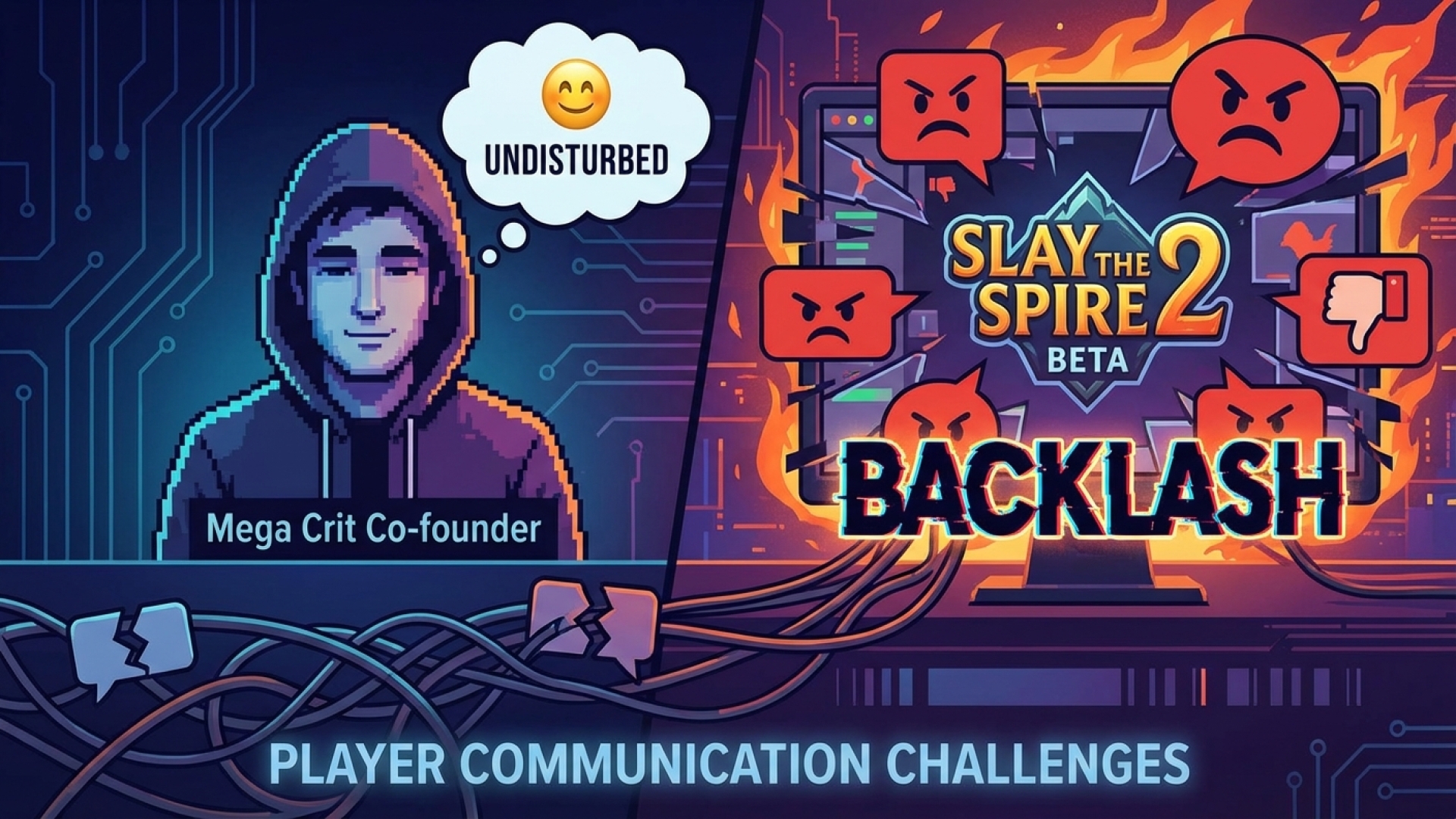
At Digital Tech Explorer, we closely monitor how digital innovation intersects with community sentiment. Recently, the gaming world witnessed a fascinating case study in developer-player relations. When Slay the Spire 2 released its first beta balance patch, it didn’t just spark discussion—it ignited a firestorm. Over 9,000 negative reviews flooded Steam within a 24-hour window, a staggering figure for a highly anticipated sequel.
In a recent discussion, Mega Crit co-founder Casey Yano shared his perspective on the situation. While such a massive wave of criticism might rattle any studio, especially newer developers, Yano remained remarkably composed. He viewed the surge not as an act of malice, but as a desperate attempt at communication from a passionate player base.
Slay the Spire 2 faces intense player scrutiny following its initial beta balance updates.
Understanding the Slay the Spire 2 Beta Feedback
The intensity of the feedback highlights a recurring challenge in PC games: how can players ensure their voices are heard? Yano acknowledged that “bandwagoning” is often a byproduct of players feeling invisible. When traditional channels feel stagnant, visibility on a storefront like Steam becomes the most effective lever to pull.
To better understand the scale of this event, here is a breakdown of the feedback landscape:
Feedback Channel
Primary User Base
Accessibility in China
Steam Reviews
Global / All Players
High (Global Version)
Discord / Forums
Western / Tech-Savvy
Low (Requires VPN)
Steam Community Hub
Global
Restricted
Bridging the Gap: Regional Restrictions and Global Voices
A significant portion of the negative reviews were written in Simplified Chinese. For those of us tracking 2024 releases and global tech trends, this points to a deeper issue regarding internet restrictions. While the global version of Steam remains accessible to many in China, its community features—such as discussion forums and integrated social hubs—are often blocked.
“I think it’s really easy, if you’re a player in America, to be like, ‘Why don’t they just use these systems?’” Yano remarked. At Digital Tech Explorer, we see this as a vital lesson in digital accessibility. For players in China, the review section isn’t just for ratings; it’s the only direct, non-restricted line of communication to the developers.
Evolution in Developer-Player Communication
Rather than recoiling from the “review bombardment,” Mega Crit is looking to evolve. The studio’s goal is to improve how they interact with players regardless of geographical or digital barriers. Yano emphasizes a human-centric approach, noting that players in China are sharing the same fundamental concerns as those in the West; they simply have fewer ways to express them.
As TechTalesLeo, I find this transparency refreshing. In an era where many studios hide behind corporate PR, Mega Crit’s willingness to look past the “one-to-five star” oversimplification shows a commitment to the craft of game development and community building.
Exploring More Slay the Spire 2 Content
Slay the Spire 2 Multiplayer: Exploring the potential of co-op play.
The Golden Compass: Navigating the new pathfinding mechanics.
Byrdonis Egg: A deep dive into the latest relic additions.
The Doormaker: Analyzing new character archetypes and strategies.
Vantom Mechanics: How slippery new keywords change the meta.
At Digital Tech Explorer, we believe that understanding the “why” behind tech trends is just as important as the tech itself. Whether it is a GPU benchmark or a Steam review surge, there is always a deeper narrative to uncover.