At Digital Tech Explorer, we’ve tracked Bungie’s evolution from the early days of Mac gaming to the era-defining Halo and Destiny. Now, with the revival of Marathon, we are seeing a brilliant distillation of what makes extraction shooters great, offering a fascinating glimpse into the future of competitive digital environments.
Our team of software engineers and hardware enthusiasts spent dozens of hours embedded in Tau Ceti IV to bring you this analysis. We don’t just play; we evaluate the systems, the netcode, and the hardware demands to ensure you’re making an informed decision. For more on our methodology, check out how we evaluate games and hardware.
There is a specific clarity that comes from letting a high-stakes multiplayer shooter marinate before rendered a verdict. After several weeks, I’ve experienced the full spectrum of the Marathon experience—the technical triumphs and the crushing, data-wiping lows.
Marathon: Need to Know
Specification
Details
What is it
Extraction shooter revival of Bungie’s foundational FPS series
I’ve had triumphant nights of plundering tens of thousands in valuables, prying rare guns off the blue-stained corpses of rival squads, and building a vault resplendent with expensive attachments. I’ve also visited Marathon rock bottom: a cold, unyielding cycle of squad wipes that feels as though the server algorithms are conspiring against your success. I’ve scraped together loadouts with my last 3,000 credits just to lose it all, and debased myself with “Rook” runs into hot zones to scavenge fragments of Biomass.
Marathon is brutal. But from a design perspective, it is a marvel of digital innovation.
Bungie’s return to the Marathon universe is a visual and technical powerhouse.
Rampant Fun and Narrative Depth
I didn’t anticipate that an extraction shooter would be the perfect container for the things Bungie has always done well. While many competitive PC games squeeze storytelling into the margins, Marathon is drenched in lore.
I approached this title as most likely will: largely oblivious to the ’90s FPS roots where Bungie first explored AI, cosmic mysticism, and digital consciousness. The game begins with an AI delivering the news that you’ve left your mortal coil behind. You are a digital consciousness uploaded to a starship server—unbound from a physical body and free to inhabit disposable “shells” for high-risk contracts on Tau Ceti IV.
It’s a gritty sci-fi setup: the work is hard, the pay is often poor, and death is a recurring event. But as a digital explorer, the autonomy of the contract life is hard to resist.
Tau Ceti IV serves as the beautiful, dangerous backdrop for your extraction runs.Marathon sits alongside titles like Hunt: Showdown in its ability to distill the intensity of extraction fights into repeatable, delectable chunks. However, it also taps into the “loot lust” found in Escape From Tarkov. Bungie has optimized the map sizes (Perimeter, Dire Marsh, and Outpost) to ensure that even with varying objectives, player encounters are frequent and meaningful.
The result is an extraction format where PvP is the undisputed star, but the itemized loot provides the necessary stakes. Because most contracts can be completed in minutes, matches have a “bouncy” quality—you can experience a full gameplay loop in 15 minutes and jump back into the queue within seconds.
The Bungie “House Style”
Bungie’s first game in nearly a decade reminds us what it means for a studio to have a “house style.” It’s not just the world-building or the gorgeous skyboxes; it’s the raw first-person shooting excellence.
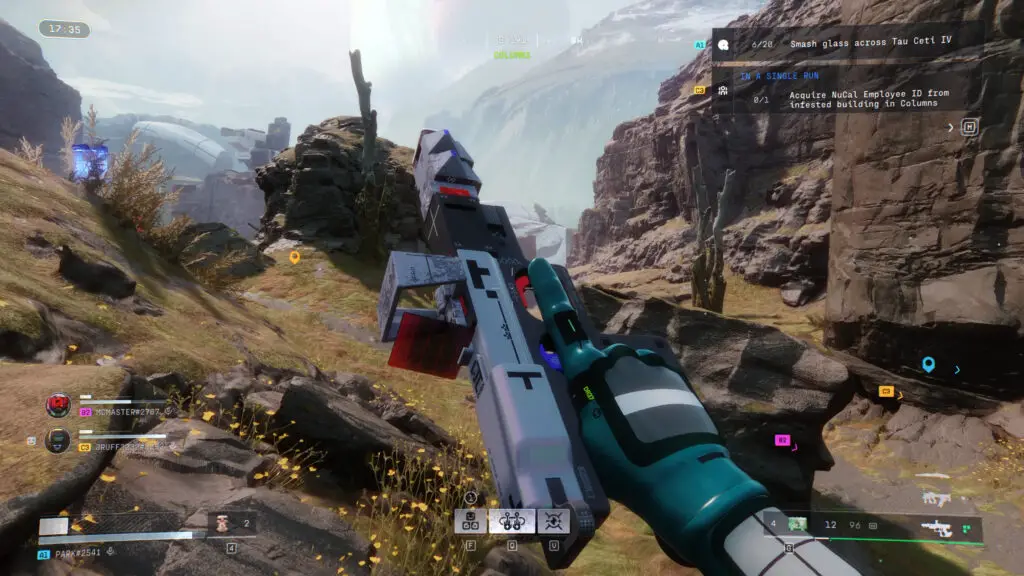
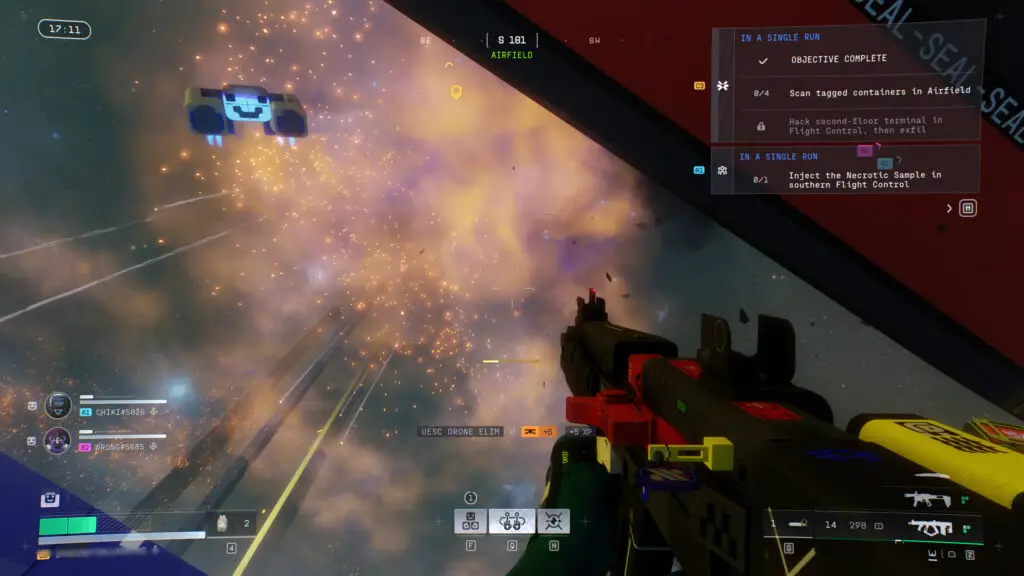
The weapons in Marathon are rhythmic, rewarding instruments. Amidst a genre trending toward hyper-fast “schmovement,” Marathon’s low gravity and methodical movement echo the graceful, weighty gait of Halo. It feels sophisticated. While it includes modern mechanics like sliding and ADS, it evokes a more “civilized age” of FPS design.
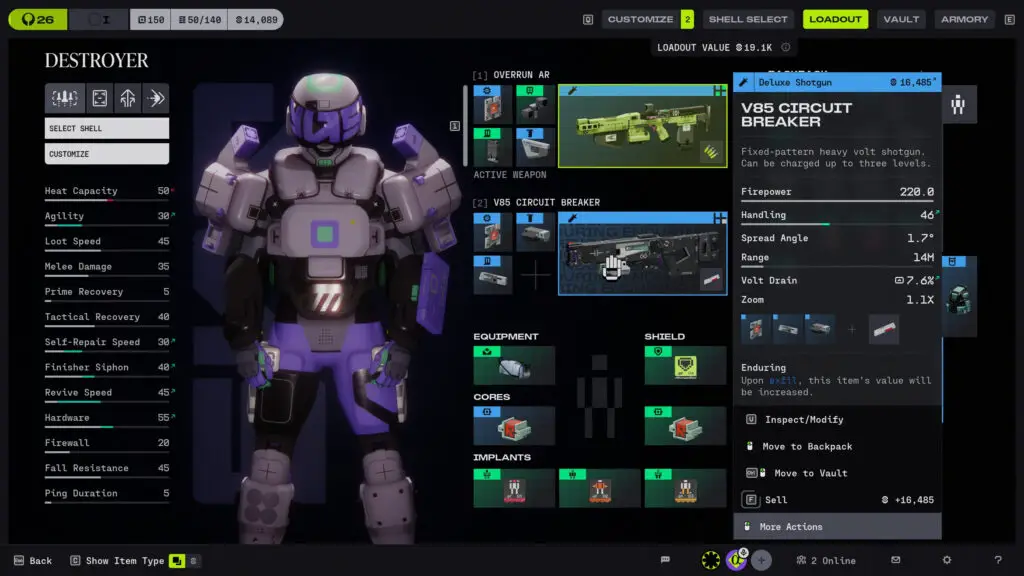
The weapon design in Marathon balances futuristic aesthetics with tactile functionality.
These qualities make the game accessible to a wider range of players while maintaining a high skill ceiling in positioning and perception. It’s a game that rewards smart plays over pure “twitch” reflexes, which speaks to both the seasoned professional and the tech enthusiast.
A Masterclass in Visual Technology
From a technical standpoint, Marathon is one of the most original-looking games we’ve reviewed. It’s a “CMYK wonderland” of rounded edges and soft lighting. Bungie proves that 4K resolution and photorealism aren’t the only ways to achieve immersion.
“A Bungie game really does hit different, blending high-concept tech with visceral gameplay.”
The environments are carried by top-notch materials work and breathtaking weather effects that don’t necessarily require an 8K-ready rig to look stunning. The weapons—specifically the Volt guns and the cubic-clip Brrt SMG—look like a cross between 3D-printed prototypes and high-end collectibles. They feel unique in a market saturated with generic military hardware.
Weather effects like the Heat Cascade add a layer of environmental tension to every run.
Storytelling Through Systems
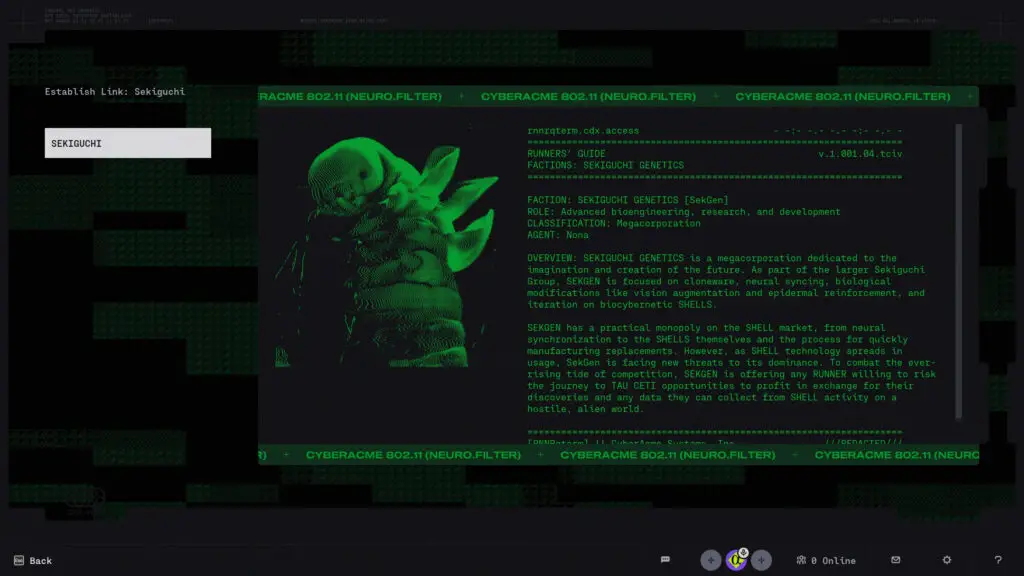
As TechTalesLeo, I find the narrative delivery here fascinating. Marathon sees Tau Ceti IV not just as a map, but as a rabbit hole of scattered dramas. The game features a codex with hundreds of entries—thousands of words providing context for the corporate greed and AI hubris that led to the colony’s downfall.
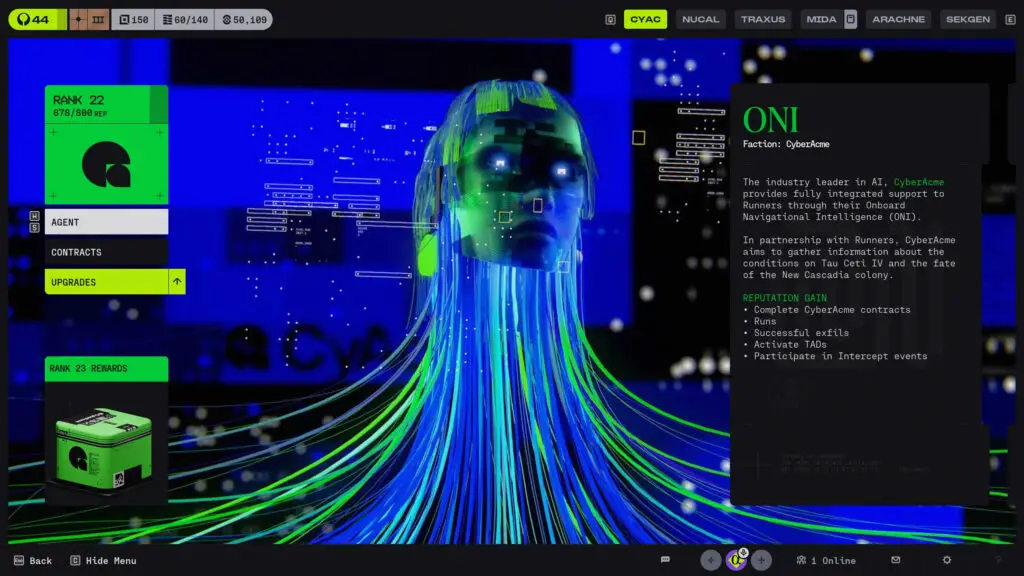
The absence of a traditional campaign allows the non-linear storytelling to take center stage. You aren’t just looting for credits; you’re uncovering the history of a world consumed by capitalism. The faction handlers—ranging from an executive sitting next to a digital lion to a literal worm—provide a “pretty good sci-fi” backdrop that keeps you engaged between deployments.
Map Mastery: Outpost and Cryo Archive
The map design in Marathon is where the studio’s experience truly shines. Outpost, unlocked at level 12, is a masterpiece of verticality and density. It’s a massive compound featuring factories and air hangars, topped by the Pinwheel—a megastructure that requires security cards and combat prowess to infiltrate.
Infiltrating the Pinwheel offers some of the best rewards in the game—if you can survive the other squads.
Then there is the Cryo Archive, a “raid” map that marries complex mechanics with a PvP environment. It introduces Security Clearance ratings, forcing teams to hunt for tags to access deeper facility layers. It’s an innovative approach to the genre that adds a layer of objective-based strategy to the standard “shoot and scoot” gameplay.
The Road Ahead
If there’s a concern, it’s the seasonal model. With the first wipe coming in June, it remains to be seen if players will feel motivated to reset their progress. The longevity of Marathon will depend on the cadence of new content. While the UI and battle pass have room for improvement, Bungie’s responsiveness to the community gives us hope for its future.
Bungie has combined spectacular gunplay, second-to-none map design, and deep progression systems to create something that stands out in a crowded market. For the foreseeable future, Marathon is staying at the top of our rotation.
The Verdict
Marathon is a masterful evolution of the extraction shooter, blending top-tier technical performance with a narrative depth rarely seen in the genre.
Final Rating: 90/100