
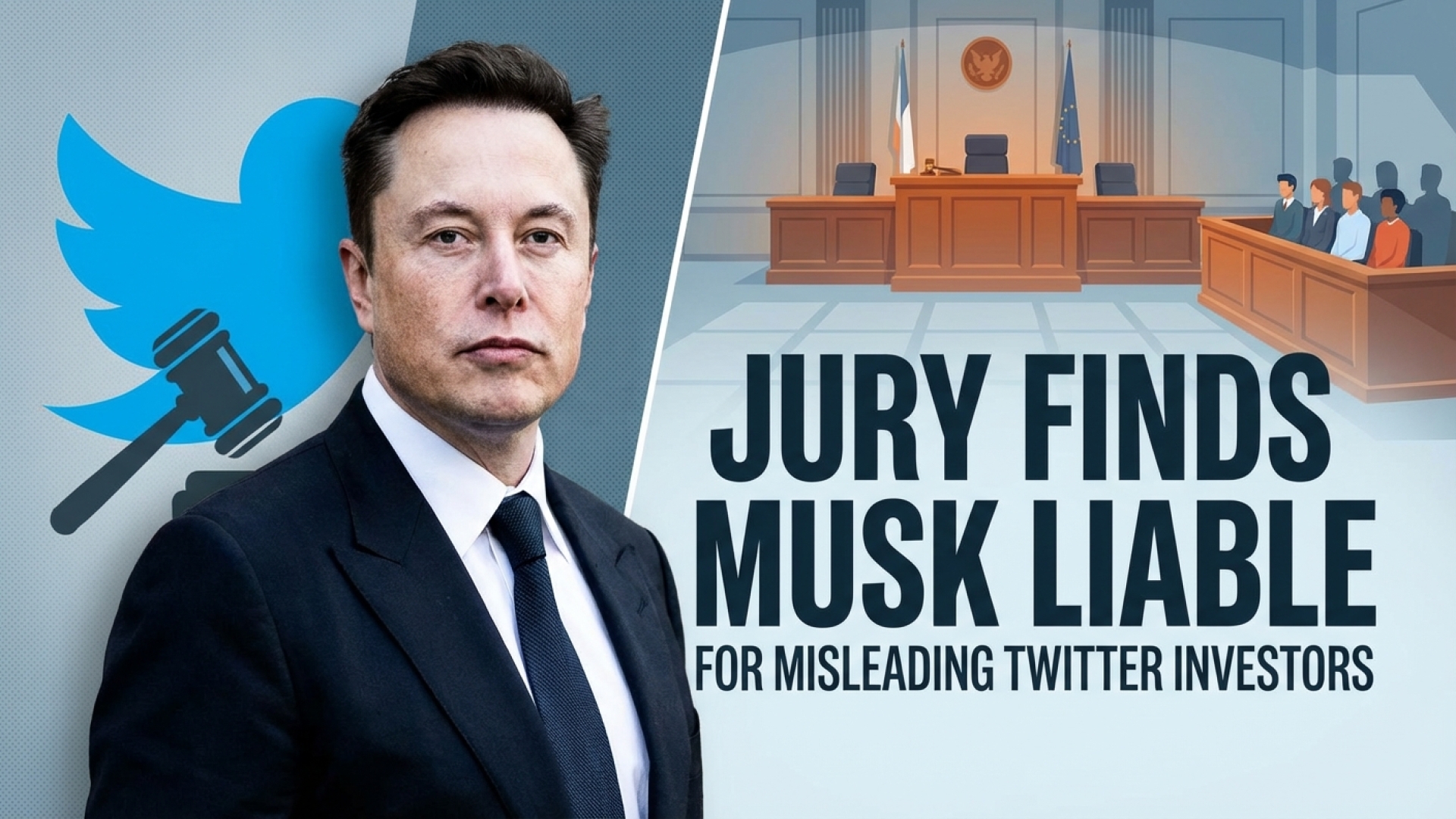
In a landmark ruling for the tech industry and digital market transparency, a Californian jury has found Elon Musk liable for misleading investors during his high-profile $44 billion acquisition of Twitter (now X) in 2022. This class-action lawsuit, Pampena v. Musk, highlights the growing legal scrutiny over how tech leaders use social media platforms to communicate market-moving information.
The Verdict: Materially False or Misleading
The jury concluded that while Musk may not have harbored a specific intent to defraud, two of his tweets posted in May 2022 were materially false or misleading. These communications regarding the prevalence of spam and fake accounts caused a ripple effect in the market, leading shareholders to sell their stock at prices artificially lowered by the uncertainty Musk created. At the time, the acquisition price was set at $54.20 per share, but the market volatility driven by Musk’s “personal megaphone” left many investors at a significant disadvantage.

A Breakdown of the Misleading Communications
At Digital Tech Explorer, we believe in technical transparency. To understand the legal weight of this case, we must look at the specific data points that the jury scrutinized. The lawsuit centered on Musk’s claims that Twitter’s internal metrics regarding bot activity were inaccurate, which he used as leverage to potentially renegotiate or withdraw from the deal.
| Date of Tweet | Statement Summary | Jury Determination |
|---|---|---|
| May 13, 2022 | Claimed the deal was “temporarily on hold” pending spam account verification. | Materially Misleading |
| May 27, 2022 | Alleged fake accounts could be “much higher” than 20% and questioned SEC filings. | Materially Misleading |
Impact on Individual Investors and Market Confidence
The human element of this legal battle was brought to the forefront by lead plaintiff Brian Belgrave. His testimony detailed the financial loss of selling thousands of shares in July 2022, under the false impression that the deal would collapse. This sentiment was echoed by legal representatives who argued that Musk’s tactics “cheated” average investors—ranging from tech professionals to those managing 401ks—to save himself billions during the renegotiation phase.
Musk’s Defense and Potential Damages
Throughout the trial, Musk maintained a characteristic blend of defiance and candor. While he denied any deceptive intent, he famously remarked during his testimony: “If this was a trial about whether I made stupid tweets, I would say I’m guilty.” His defense argued that his tweets were subjective opinions rather than calculated market manipulation.
Despite this, the financial stakes are massive. Expert analysis suggests that Musk’s comments artificially depressed stock values by $3 to $8 per share. Total damages are estimated to reach up to $2.6 billion. While Musk’s legal team plans to appeal, the verdict remains a significant warning to tech magnates about the legal weight of their digital narratives.
TechTalesLeo’s Perspective: The Future of Digital Accountability
As we navigate the evolving landscape of digital innovation and social media, this case serves as a pivotal chapter. It isn’t just about one man or one platform; it’s about the responsibility that comes with digital power. For developers, investors, and tech enthusiasts alike, the Pampena v. Musk verdict reinforces that in the digital age, a tweet is more than just a thought—it’s a transaction of trust.
For more in-depth analyses on tech trends, product reviews, and the intersection of coding and commerce, stay tuned to Digital Tech Explorer.
Disclaimer: All content on Digital Tech Explorer is for informational and entertainment purposes only. We do not provide financial or legal advice. Some of the links on our site may be affiliate links, meaning we may earn a commission at no additional cost to you.