
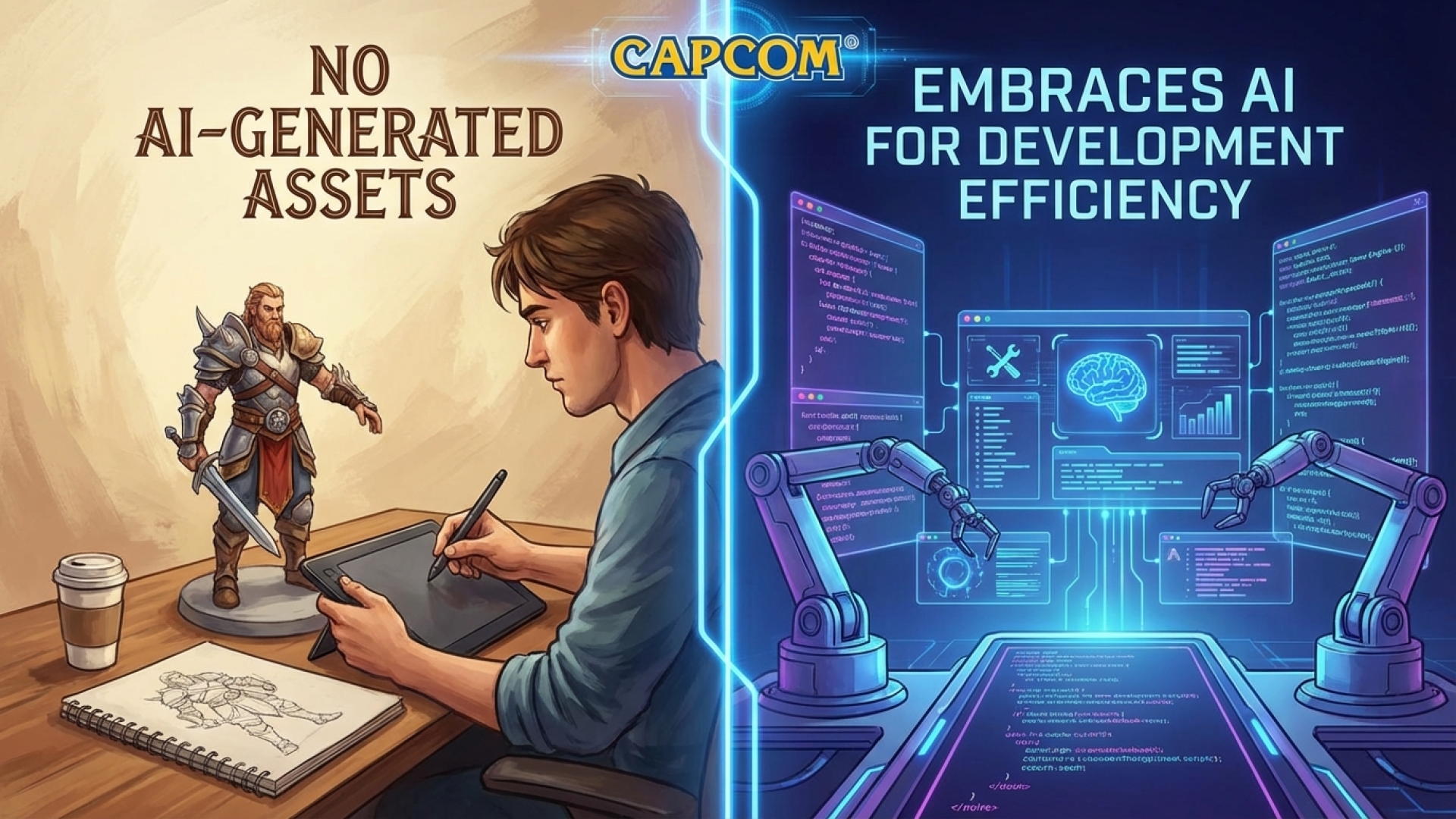
The gaming industry is currently navigating complex discussions surrounding the integration of Artificial Intelligence (AI) into game development. Recently, gaming powerhouse Capcom clarified its stance on using AI acceleration, drawing a distinct line between leveraging AI to enhance development workflows and directly incorporating AI-generated content into its highly anticipated titles. As a seasoned observer of digital innovation, I’ve seen many studios struggle with this balance, but Capcom’s approach offers a fascinating look into the future of 3D gaming.
Capcom’s Stance on AI Assets
In its summary of a February 2026 online investor information session, Capcom—the legendary studio behind PC games like Resident Evil Requiem and Monster Hunter Wilds—addressed its plans for AI usage. The company explicitly stated, “We will not incorporate assets generated by AI into our game content.” This strong declaration aims to reassure stakeholders and the creative community about the authenticity of Capcom’s game worlds and characters, ensuring that every texture and voice line maintains a human touch.

AI for Efficiency and Productivity
While committed to avoiding AI-generated game assets, Capcom revealed its intention to “actively utilize such technologies to enhance efficiency and boost productivity within our game development processes.” This is where the intersection of hardware and software becomes vital. The developer is exploring generative AI applications across various disciplines, including:
| Development Area | AI Application | Goal |
|---|---|---|
| Graphics | Visual Reference Generation | Streamlining initial concept phases |
| Sound | Workflow Optimization | Reducing repetitive audio processing tasks |
| Programming | Code Assistance | Improving debugging and script efficiency |
This strategic move seeks to optimize production without compromising the artistic integrity that fans of Digital Tech Explorer have come to expect from triple-A titles.

Clarifying the Line: Efficiency vs. Asset Implementation
The distinction between using AI for efficiency and directly implementing AI-generated assets can often be ambiguous. Capcom’s technical director, Kazuki Abe, elaborated in early 2025 on the company’s use of Google Cloud-based technology. This system aids in generating initial visual references to alleviate the intensive labor of producing concept illustrations. This approach focuses on assisting human artists in the conceptualization phase rather than replacing their final creative output, a method that aligns with our mission to highlight how technology can enhance human skill rather than replace it.
Industry Precedent and Backlash
Capcom’s cautious approach to AI adoption comes at a time of heightened scrutiny within the gaming industry. Concerns regarding visual alterations and the “uncanny valley” have been amplified by recent discussions around GPU technologies like Nvidia’s DLSS. Other developers have faced significant backlash; for instance, Pearl Abyss, the studio behind Crimson Desert, issued an apology after players identified AI-generated art within their game. Such incidents highlight the necessity for clear boundaries and transparent communication regarding AI implementation in modern 2024 releases and beyond.
Conclusion
Capcom’s commitment to avoiding AI-generated game content while strategically embracing it for developmental efficiency represents a balanced approach in a rapidly evolving technological landscape. As TechTalesLeo, I believe this position will resonate with players who prioritize artistic authenticity. As machine learning continues to advance, the gaming industry will undoubtedly face ongoing challenges in integrating these tools responsibly, balancing pure innovation with creative integrity.

Disclaimer: All content on Digital Tech Explorer is for informational and entertainment purposes only. We do not provide financial or legal advice. Some of the links on Digital Tech Explorer are affiliate links. This means we may earn a commission if you click through and make a purchase, at no additional cost to you. Our recommendations are based on thorough research and personal experience.