
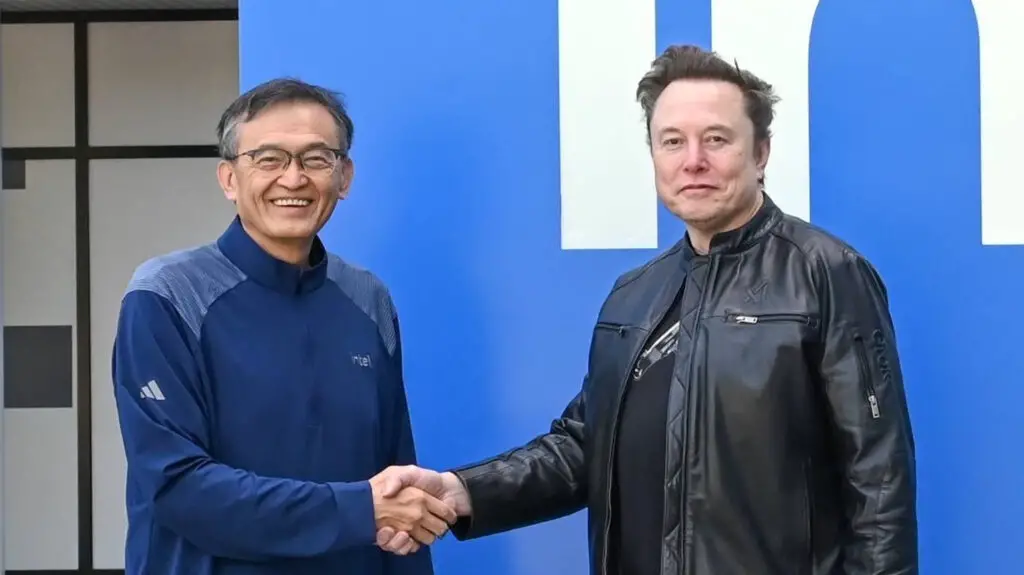
In a move that signals a tectonic shift in the semiconductor landscape, Intel has confirmed a strategic alliance with Elon Musk’s ambitious Terafab project. This collaboration aims to “refactor silicon fab technology” by utilizing Intel’s expansive foundries and advanced packaging facilities. For those of us following the evolution of hardware and manufacturing, this represents more than just a business deal; it is a potential lifeline for Intel’s foundry ambitions, securing what could be its most substantial order to date.
Intel CEO Lip-Bu Tan was quick to acknowledge the weight of this partnership, pointing to Musk’s history of disrupting stagnant industries. “Elon has a proven track record of reimagining entire sectors,” Tan remarked. “Terafab represents a step change in how silicon logic, memory, and packaging will be constructed. At Digital Tech Explorer, we often discuss the intersection of software principles and hardware design; this ‘refactoring’ of the fab process is exactly the kind of innovation the industry requires to meet future demands.”
Understanding the Terafab Project
The Terafab project is the cornerstone of Musk’s strategy to achieve self-sufficiency for his tech empire, which includes xAI, SpaceX, and Tesla. The ultimate objective is to reach a staggering “1 TW of compute per year.” While the use of “terawatts” to measure computational throughput is unconventional, it highlights the sheer scale of the AI acceleration Musk intends to deploy across his ventures.
Following the announcement, Intel’s stock experienced a modest 3% uptick. This reserved market sentiment likely stems from the ambiguity surrounding Intel’s specific contributions. Whether the company will focus on chip design, pure fabrication, or its proprietary packaging technologies remains to be seen. While Musk has noted that Tesla’s Austin facility will lead the initial production, Intel’s global infrastructure is expected to provide the scalability Terafab needs to reach its goals.
| Project Aspect | Details |
|---|---|
| Primary Goal | 1 TW (Terawatt) of compute per year |
| Key Partners | Intel, Tesla, SpaceX, xAI |
| Technology Focus | Silicon logic, advanced packaging, and AI silicon |
| Initial Manufacturing | Tesla Austin Foundry & Intel Foundry Services |
Potential Implications for Intel and the PC Market
While the partnership is a win for Intel’s foundry business, it raises significant questions regarding capacity. Currently, Intel relies on TSMC for several of its own flagship processors. If the Terafab project consumes a massive portion of Intel’s internal manufacturing bandwidth, the consumer gaming and professional PC markets could feel the squeeze.
We have previously seen how high demand for AI-driven components can lead to volatility in the pricing of DRAM and SSDs. Industry analysts are already sounding the alarm on potential GPU and CPU shortages. If manufacturing resources are heavily pivoted toward Musk’s “terawatt” goal, the average consumer might face a market where processor prices rise significantly. For tech enthusiasts and professionals alike, monitoring how Intel balances these massive industrial orders with the needs of the consumer PC market will be critical in the coming months.
Disclaimer: All content on Digital Tech Explorer is for informational and entertainment purposes only. We do not provide financial or legal advice. Some of the links on our site are affiliate links, meaning we may earn a commission if you click through and make a purchase, at no additional cost to you.