
The timeline for “Q-Day”—the moment quantum computing power catches up to modern encryption—just shifted from the distant future to our near-term horizon. At Digital Tech Explorer, we’ve been tracking the intersection of hardware innovation and digital security closely. Recent findings from Google Quantum AI suggest that the cryptography securing global giants like Bitcoin and Ethereum might be more fragile than we once believed.
The 500,000 Qubit Threshold: A Drastic Revision
For years, the consensus among researchers was that it would take tens of millions of physical qubits to compromise the elliptic curve cryptography used by major blockchain networks. However, a new whitepaper published by Google has effectively slashed those requirements. The revised data suggests that a quantum system with fewer than 500,000 physical qubits could theoretically crack these codes. This is roughly 20 times lower than previous industry benchmarks. This acceleration has caught the attention of experts like Justin Drake, who noted on X that his confidence in Q-Day occurring by 2032 has risen significantly, citing at least a 10% chance of a secp256k1 ECDSA private key being recovered from an exposed public key within that timeframe.Quality Over Quantity: The Battle of Quantum Chips
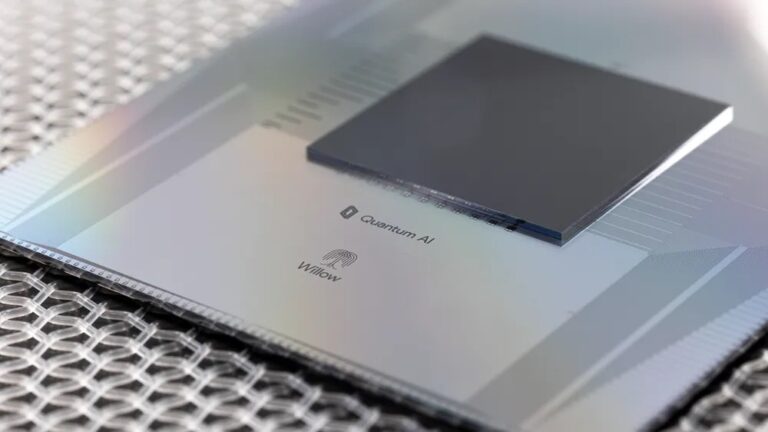
As a storyteller in the tech space, I find the narrative of “more is better” is quickly being replaced by “better is more.” While IBM has made headlines with its high-qubit processors, Google is betting on fidelity—the accuracy and reliability of each qubit.| Processor | Developer | Qubit Count | Key Focus |
|---|---|---|---|
| Willow | 105 | High fidelity (99.9%+) and error correction | |
| Condor | IBM | 1,121 | Scaling superconducting qubit volume |
How Q-Day Impacts Different Encryption Standards
To understand the “Quantum Apocalypse,” we must distinguish between the types of digital locks currently in use. Not all encryption is created equal when faced with quantum algorithms.- Public-Key Cryptography (Highly Vulnerable): Systems relying on factoring large numbers (RSA) or discrete logarithms are sitting ducks for Shor’s algorithm. This is the bedrock of most cryptocurrency signatures.
- Symmetric Encryption (Resilient): Standards like AES-256 and hashing algorithms like SHA-2 (used in Bitcoin mining) are susceptible to Grover’s algorithm. This doesn’t “break” the code but halves its effective security. Moving to longer keys can typically mitigate this threat.