
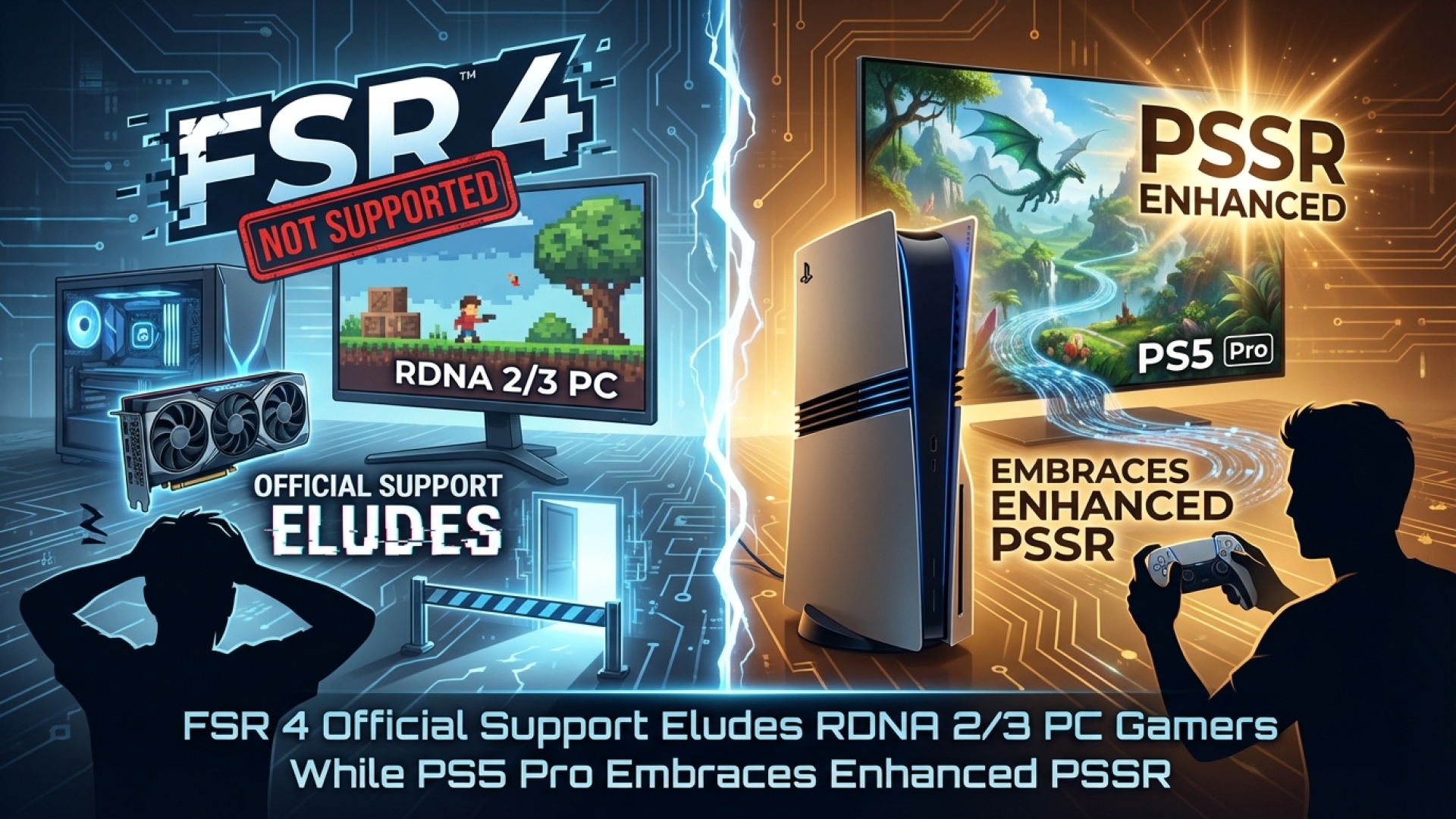
At Digital Tech Explorer, we often discuss the thin line between console architecture and PC hardware. If you are a PC gamer rocking an AMD RDNA-based GPU, you actually have more in common with a PlayStation 5 owner than you might realize. Both platforms share deep architectural roots, but as we move into the next generation of AI-driven graphics, a rift is forming. While RDNA 4 users are the primary target for FSR 4, PS5 Pro gamers are about to see the next evolution of Sony’s PSSR upscaler, with the upcoming Resident Evil Requiem leading the charge.
If you’re wondering why this matters, it comes down to a shared lineage. Both FSR 4 and PSSR (PlayStation Spectral Super Resolution) are born from “Project Amethyst”—a collaborative venture between AMD and Sony designed to bring high-end AI upscaling to the masses.
FSR 4 vs. PSSR: Architectural Nuances
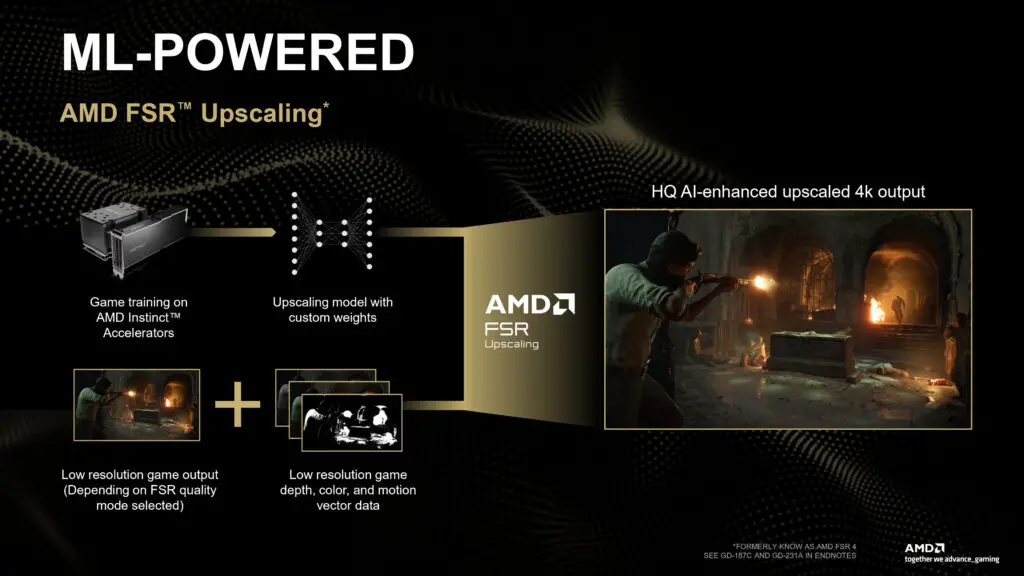
While they share a common ancestor, these technologies are optimized for different environments. AMD’s FSR 4 is engineered for discrete GPUs that boast massive L3 caches and dedicated VRAM bandwidth. In contrast, PSSR is optimized for the PS5 Pro’s custom silicon—a beefy integrated chip that relies on a shared memory pool without the luxury of a massive L3 cache.
There has been significant debate regarding the hardware requirements for these AI features. Initially, it was suggested that the PS5 Pro lacked dedicated matrix instruction units. However, deeper technical analysis confirms the console’s GPU is capable of hitting 300 TOPS in INT8 data format. This puts it in a unique position: it uses RDNA-based compute units capable of handling the heavy lifting required for convolutional neural networks, much like the modern RTX or Radeon cards.
| Feature | AMD FSR 4 | Sony PSSR |
|---|---|---|
| Primary Platform | PC (RDNA 4 Recommended) | PlayStation 5 Pro |
| Hardware Basis | Discrete GPU / Large L3 Cache | Integrated Custom APU / Shared Memory |
| AI Integration | Neural Network Based | Neural Network Based |
| Performance Target | High Frame Rates / 4K Resolution | Console Stability / Image Clarity |
The Compatibility Controversy: Older AMD GPUs
As a storyteller in the tech space, I find the narrative surrounding “official support” fascinating. Modders have already demonstrated that FSR 4-style algorithms can run on RDNA 2 and RDNA 3 hardware. Despite this, AMD has remained hesitant to offer official support for older architectures.
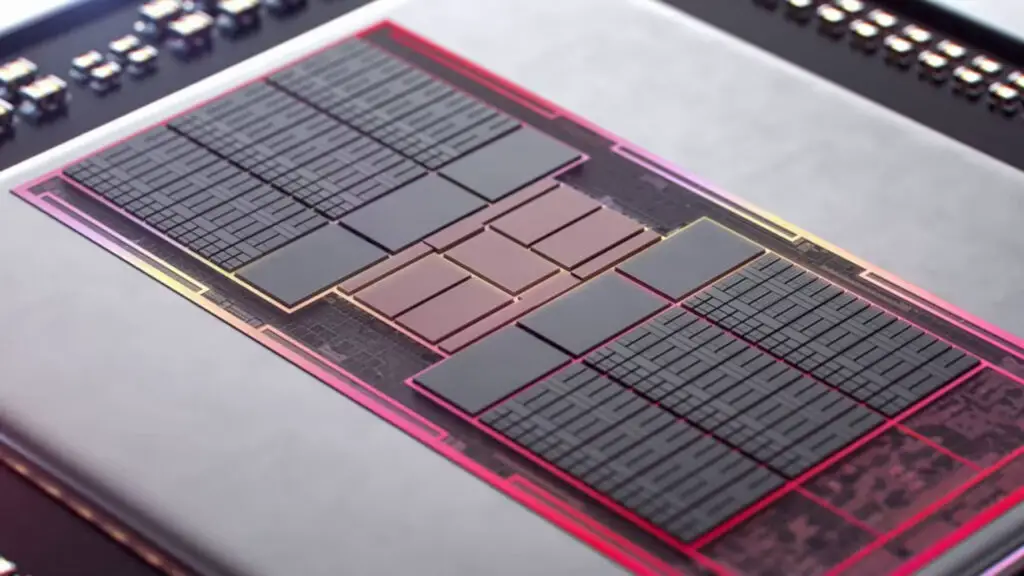
If the PS5 Pro, which utilizes RDNA 2-type compute units, can successfully implement PSSR, there is no technical reason why RX 6000 or 7000-series cards couldn’t handle similar AI upscaling. While the performance gains might not match a flagship Radeon RX 9000-series, the visual benefits would be a welcome upgrade for the community.
The Business of Upscaling
From our perspective at Digital Tech Explorer, the exclusion of older hardware is likely a business decision rather than a technical limitation. Exclusive features like FSR 4 serve as a primary incentive for users to upgrade to newer hardware. It’s a strategy we’ve seen across the industry—Sony themselves do not support PSSR on the standard PS5, despite its capable architecture.
For now, while PS5 Pro gamers enjoy the enhanced fidelity of Resident Evil Requiem via PSSR, PC enthusiasts on older Team Red hardware will need to rely on FSR 3.1. Fortunately, FSR 3.1 remains an excellent solution, particularly with its impressive frame generation capabilities that keep PC games running smoothly across a wide range of hardware.
Stay tuned to Digital Tech Explorer for more in-depth analyses and the latest updates on machine learning in gaming.