
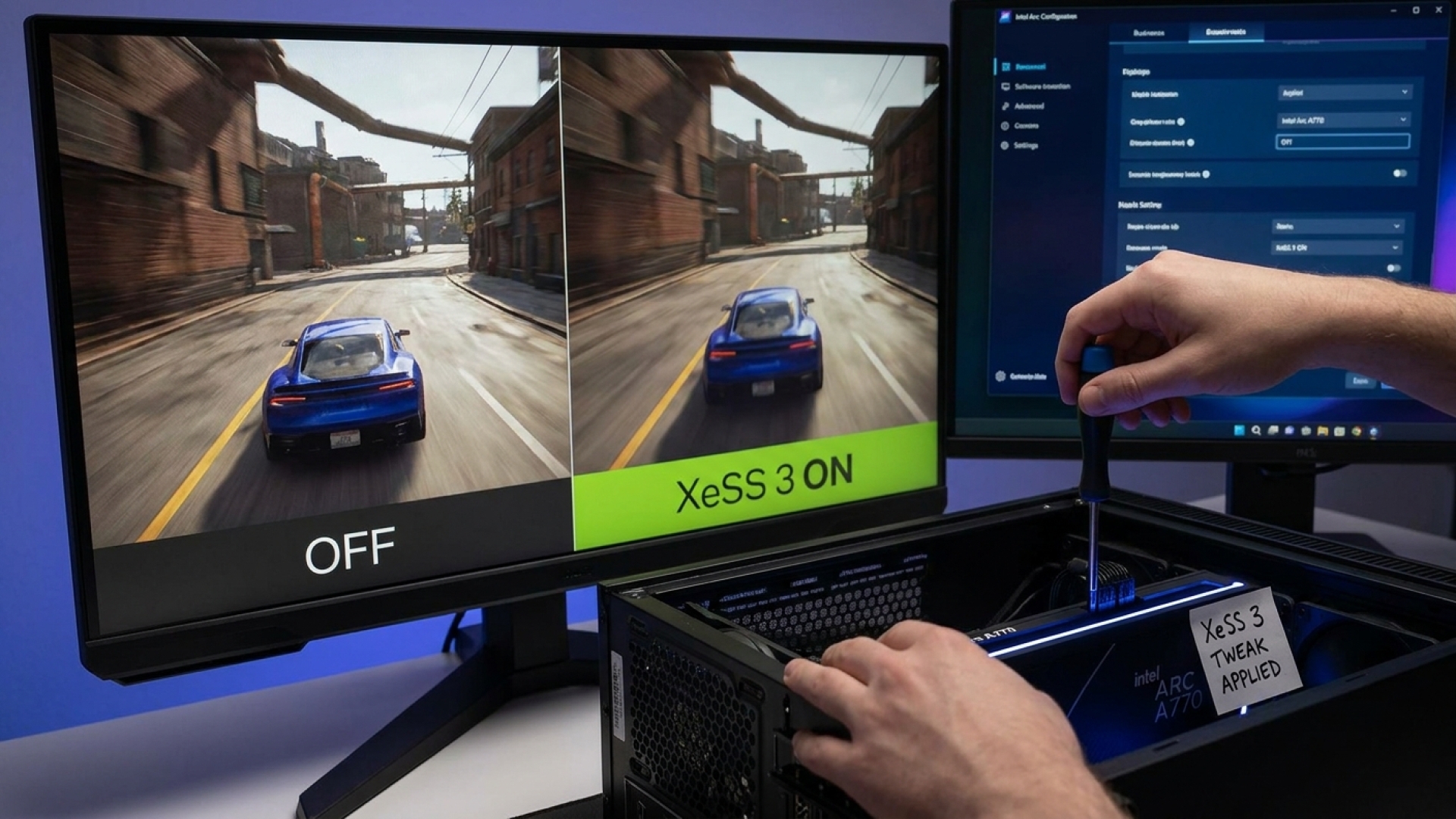
At Digital Tech Explorer, we are constantly tracking the pulse of digital innovation. Recently, Intel has been making waves with the announcement of XeSS 3 and its groundbreaking multi-frame generation (MFG) technology. While these high-performance features are officially designated for the upcoming Xe3-cored graphics chips—specifically the Panther Lake mobile processors—the tech community has once again proven that boundaries are meant to be pushed.
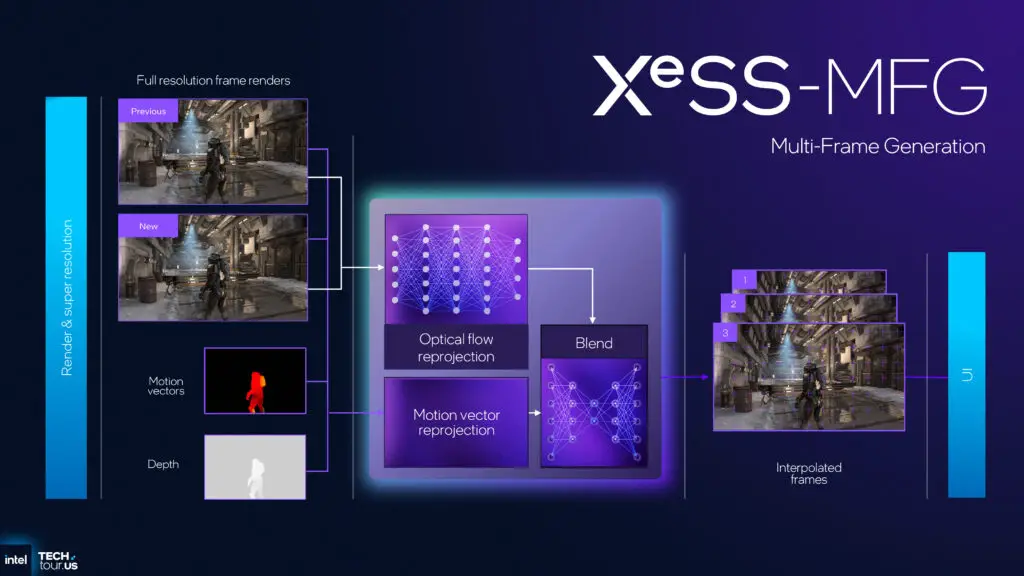
Unlocking XeSS 3 on Legacy Intel Silicon
In a fascinating turn for hardware enthusiasts, several community members on Reddit have bypassed official restrictions. They’ve discovered a relatively simple method to activate XeSS 3 on a wider range of Intel graphics chips. By utilizing a “file-swap” tweak within the latest driver packages, users with older GPUs, such as the Intel Arc B580 and the enthusiast-favorite Arc A770, are already testing the merits of AI-powered frame generation.
Step-by-Step: Enabling XeSS 3 Manually
For those who enjoy tinkering with their gaming setup, the process of enabling these advanced features involves a few precise steps. TechTalesLeo recommends this only for those comfortable with driver modifications:
- Download and extract the latest Intel driver to a local folder.
- Navigate to folder 8362 within the package and copy
igxell.dlandigxess_fg.dll. - Paste and overwrite these files into folder 8452.
- Use a utility like Display Driver Uninstaller (DDU) to cleanly remove existing drivers.
- Install the modified driver from your prepared folder.
Note: Digital Tech Explorer provides this information for educational purposes. Unofficial modifications can lead to system instability. Always back up your data before attempting hardware-level tweaks.
Performance Benchmarks: Theory vs. Reality
The core question remains: Does the AI acceleration translate to real-world gains on older hardware? While the results are promising, they come with caveats regarding “base frame rates.” To provide clarity, we’ve summarized the community testing data from an A370m mobile system running Cyberpunk 2077:
| Setting Configuration | Reported FPS (Native) | Perceived Smoothness | Impact on XMX Units |
|---|---|---|---|
| Upscaling Only | ~40 FPS | Standard | Low |
| 2x Frame Generation | ~38 FPS | ~50 FPS equivalent | High |
| 4x Frame Generation | ~22 FPS | Unstable / Pacing Issues | Very High |
As seen in the data, the ACM-G11 GPU struggled under the heavy load of 4x generation. However, many users reported that using 2x generation with a controller felt surprisingly fluid—comparable to 40 FPS rasterization—despite the lower raw frame count. This indicates that while the silicon is being pushed to its limit, Intel’s frame-pacing logic is doing heavy lifting behind the scenes.
The Road Ahead for Intel Graphics
Intel’s engineering team recently claimed their GPU drivers are now “light years ahead” of their initial launch state. This community-driven discovery of XeSS 3 functionality months before its official release validates that claim. It suggests that Intel’s software architecture is becoming more modular and robust, allowing for features to be potentially back-ported to older hardware.
For the tech enthusiasts and developers we serve here at Digital Tech Explorer, this is a clear signal: Intel is no longer just a participant in the GPU race; they are actively innovating. Whether you are an early adopter of the Arc series or waiting for Panther Lake, the future of AI-enhanced gaming is looking brighter—and more accessible—than ever.
For more in-depth reviews and the latest tech narratives, stay tuned to TechTalesLeo on Digital Tech Explorer.