
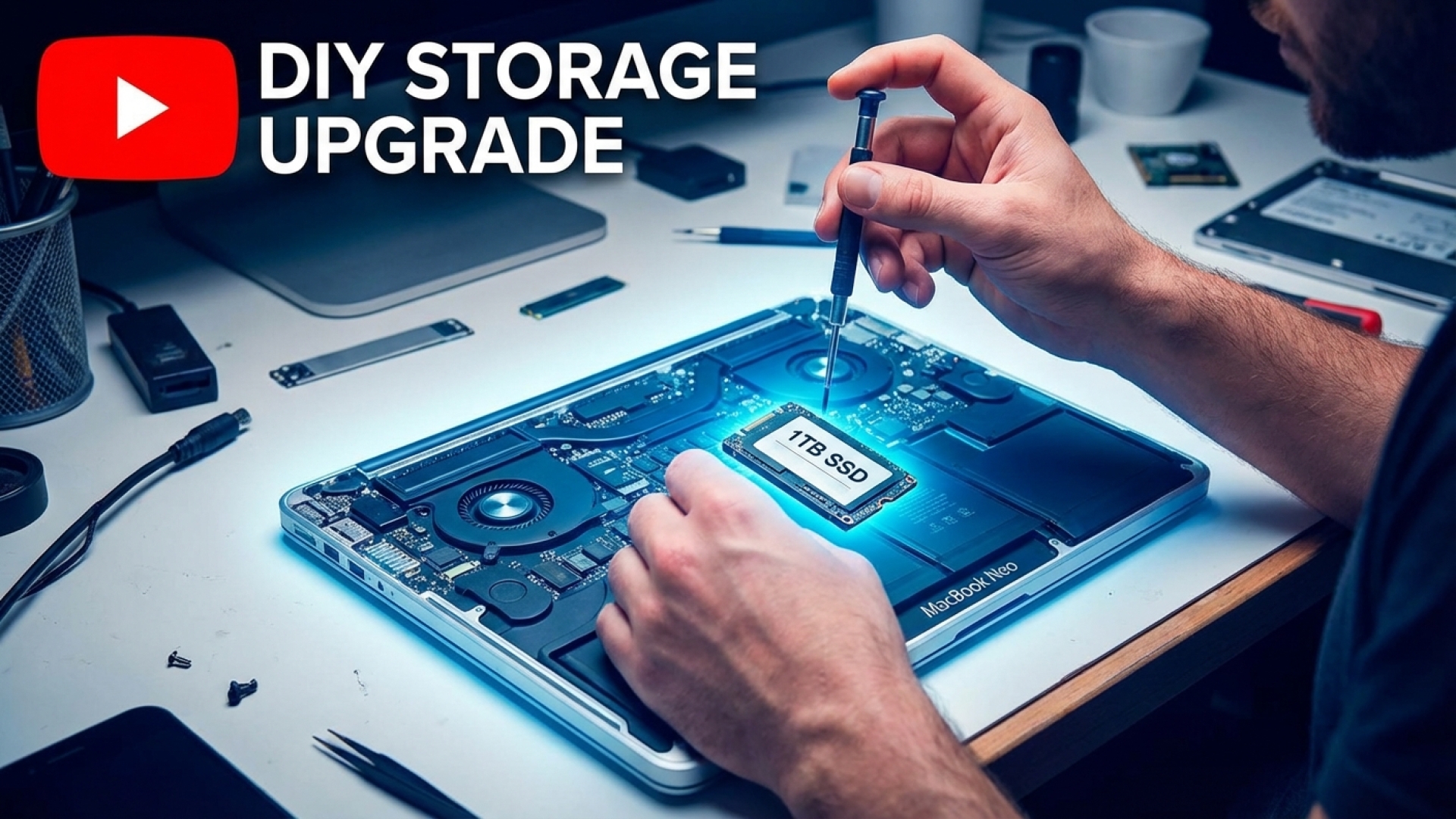
At Digital Tech Explorer, we’ve been keeping a close eye on Apple’s latest hardware shift. The new MacBook Neo has certainly shaken up the budget laptop market. Powered by the same high-performance silicon found in the iPhone 16, this $599 machine offers incredible value, even if its standard 512 GB storage ceiling leaves power users wanting more. However, for those with the technical prowess of a seasoned engineer, that hardware limitation is merely a suggestion.
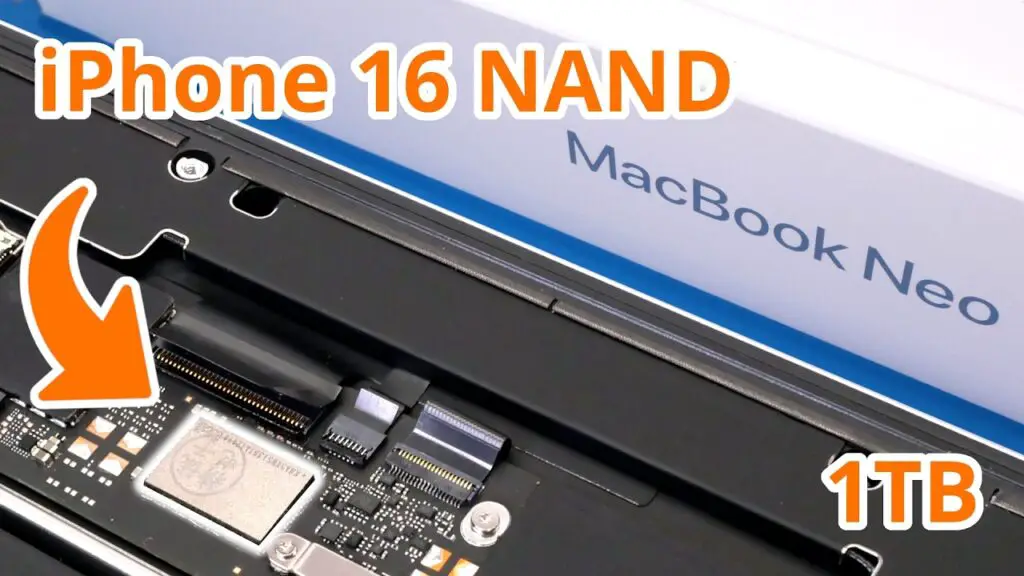
The Quest for More Storage: Upgrading the MacBook Neo
In a recent deep dive into hardware modification, popular YouTuber dosdude1 showcased a project that bridges the gap between consumer electronics and professional engineering. The premise was straightforward but high-stakes: take a base MacBook Neo equipped with 256 GB of storage, remove the original NAND flash chip, and replace it with a 1 TB module.
The process began with meticulous preparation. Using specialized software and hardware interfaces, the new flash chip was verified as blank before being reballed with a fresh array of solder. While dosdude1 makes it look effortless, this level of precision work requires a steady hand and professional-grade equipment, setting the stage for the most difficult part of the procedure: the chip swap.
Overcoming the Soldered Storage Barrier
Like many modern ultra-portables, the MacBook Neo utilizes a soldered storage architecture. Typically, removing these components involves precision heating to liquify the solder balls. However, Apple has added a layer of complexity here with “underfill”—a tough epoxy-like substance beneath the chip—and a dense surrounding of surface-mounted devices (SMDs).
Through the judicious application of heat and specialized shims, the original chip was successfully extracted. Interestingly, the circuit board pads revealed that the Neo might have been designed to accommodate physically larger storage modules, a design choice Apple likely bypassed to maintain the aggressive $599 price point. Our analysis at Digital Tech Explorer suggests this “over-engineering” of the PCB is a common trait in modern Apple silicon designs.
Software Integration: DFU Mode and OS Restore
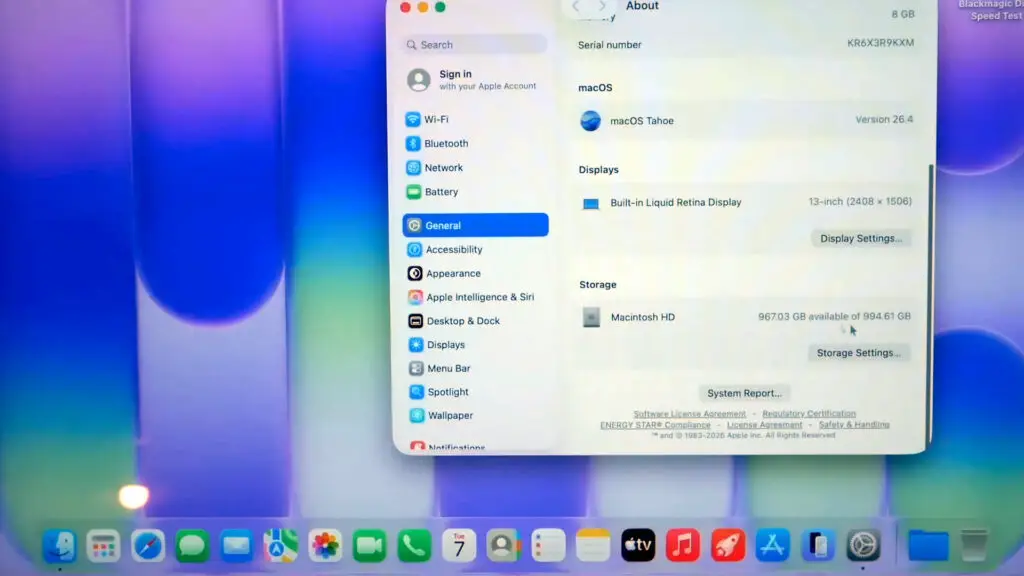
Physical installation is only half the battle. To make the new 1 TB module bootable, the MacBook Neo had to be placed into DFU (Device Firmware Update) mode. By connecting the modified Neo to another Mac, dosdude1 was able to initialize the storage and restore the operating system. This software handshake is critical, as it allows the Apple silicon controller to recognize and trust the new NAND configuration.
Value Analysis: Is DIY Worth the Risk?
The success of this “flash lobotomy” raises an interesting question for the tech community: is the cost-to-risk ratio worth it? When we compare the market prices for high-capacity modules against Apple’s official upgrade pricing, the margins are slim for anyone who doesn’t already own the necessary tools.
| Model / Configuration | Estimated Retail Price | Storage Capacity |
|---|---|---|
| MacBook Neo (Base) | $599 | 256 GB |
| MacBook Neo (Mid-Tier) | $699 | 512 GB |
| MacBook Neo (Modified DIY) | ~$750 – $800* | 1 TB |
| *Includes estimated cost of 1 TB NAND module and consumables. | ||
While Apple typically charges a $200 premium to jump to 1 TB on their other laptop lines, the MacBook Neo provides a unique entry point for gaming and productivity on a budget. If you can source a compatible 1 TB module for a reasonable price and possess the skill set of an electronics expert, the upgrade is a masterclass in hardware optimization. For the rest of us, it remains a fascinating look at what’s possible when we look under the hood of our favorite devices.
At Digital Tech Explorer, we love seeing the community push the boundaries of what’s possible with modern hardware. Whether you’re a seasoned developer or a tech enthusiast, stories like these remind us that the devices we use every day are full of untapped potential.