
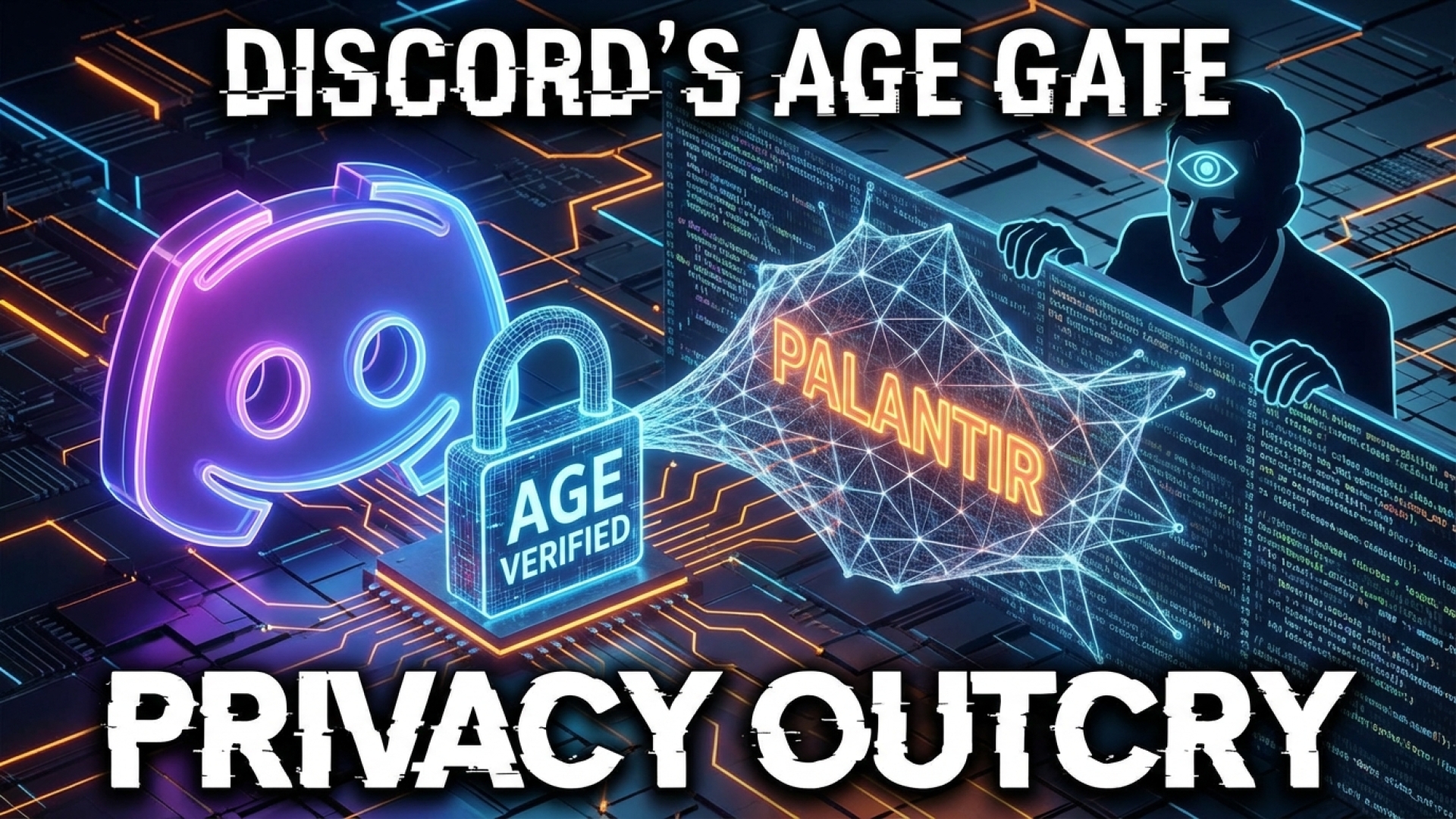
Discord has recently sparked widespread backlash from its global user base by announcing a mandatory age verification rollout scheduled for March. This new policy mandates that users wishing to access specific content or communities must either undergo a face scan or provide government-issued identification—unless the platform’s internal prediction algorithms have already verified them as adults. At Digital Tech Explorer, we’ve been tracking how these shifts in digital policy impact user privacy and the broader tech ecosystem, and this move represents a significant pivot for the platform.
In the wake of the announcement, Discord attempted to mitigate the fallout by clarifying that only a subset of users would be subjected to these “child detection” measures. However, the narrative has grown increasingly complex as details emerge regarding the third-party vendors managing this sensitive data. Users in the UK—already navigating the 2025 Online Safety Act—report being prompted to consent to age verification processed by a company called Persona.

The ‘Experiment’ with Persona
Discord’s updated support documentation now includes a disclaimer informing UK users that they “may be part of an experiment where your information will be processed by an age-assurance vendor, Persona.” This revelation has raised fresh concerns among tech enthusiasts and privacy advocates alike. Previously, Discord suggested that facial verification data would be processed and stored locally on the user’s device. However, the notice regarding Persona explicitly states that submitted information “will be temporarily stored for up to 7 days, then deleted.”
Industry observers speculate that Discord is testing Persona as a more robust alternative to its primary partner, k-ID. Reports have suggested that k-ID’s systems were susceptible to workarounds using 3D models. While Discord has not officially confirmed the technical reasoning behind this “experiment,” the shift highlights the ongoing struggle to balance regulatory compliance with secure software solutions.

Comparing Discord’s Age Verification Vendors
To help our readers understand the landscape of these “child detection” measures, we have outlined the two primary vendors currently associated with Discord’s verification rollout:
| Vendor | Data Processing Method | Reported Storage Policy | Primary Concern |
|---|---|---|---|
| k-ID | On-device (Initial claim) | Local processing | Susceptibility to 3D model workarounds |
| Persona | Cloud-based “Experiment” | Stored for up to 7 days | Financial ties to surveillance-linked investors |
Ties to Peter Thiel and Surveillance Concerns
The partnership with Persona has significantly heightened privacy anxieties due to the company’s financial backing. In its recent funding rounds, Persona’s lead investor was Founders Fund, the venture capital firm co-founded and directed by Peter Thiel. Thiel is a central figure in the tech world, primarily known for co-founding Palantir, a massive data harvesting and surveillance firm.
Palantir has long been scrutinized by digital rights groups for providing surveillance tools to government agencies and compiling vast databases of private information. The involvement of Thiel’s capital in a platform used by millions for private communication has triggered “panopticon” comparisons. For many in the coding and development community, the bridge between a social chat app and a surveillance-backed vendor is a concerning development in AI-driven monitoring.

Growing Criticism and the Path Forward
Despite Discord’s efforts to frame these changes as minor safety updates, organizations like the Electronic Frontier Foundation (EFF) argue that the public outcry is justified. Experts suggest that platforms should prioritize user privacy and advocate against invasive mandates rather than preemptively complying with tech-heavy age-verification laws that require biometric or government data.
As the March deadline approaches, the controversy continues to trend across gaming and tech circles. For many users, the combination of mandatory ID checks and the involvement of surveillance-linked investors is a dealbreaker. This shift is already prompting some tech-savvy communities to explore decentralized alternatives like IRC or self-hosted communication tools to maintain their digital sovereignty.
At Digital Tech Explorer, we believe transparency is key to navigating the future of technology. Whether you are a developer concerned about data integrity or a casual user worried about your digital footprint, staying informed on these 2024-2025 tech trends is essential. We will continue to monitor the Discord rollout and provide updates as more information on these “experiments” becomes available.