
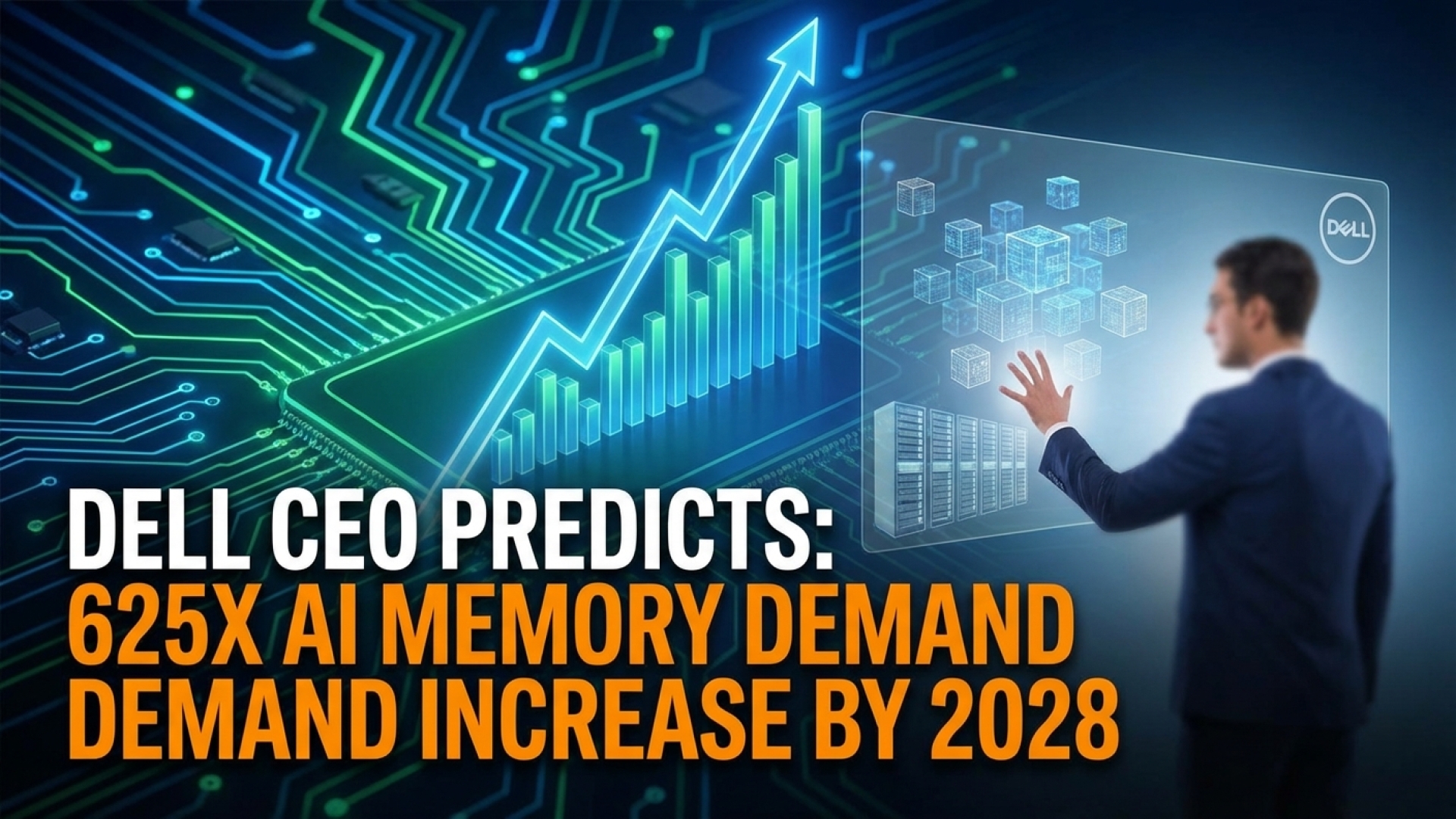
At Digital Tech Explorer, we are constantly tracking the tectonic shifts in the hardware landscape. Today, a forecast from Dell’s CEO, Michael Dell, has sent shockwaves through the industry, signaling a massive surge in memory demand driven by the relentless expansion of artificial intelligence. Dell’s prediction is nothing short of cinematic: by 2028, the total memory demand from the AI market will be 625 times greater than it was in 2022.
Analyzing Dell’s AI Memory Demand Equation
In a narrative shared during a recent Bank of America event—and detailed by IT Home—Michael Dell outlined a future where AI infrastructure scales at an exponential rate. He noted that as memory per accelerator and system scale expand simultaneously, the industry is entering a period of unprecedented hardware consumption.
This staggering 625-fold figure is derived from two primary growth vectors:
- Capacity per Unit: In 2022, the flagship Nvidia H100 was equipped with 80 GB of High Bandwidth Memory (HBM3). By 2028, accelerators are projected to reach 2 TB of DRAM capacity, representing a 25x increase in memory per unit.
- Deployment Scale: Dell anticipates that the number of AI accelerators deployed in global data centers will also increase by a factor of 25 over that same window.
When you multiply these factors—25x capacity by 25x deployment—you arrive at the massive 625x increase in total market demand.
Scaling with Next-Gen Architectures
Dell’s projection likely accounts for the maximum capacities supported by future architectures, such as the upcoming Vera Rubin superchip. Even if we look at more immediate iterations, like Nvidia’s NVL72 system featuring HBM4, the numbers remain daunting. A single rack in these systems can feature 576 GB of memory, which is 7.2 times the capacity of a single H100. Even with this more “conservative” math, the total demand would still see a colossal 180-fold increase when paired with Dell’s deployment forecasts.
The Manufacturing Bottleneck
For developers and tech professionals, this data highlights a looming challenge: supply. Currently, the production of HBM4 is a high-stakes race dominated by only three global titans: SK hynix, Samsung, and Micron. Despite aggressive efforts to ramp up production, current facilities are already struggling to meet existing AI acceleration demands.
By 2028, additional facilities will be online, but whether they can outpace a demand curve that is hundreds of times steeper than today remains a critical question. Furthermore, the strain isn’t limited to HBM. The ripple effect will likely hit LPDDR5x—essential for high-end laptops—and NAND flash storage, creating a potential squeeze across the entire digital ecosystem.
The Substantial Scale of Modern Infrastructure
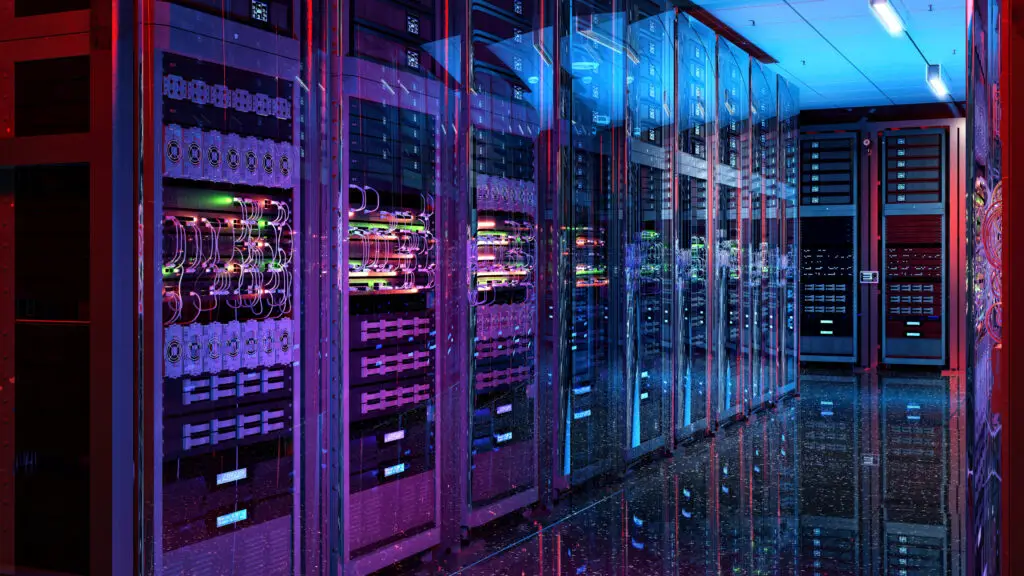
To visualize this scale, consider a single Nvidia GB200 NVL72 AI server. A fully configured tower in this system can house up to 17 TB of DRAM and an incredible 547 TB of flash storage. When large-scale AI data centers deploy these by the thousands, the sheer volume of silicon required is almost unfathomable.
Hardware Requirements Overview
| Component Type | Standard AI Server Requirement | Scale of 2028 Projection |
|---|---|---|
| DRAM per Accelerator | 80 GB (2022) | Up to 2 TB (2028) |
| System DRAM (NVL72) | Approx. 17 TB | Significant Multiplier Increase |
| NAND Flash Storage | Over 500 TB per Rack | Exascale Requirements |
Looking Ahead: A High-Stakes Future
As TechTalesLeo, I see this not just as a hardware story, but as the beginning of a new chapter in digital innovation. The hope is that manufacturing advancements in DRAM and flash will accelerate fast enough to keep the AI revolution sustainable. If Dell’s vision comes to pass, the industry must evolve rapidly to prevent a supply crisis that could stall the very progress we are all working to achieve.
At Digital Tech Explorer, we will continue to monitor these trends, providing the insights you need to stay ahead in an increasingly resource-heavy tech world. For more updates on the latest in 2024 releases and emerging tech trends, keep your eyes on this space.