
Navigating the landscape of modern display technology often feels like deciphering a secret code. As we’ve explored here at Digital Tech Explorer, keeping track of the rapid iterations in OLED panel generations from giants like LG and Samsung is no small feat. Fortunately, the tech community has received a much-needed clarity boost. Thanks to recent insights from TFT Central, the roadmap for Samsung QD-OLED gaming monitor technology is finally coming into focus.
Deciphering Samsung QD-OLED Panel Generations
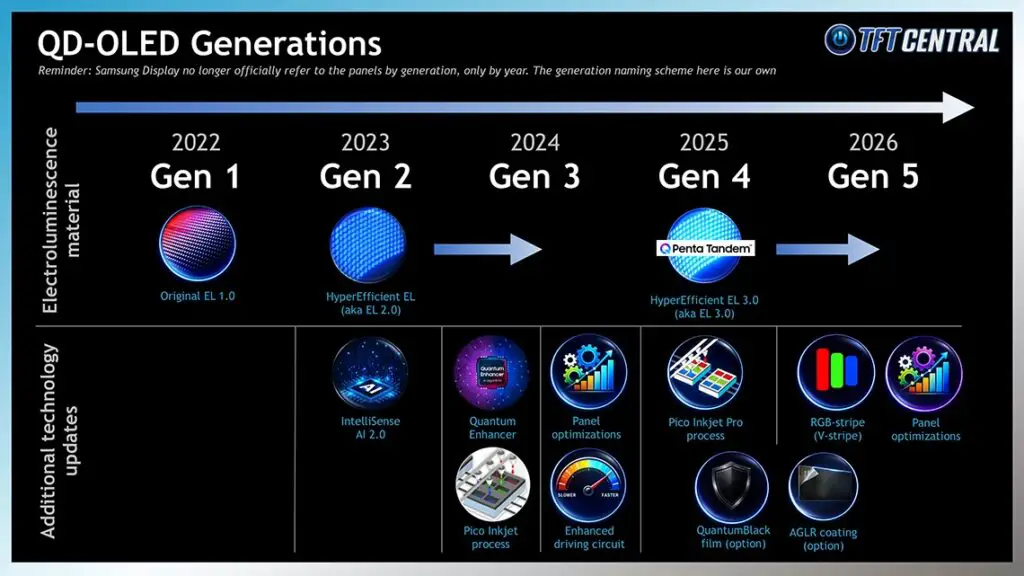
At Digital Tech Explorer, our mission is to help you stay ahead of trends. Understanding the nomenclature of your hardware is the first step. Historically, Samsung utilized a straightforward numerical system, beginning with “Gen 1” panels in 2022. However, the narrative has shifted. With the latest 2024 releases, Samsung has transitioned to a date-based system to denote panel generations, moving away from what enthusiasts expected to be “Gen 5.”
| Generation Year | Naming Convention | Key Technological Milestone |
|---|---|---|
| 2022 | Gen 1 | Initial QD-OLED Launch (e.g., Alienware AW3423DW) |
| 2023 | Gen 2 | Improved Pixel Layout and Peak Brightness |
| 2024 | 2024 Series / Gen 3 | HyperEfficient EL 3.0 & Enhanced Durability |
This change in naming, combined with various monitor manufacturers applying their own marketing labels, can create a “tech fog.” Despite the marketing spin, the core QD-OLED technology continues to evolve in ways that matter most to gamers and professionals alike.
Material Science: Electroluminescence and Longevity
As a storyteller in the tech space, I find the “under the hood” advancements the most compelling. The real story isn’t just in the resolution; it’s in the electroluminescent material—the organic heart of the OLED that produces light. Samsung is now deploying its third iteration of this material, marketed as HyperEfficient EL 3.0.
While mainstream marketing often pushes 8K or 4K resolution and peak brightness, Samsung has pivoted toward a critical consumer pain point: durability. According to technical data, each successive generation of this material has effectively doubled its resistance to degradation.
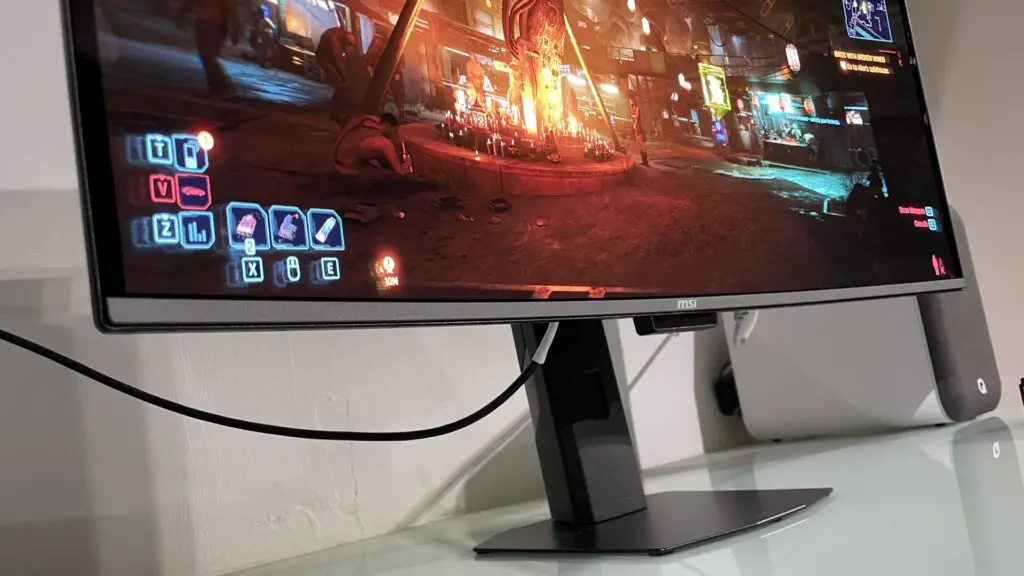
This implies that the latest 3.0 material is theoretically four times more durable than the pioneer panels found in 2022 models, such as the Alienware AW3423DW. For those of us who remember the early days of gaming OLED monitors, this leap in stability is a game-changer.
The Burn-In Question: Is Your Investment Safe?
Burn-in remains the “elephant in the room” for any prospective OLED buyer. It is vital to clarify that a fourfold increase in material durability does not automatically equate to a 400% increase in total lifespan before artifacts appear. However, these hardware refinements offer significant peace of mind. By optimizing how light is produced, Samsung reduces the heat and stress on individual pixels.
For the developers and tech enthusiasts we serve here at Digital Tech Explorer, these advancements mean that the trade-off between stunning visual fidelity and long-term reliability is shrinking. Whether you are interested in 3D gaming or high-end color grading, the 2024 QD-OLED panels represent a more mature, reliable version of the tech we fell in love with two years ago.
Navigating the intricacies of Samsung QD-OLED panels is now much easier thanks to these standardized guides. As we look toward future AI acceleration in display processing, having a solid foundation in the physical panel technology ensures you make an informed decision for your next desk upgrade.
Disclaimer: All content on Digital Tech Explorer is for informational and entertainment purposes only. We do not provide financial or legal advice. Some of the links in this article are affiliate links, meaning we may earn a commission at no additional cost to you.