
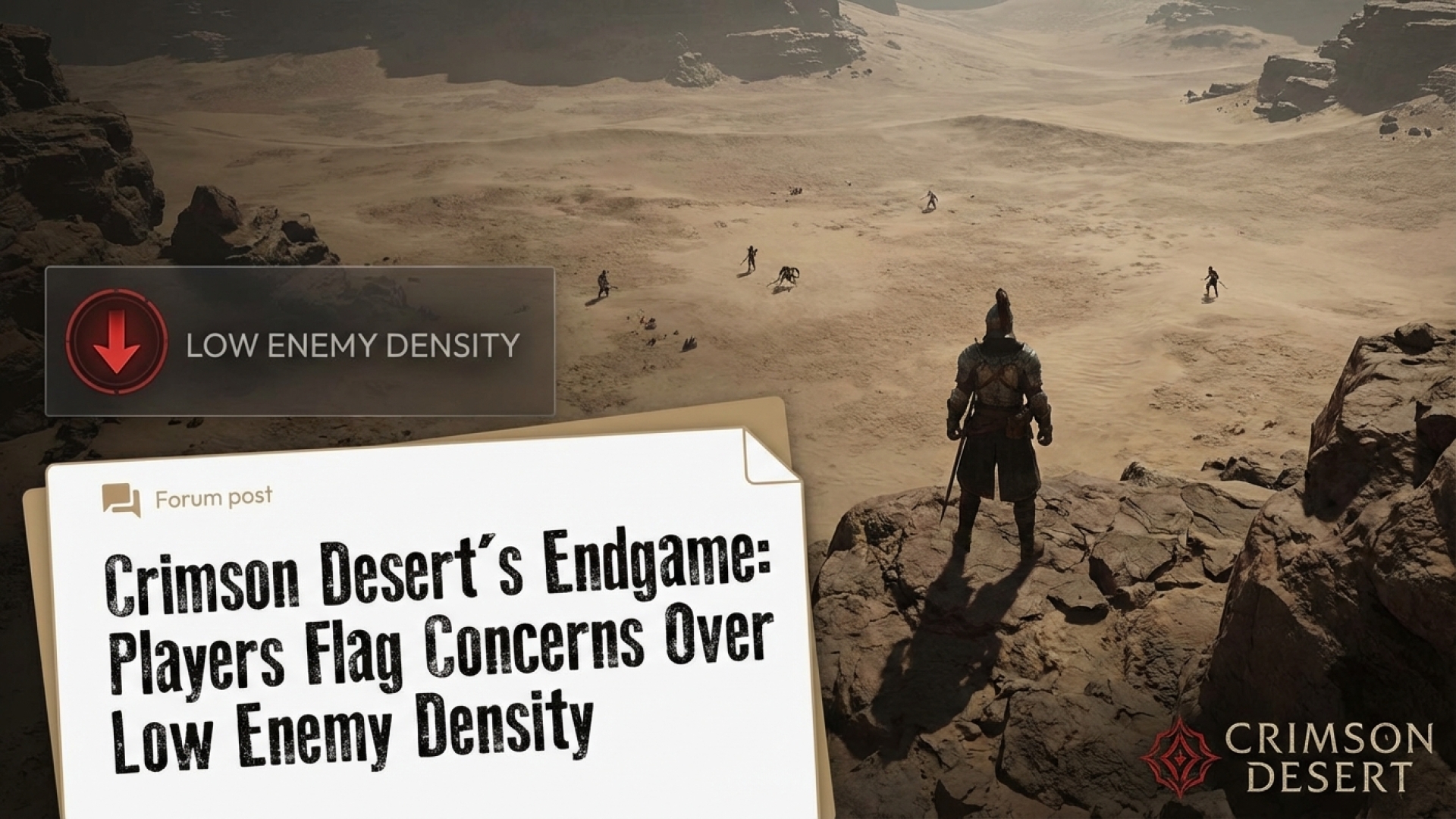
In the sprawling, visually arresting world of Pywel, the first few hours of Crimson Desert feel like a masterclass in atmospheric immersion. As our team at Digital Tech Explorer dove into the mechanics, something became strikingly apparent: the silence isn’t just atmospheric—it’s occasionally absolute. While exploring the rugged terrain, you might find a few bandits scattered across the plains or a solitary bear lurking in the treeline, but the frequency of these encounters drops off significantly as you progress.
The primary combat loops are centered around outposts and camps. Liberating these strongholds for the people of Pywel is satisfying initially, but once the land is “safe,” the gameplay experience begins to shift. For those of us looking for a sustained challenge in the gaming endgame, the lack of respawning threats presents a technical hurdle that dampens the thrill of the hunt.
The Sparse Enemy Problem: A Technical Analysis of the Endgame
As players approach the endgame, the peace and tranquility of the world come at a significant cost to the core gameplay loop. This “peace” translates to a dried-up pool of enemies, resulting in long stretches of travel without combat and a lack of opportunities to engage with the PC games’ deeper mechanics.
This sentiment has been echoed across the community. Reddit user GullibleTerm3909 highlighted the issue, noting they played for six hours and only encountered two brief fights that lasted less than ten seconds. In my own 100+ hours of playtime, I’ve noticed the same pattern. While the exploration is top-tier, the lack of random ambushes while gathering materials or hunting makes the world feel less like a dangerous frontier and more like a curated museum.
Impact on Skill Progression and Abyss Artifacts
The scarcity of enemies isn’t just a pacing issue; it directly impacts the Abyss Artifacts and Challenges systems. Most challenges require specific combat actions—such as assassinating a set number of targets or blocking arrows. Without consistent enemy spawns, these objectives become nearly impossible to complete.
Furthermore, Abyss Artifacts are the lifeblood of the skill tree and weapon upgrades. Because these are largely obtained through combat, a lack of “baddies” creates a bottleneck for players looking to max out their gear. With three characters to manage and gear to refine, the math simply doesn’t add up if the enemies don’t return to the map.
| Feature | Current Crimson Desert State | Standard Open-World Expectation |
|---|---|---|
| Enemy Respawn | Limited to specific events/areas | Timed or distance-based respawns |
| Fort Reclaming | Stays cleared once liberated | Factions attempt to retake territory |
| Resource Farming | Relies on finite encounters | Infinite through random encounters |
| World Density | Sparse in endgame regions | Dynamic difficulty and density scaling |
Looking for Solutions: Lessons from the Classics
Looking back at titles like Skyrim, we see a blueprint for maintaining world engagement. By allowing bandit camps to respawn and implementing random world events, the game stayed alive for years. For Crimson Desert to maintain its momentum, Pearl Abyss may need to look into dynamic faction systems where enemies attempt to reclaim lost forts.
At Digital Tech Explorer, we believe in the potential of this title. The foundations of the combat and the world-building are exceptional. With a few tweaks to enemy density and world persistence, the developers could transform a beautiful, quiet landscape back into the thrilling, dangerous world that Kliff and his mercenaries deserve to inhabit.
For more in-depth reviews and the latest in hardware and software innovation, stay tuned to TechTalesLeo’s latest updates right here on Digital Tech Explorer.