
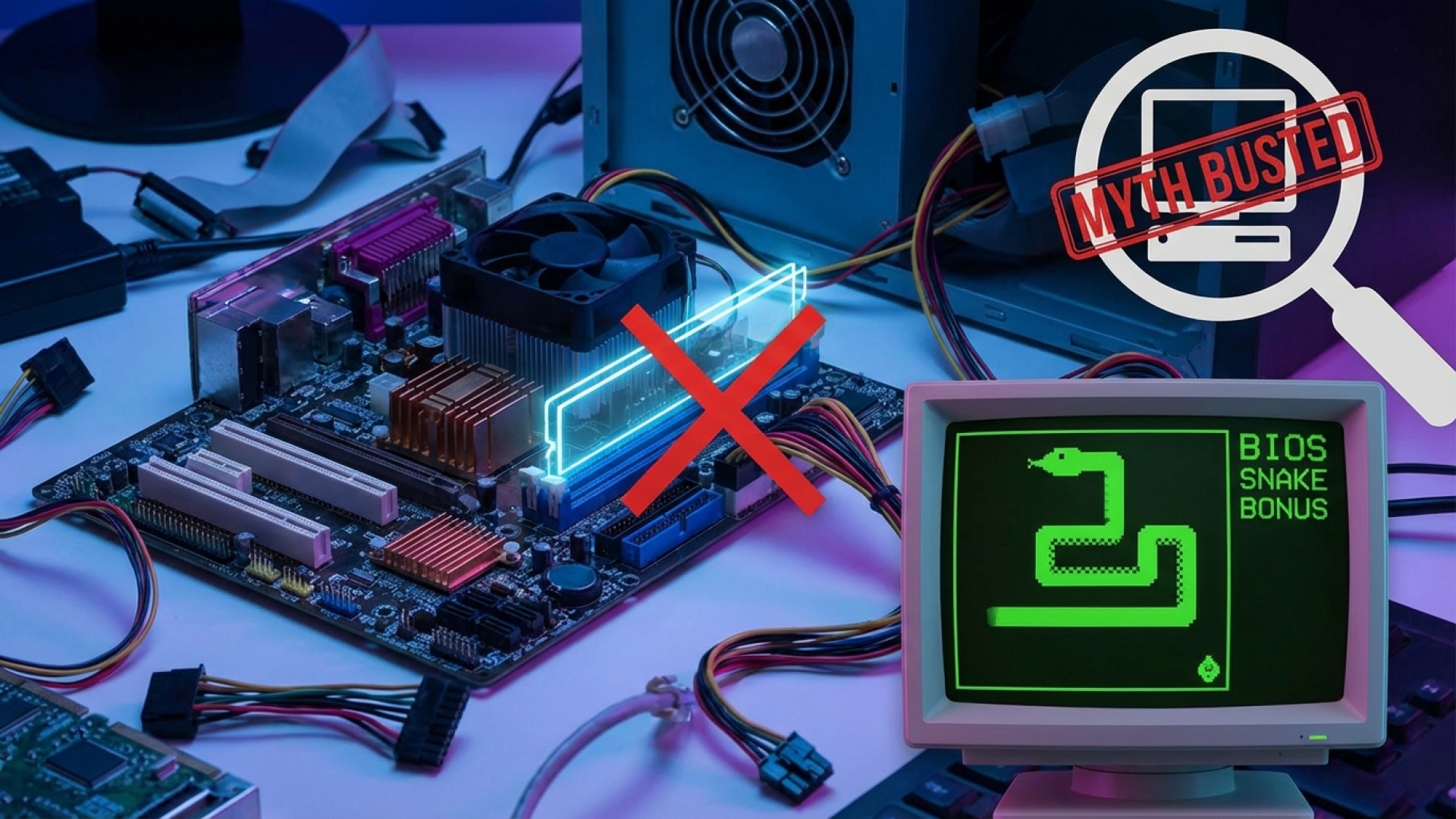
In an era where the memory crisis continues to keep high-performance DRAM just out of reach for many builders, most of us are squeezing every last megabyte out of our current setups. But here at Digital Tech Explorer, we love a good “what if” scenario. A fascinating investigation by the YouTube channel PortalRunner recently caught our eye, posing a radical question: Is it actually possible to run a PC without any system memory at all?
As TechTalesLeo, I’ve seen some wild hardware workarounds, but this experiment dives deep into the architecture of how our machines think. The short answer? It isn’t pretty. After realizing that a new editing server would demand a fortune in SSD storage and DDR5 RAM, PortalRunner set out to see just how low that memory floor could go.
The Great Memory Swap: Experiments and Failures
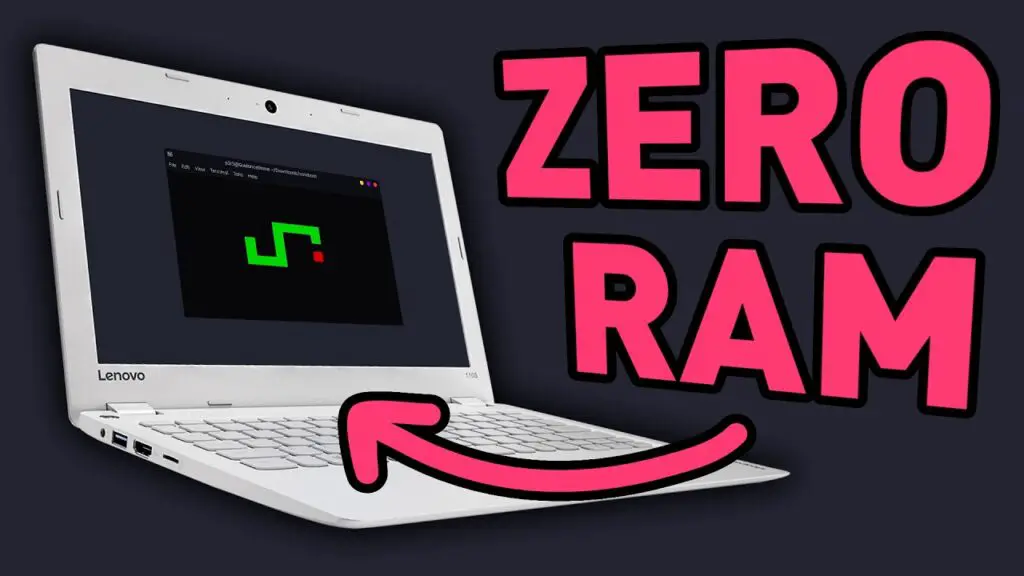
The journey began with software manipulation. By tweaking Linux boot parameters, the goal was to restrict system memory to a tiny 256 MB. The system, predictably, refused to wake up. It wasn’t until the limit was bumped to 446 MB—supported by 4 GB of swap space on a SATA SSD—that the machine finally sputtered to life.
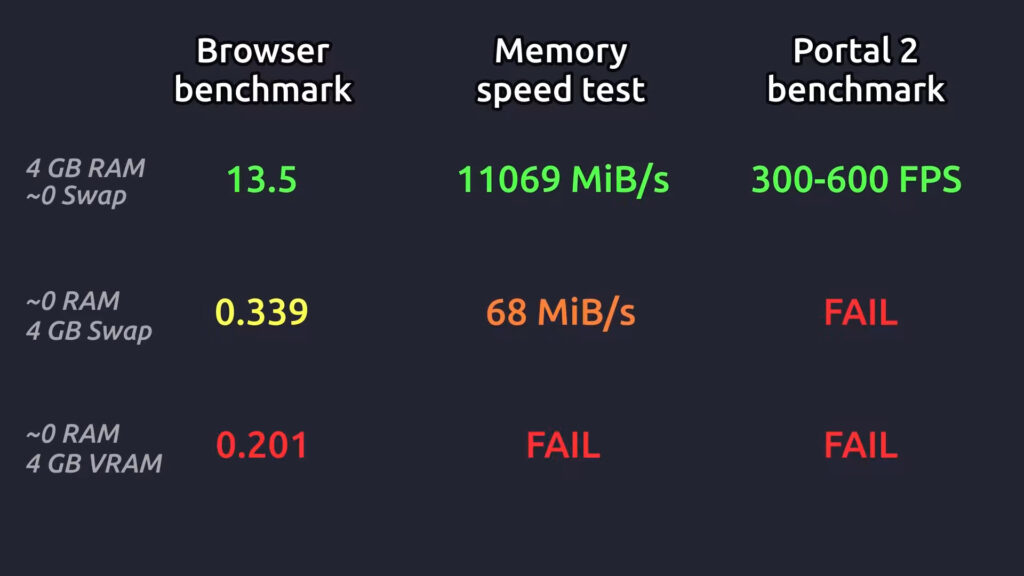
However, “life” is a generous term here. The performance trade-offs were staggering, as shown in the table below:
| Experiment | Method | Result |
|---|---|---|
| 1. Linux Boot Mod | 446MB DRAM + SSD Swap | Extremely slow; 68 MiB/s memory access vs 11,069 MiB/s control. |
| 2. VRAM Substitution | GTX 1660 Super Swapfile | Frequent kernel crashes; impractical for any real-world use. |
| 3. CPU Cache Only | BIOS Mod (No DRAM) | Ran a Snake clone via serial port; system froze without BIOS data. |
During the first test, the browser benchmark was virtually unusable, and Portal 2—a staple in gaming history—refused to even launch because Steam couldn’t find enough breathing room to initialize.
Hacking the GPU and the CPU Cache
The innovation didn’t stop there. The next phase involved treating graphics card VRAM as a surrogate for system memory. Using a modded swapfile on a GTX 1660 Super, the team attempted to force the OS to rely on the GPU. While clever, Linux simply isn’t designed to handle its primary processes this way, leading to a cascade of crashes and a browser experience that felt like using dial-up in a blizzard.
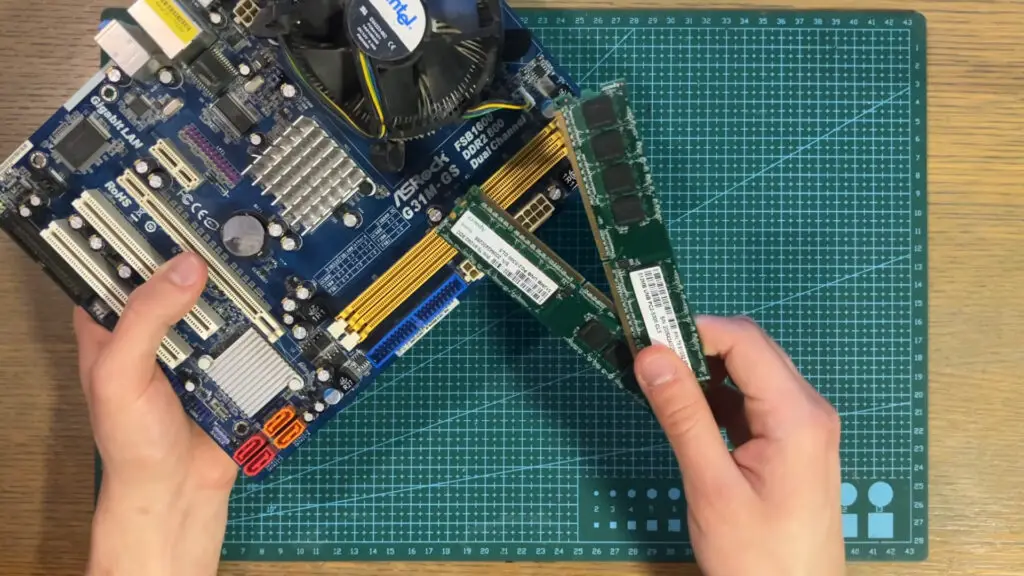
The most extreme attempt involved a BIOS modification to bypass DRAM detection entirely. By forcing an old Intel chip to rely solely on its internal CPU cache, PortalRunner managed to get a “working” output. The result? A basic Snake clone transmitted over a serial port. It’s a technical marvel, but it proves that without a dedicated memory pool, the “computer” is essentially a high-tech calculator.
The Verdict: Why RAM Still Reigns Supreme
This deep dive into hardware constraints confirms a fundamental truth for any developer or enthusiast: RAM is the indispensable heartbeat of a modern system. While these experiments are incredible stories of digital persistence, they aren’t going to solve the memory crisis for the average consumer.
At Digital Tech Explorer, our mission is to help you navigate these complex hardware realities. Whether you’re interested in AI acceleration or building a budget gaming rig, understanding the “why” behind your components is key to making informed decisions.
Affiliate Disclaimer: Some of the links on Digital Tech Explorer are affiliate links. This means we may earn a commission if you click through and make a purchase, at no additional cost to you. Our recommendations are based on thorough research and personal experience.
For more tech stories and in-depth analyses, visit the TechTalesLeo author page and stay tuned for our latest hardware reviews.