
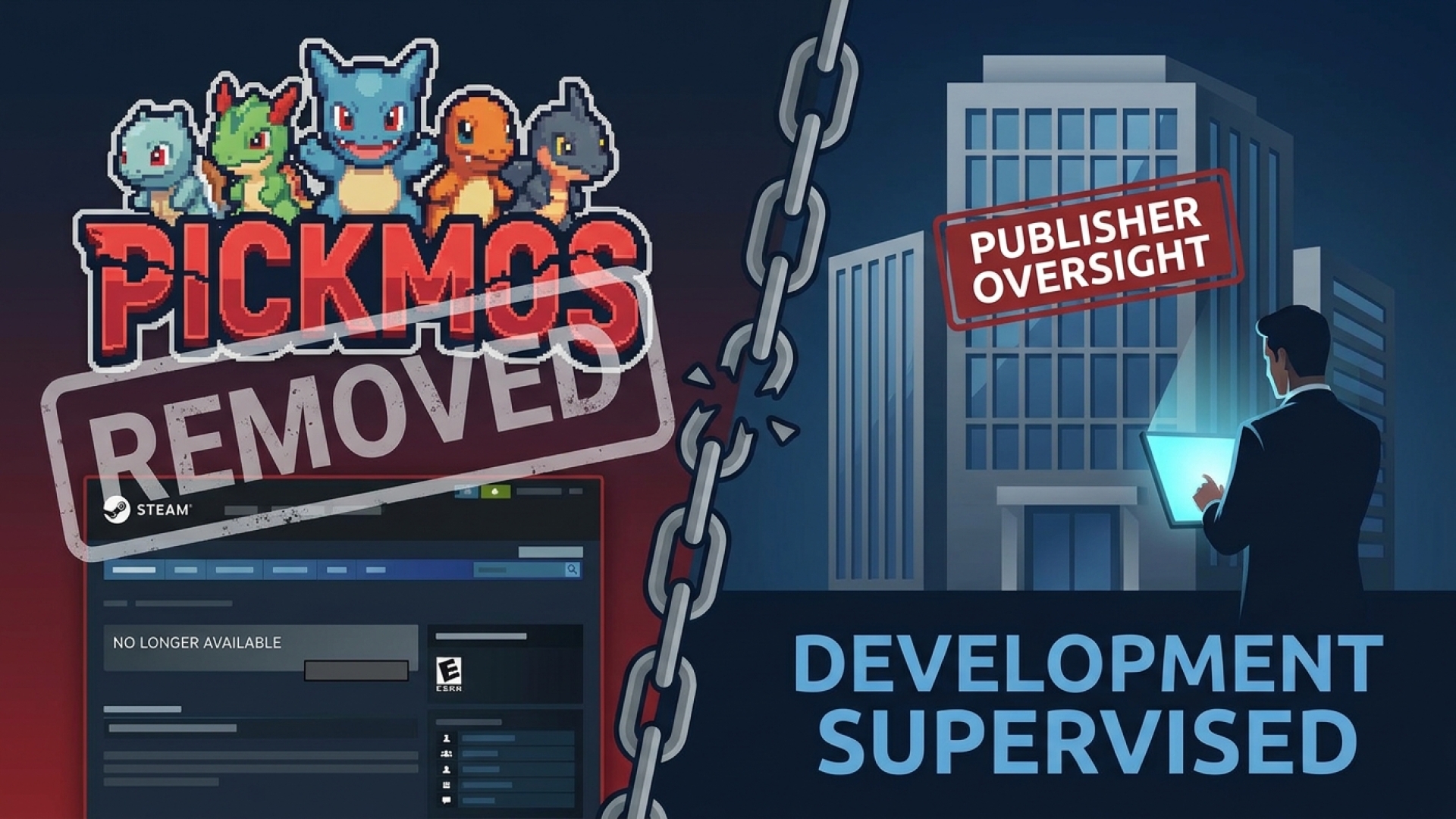
Just days after the Palworld imitator Pickmon rebranded to Pickmos—a move the developer claimed was meant “to better align with our brand identity”—the title has vanished from Steam. It appears that the developer, PocketGame, may have faced a stern reprimand from its own publisher, NetworkGo, as the game’s controversial presence reached a breaking point.
Publisher Intervention and the Digital Vanishing Act
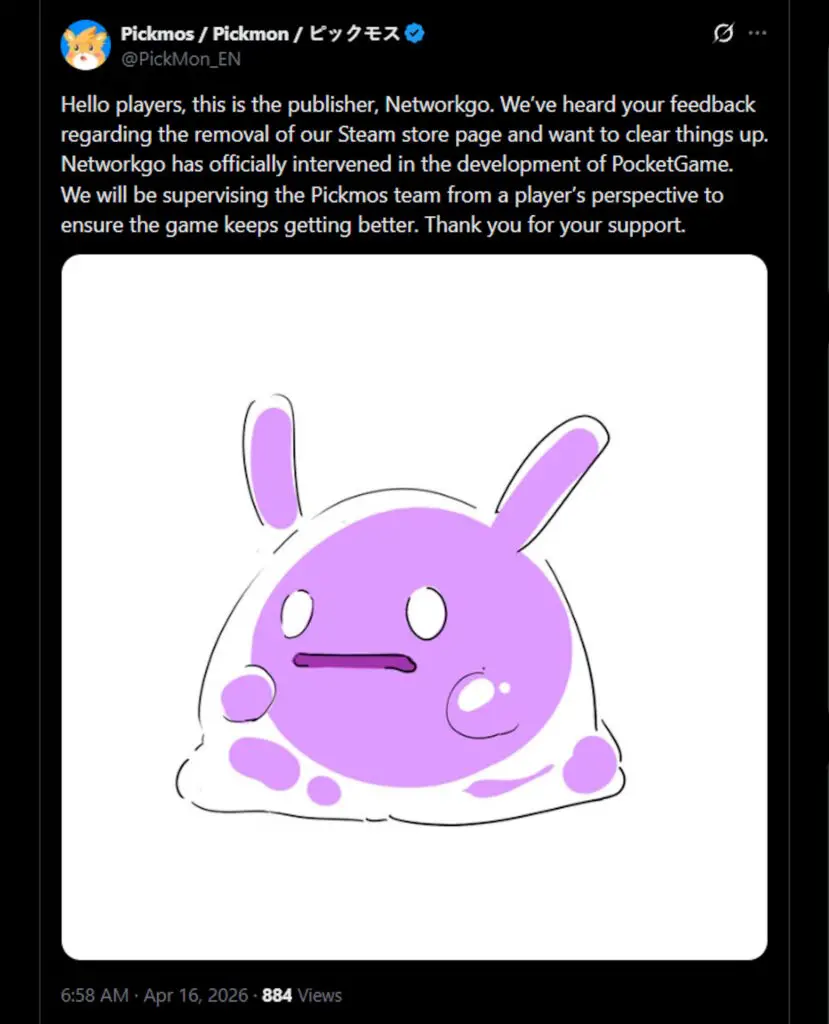
In a surprising turn of events, the rebuke didn’t come from a platform holder like Valve or a litigious giant like Nintendo, but from NetworkGo, the game’s publisher. In a recent statement on X, the publisher suggested that the recent turmoil was a result of the developer’s mismanagement.
According to the publisher’s announcement, NetworkGo has officially intervened in the development process. They stated that they will now be “supervising the Pickmos team from a player’s perspective” to ensure the project meets a higher standard. This move follows the abrupt removal of the game’s Steam store page.
The situation became even more convoluted when PocketGame posted on the same social media account, acknowledging that creative control had shifted. The developer noted that they are currently revising the game to ensure a “controversy-free experience” and will only re-release the title once the publisher grants final approval. For those following gaming news here at Digital Tech Explorer, this level of public publisher-developer friction is a rare sight.
The Controversy: When Imitation Isn’t Flattery

The core of the controversy surrounding Pickmos stems from its blatant aesthetic choices. While Palworld has faced its own legal hurdles regarding creature designs, many critics argue that Pickmos went several steps further. The game has been described as a “shameless” imitation of Pokémon, with some assets appearing to be barely modified versions of characters from The Legend of Zelda, Overwatch, and even Palworld itself.
This “copy-paste” approach to game design is what led the community to label the project a visual knockoff. Rather than innovating within the monster-taming genre, the developers seemed content to borrow heavily from established PC games and pop culture icons, leading to the current legal and PR nightmare.
“Mr. Fakemon” and the Trademark Defense
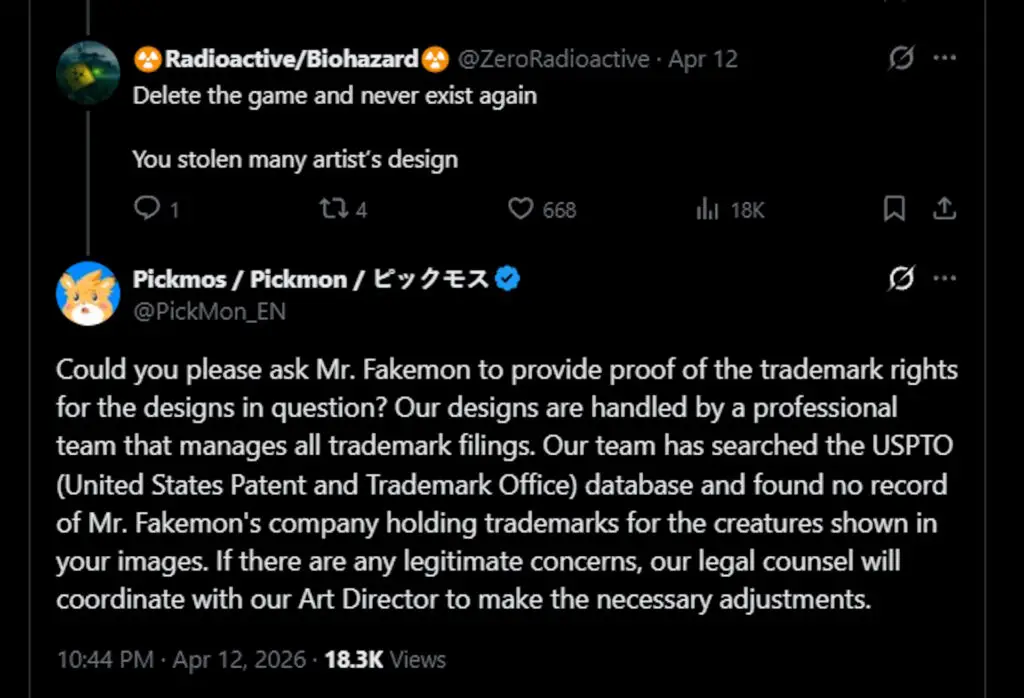
Last week, the development team attempted to quell the fire by changing a single letter in the title. However, the move backfired as they simultaneously insisted the creatures would still be called “Pickmon.” The absurdity reached a peak when the studio responded to allegations of stealing fan art.
In a bizarre social media exchange, the studio asked “Mr. Fakemon”—a reference to the “fakemon” subreddit dedicated to fan-created Pokémon—to provide proof of trademark rights for the designs. The studio claimed their “professional team” had searched the USPTO database and found no records of these fan-created designs, seemingly ignoring the fact that the designs were heavily based on existing intellectual property they didn’t own either.
As TechTalesLeo, I find this “Olympian ballsiness” to be a fascinating case study in modern indie development. Whether it’s a language barrier or a misunderstanding of copyright law, the defense of “we checked the database and didn’t see your name on it” rarely holds up when the art is a spitting image of a global franchise.
The Road Ahead: Will Pickmos Return?
The current narrative suggests that the “adults have entered the room.” By claiming the publisher is now supervising the “unsupervised” developers, NetworkGo is attempting to salvage the project’s reputation. It’s a classic move to defuse legal tension: blame a rogue team and promise a curated, “clean” experience for the future.
While evidence of Pickmos remains on SteamDB, the game is currently inaccessible to the public. For enthusiasts tracking 2024 releases and beyond, the question remains whether a total art overhaul can save a project already stained by controversy. We will continue to monitor the situation here at Digital Tech Explorer to see if this “controversy-free” version ever sees the light of day.

Disclaimer: All content on Digital Tech Explorer is for informational and entertainment purposes only. Some links may be affiliate links, meaning we earn a commission at no extra cost to you.