
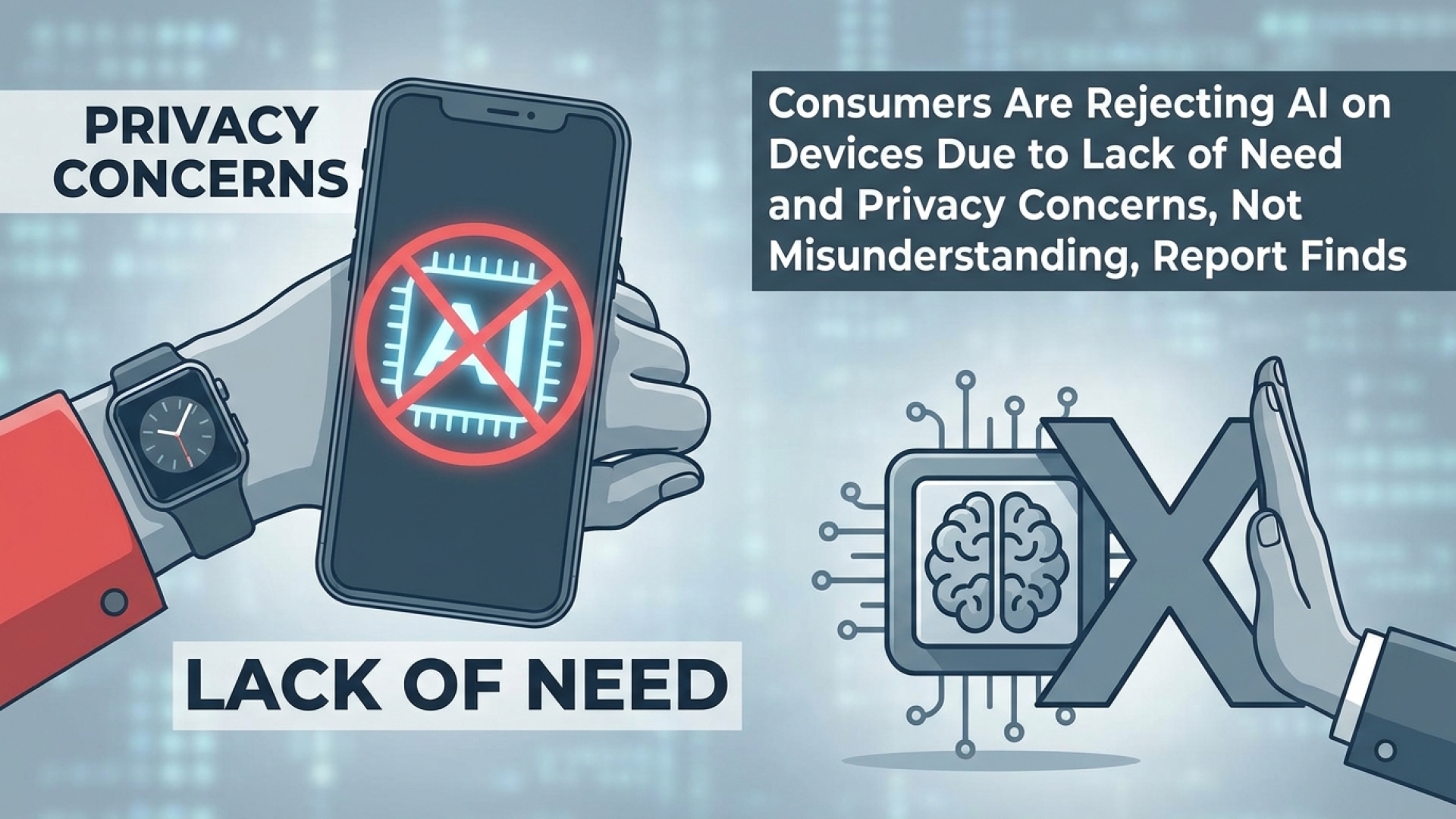
At Digital Tech Explorer, we often hear industry executives and Artificial Intelligence proponents suggest that public hesitation toward new tech stems from a lack of technical understanding. However, as a platform founded by a software engineer who values real-world testing over marketing hype, we find that the data often tells a different story. A new report from consumer research firm Circana indicates that a significant portion of users aren’t avoiding AI-integrated hardware because it’s too complex—they simply don’t find it necessary.
Key Reasons for Consumer Reluctance Towards AI

The Circana report highlights several primary hurdles preventing consumers from embracing AI-enabled devices. Our analysis of the study shows that two-thirds of those opposed to these features believe their current hardware already performs all necessary tasks efficiently. This suggests that the current “AI boom” has yet to provide a “killer app” or a compelling reason for the average user to upgrade.
| Reason for AI Reluctance | Percentage of Respondents |
|---|---|
| Current devices work fine/No need for AI | 66% |
| Privacy and Data Security concerns | 59% |
| Unwilling to pay a premium for AI features | 43% |
| Technology is too complicated to use | 15% |
Another critical factor is privacy. With 59% of detractors citing security concerns, there is a deep-seated apprehension regarding how personal data is harvested and utilized by machine learning systems. Furthermore, in an era of rising costs, 43% of respondents are unwilling to pay a premium for AI functionality, especially in the smartphone and laptop markets where budgets are already stretched.
Perhaps most importantly for us at Digital Tech Explorer, only 15% of consumers cited complexity as a barrier. This directly challenges the industry narrative that the public needs more “education” to accept AI acceleration. It appears consumers understand the tech perfectly well—they just aren’t sold on the value proposition yet.
The Generational Divide in Digital Innovation
While a segment of the market remains skeptical, TechTalesLeo notes that the narrative changes significantly when looking at younger demographics. Digital innovation is often a story of generational shifts. The report revealed that 65% of all respondents expressed interest in at least one AI-integrated device, but that number jumps to a staggering 82% for the 18-24 age group.

This trend is familiar in the tech world. Whether it’s the transition to blockchain or the evolution of 3D gaming, younger users are typically the first to normalize new tools. However, for tech enthusiasts and professionals alike, this divide prompts a necessary discussion about whether we are innovating to solve problems or simply to drive hardware sales.
A Balanced Perspective on AI Implementation
As we navigate the evolving landscape of 2024 releases, it’s clear that the push for pervasive AI is meeting a more discerning public than expected. While some view AI as a “cognitive amplifier,” others see it as an intrusive or unreliable addition to their digital lives. The environmental and economic resources required for massive GPU-driven AI development also remain a point of contention among the tech-savvy.
The Circana findings suggest that the most engaged users—those who follow Artificial Intelligence closely—are often the most critical. At Digital Tech Explorer, we believe that for AI to move from a “buzzword” to a “staple,” developers must prioritize transparency, address privacy concerns, and demonstrate tangible utility that goes beyond what our current, reliable devices can already achieve.
Disclaimer: All content on Digital Tech Explorer is for informational and entertainment purposes only. We do not provide financial or legal advice. Some of the links on our platform may be affiliate links, which support our research at no additional cost to you.