The Linux gaming landscape is shifting rapidly, and here at Digital Tech Explorer, we’ve been tracking the emergence of new alliances designed to streamline the open-source experience. Recently, several prominent Linux gaming distributions announced the formation of the Open Gaming Collective (OGC), an initiative aimed at improving the shared ecosystem. However, one of the most respected names in the performance-tuning world, CachyOS, is conspicuously absent. Its founder, Peter Jung (known in the community as ptr1337), recently shared the specific reasons why they’ve chosen to chart their own course.
Why CachyOS Is Skipping the Open Gaming Collective
For many developers and gaming enthusiasts, a collective seems like a natural evolution. Yet, Jung explains that CachyOS didn’t see a clear value proposition in joining. A primary factor is that “handheld stuff is not our major focus.” While handhelds are a massive trend in the hardware world right now, CachyOS remains dedicated to a broader scope of high-performance computing.
Beyond focus, Jung expressed deeper concerns regarding the structure of the OGC itself. He voiced apprehension that the initiative could devolve into a “bureaucratic loophole,” a sentiment he feels has already begun to manifest. From his perspective, the launch appeared to be an “emergency rushed thing,” designed primarily to assist Bazzite in securing new kernel maintainers following recent technical leadership shifts.
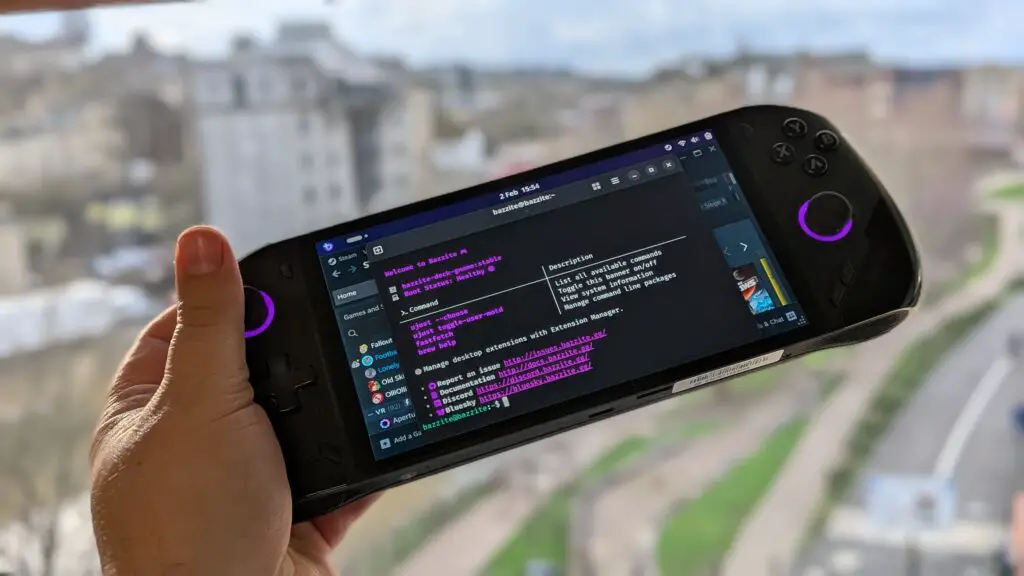
The Bazzite distribution running on a OneXPlayer handheld—a core focus of the OGC.
Concerns Over Playtron and Transparency
At Digital Tech Explorer, our mission is to provide transparency and real-world testing. This aligns with Jung’s hesitation regarding Playtron, another member of the OGC. Playtron has faced significant community pushback due to its history of integrating cryptocurrency features into the operating system. Furthermore, there have been concerns regarding the terms of service for their handheld hardware, specifically relating to non-refundable deposits.
Jung noted that CachyOS prefers not to be associated with projects carrying such controversies. While he hinted at “more reasons” for staying independent, he has chosen to keep those specific details private for the time being, focusing instead on maintaining the integrity of the CachyOS project.
The OGC Vision: Unified Kernels and Shared Solutions
Despite the critique from CachyOS, the Open Gaming Collective has a clear set of goals. They aim to reduce redundancy by encouraging different distributions to share solutions rather than solving the same problems in isolation. A major part of this strategy is the shared OGC kernel. The hope is that by pooling resources, their technical patches will eventually be integrated into the main Linux kernel, benefiting the entire community.
CachyOS: The Path of Independent Innovation
For those looking for “blazingly fast” performance, CachyOS remains a top-tier Arch-based choice. While it shares some DNA with other distributions, its optimization for speed makes it a favorite for power users who want to push their GPU and CPU to the limit.
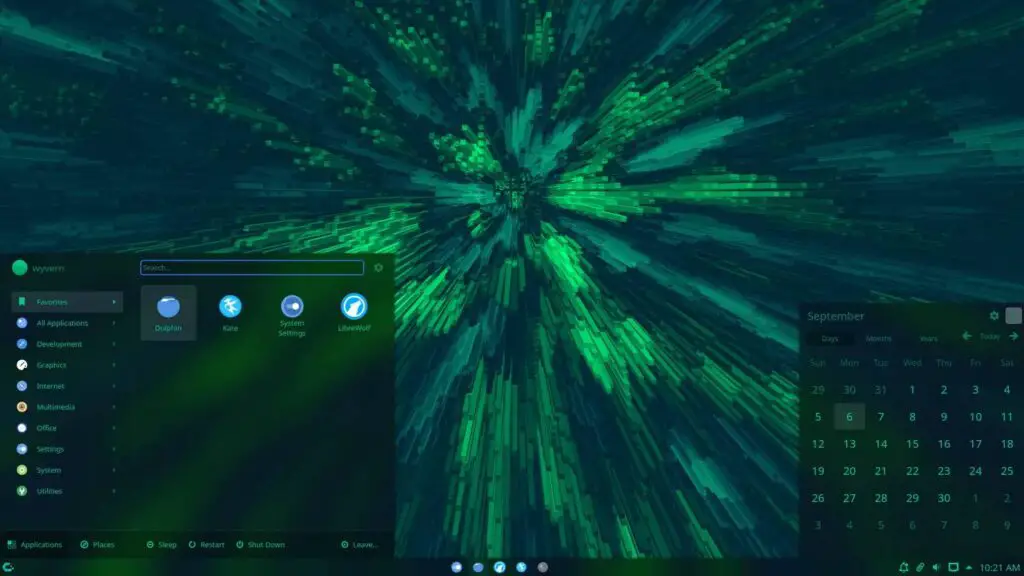
CachyOS offers a polished, high-performance desktop environment without the need for collective oversight.
Collaboration Without Strings
Jung clarified that staying out of the collective doesn’t mean CachyOS isn’t collaborative. “We’ve been working together with ChimeraOS and Asus-Linux for more than a year,” he explained. He highlighted that much of the testing for Inputplumber—a tool vital for handheld controller support—actually originated within the CachyOS Handheld Edition.
In the eyes of the CachyOS team, a formal “collective with strings attached” isn’t a prerequisite for progress. While the OGC includes desktop-focused projects like Nobara Linux (created by Proton-GE developer GloriousEggroll), CachyOS believes that the current decentralized model of open-source development already provides the freedom and efficiency they need to stay ahead of the curve.
As we continue to explore the evolving world of PC games and open-source innovation, the choice between unified collectives and independent specialists remains a fascinating story. At Digital Tech Explorer, we’ll be watching both paths closely to see which delivers the best experience for the user.