
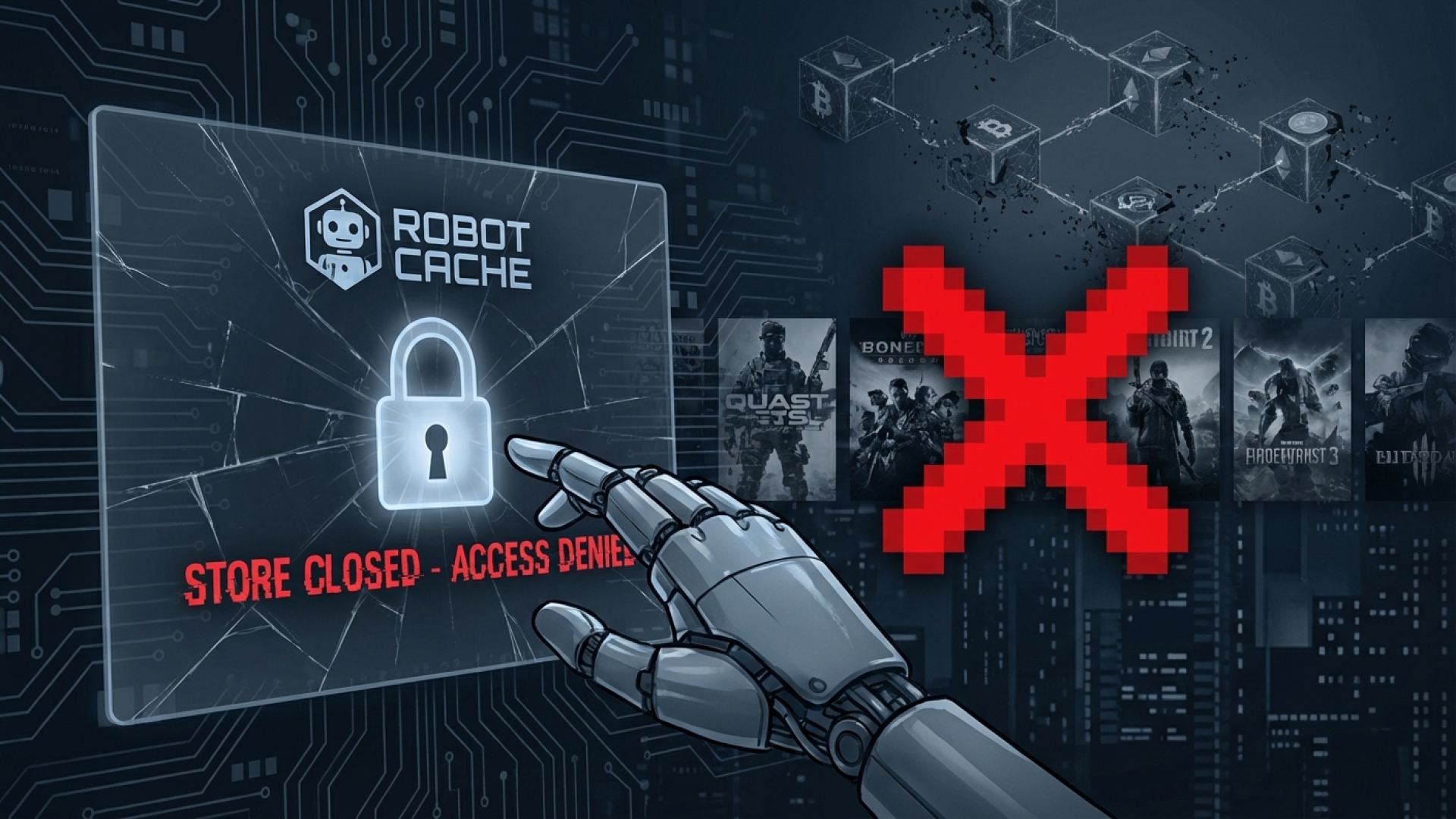
At Digital Tech Explorer, we closely monitor the intersection of blockchain and software distribution. While the dream of true digital ownership has long been a talking point in dev circles, the reality often falls short of the hype. The latest example of this struggle is the reported collapse of Robot Cache, a storefront that promised to revolutionize how we buy and sell PC games.
The unique concept behind Robot Cache aimed to provide a digital experience similar to Steam but with a game-changing twist: allowing users to resell their digital games. Despite its innovative pitch back in 2018, the platform struggled to find its footing in a crowded market. Now, a Reddit thread from user kallreven alleges that this blockchain-powered storefront is finally shutting its doors for good.

The Shutdown Announcement and the DRM Trap
A screenshot of an email sent to users, purportedly from the Robot Cache Team, delivers the grim news: “Thank you sincerely for joining us on this journey. While we gave it everything we had, we weren’t able to attract the user base and sales traction needed to keep the store running.”
According to the communication, the store will officially close within 30 days. After this window, the gaming platform will become inaccessible. This is where the story takes a turn for the worse for consumers: once the servers go dark, games purchased through the platform will become unplayable—even if they are already downloaded. This serves as a stark reminder of the risks associated with centralized Digital Rights Management (DRM). Without the platform’s verification system, the “ownership” promised by the blockchain becomes functionally void. Furthermore, any “iron”—the site’s proprietary digital currency—will vanish along with the storefront.
Operating Under Radio Silence
As of this writing, there has been no official public statement on the main Robot Cache website. However, the signs of decay have been visible for months. TechTalesLeo notes that the platform’s official X (formerly Twitter) account has been dormant since 2023, and their Discord server has reportedly dwindled to a single active moderator.
Insights from the community paint a picture of internal abandonment. A moderator known as “eazykiller” shared on Discord, “I think none of the original team is still on the company… Shortly after launch, most of them quit and not even we mods got any communication from the company side since years.” This lack of transparency is a major red flag that our team at Digital Tech Explorer often warns enthusiasts to watch for.

A Financial Cautionary Tale
Founded by inXile head Brian Fargo, Robot Cache initially sought to raise $15 million through a token generation event. However, it reportedly fell $5 million short of its goal. Even high-profile partnerships with AMD couldn’t save the platform from a staggering lack of user engagement.
The financial reality disclosed in a 2025 investor report is perhaps the most shocking aspect of this story. The platform’s revenue vs. deficit numbers highlight the massive scale of the failure:
| Metric | Reported Figure (2024/2025) |
|---|---|
| Annual Game Software Revenue (2024) | $532 |
| Accumulated Deficit | Over $30 Million |
| Status of Social Channels | Inactive since 2023 |
| Operating Window | 30 Days until Closure |
With only $532 in game sales revenue for the entire year of 2024, it is clear that the platform’s vision did not resonate with the broader gaming community. For developers and tech enthusiasts, the fall of Robot Cache serves as a significant case study in the volatility of Web3-based retail and the vital importance of sustainable user acquisition. Stay tuned to Digital Tech Explorer for more updates on how emerging technologies continue to reshape—and occasionally disrupt—the digital landscape.