
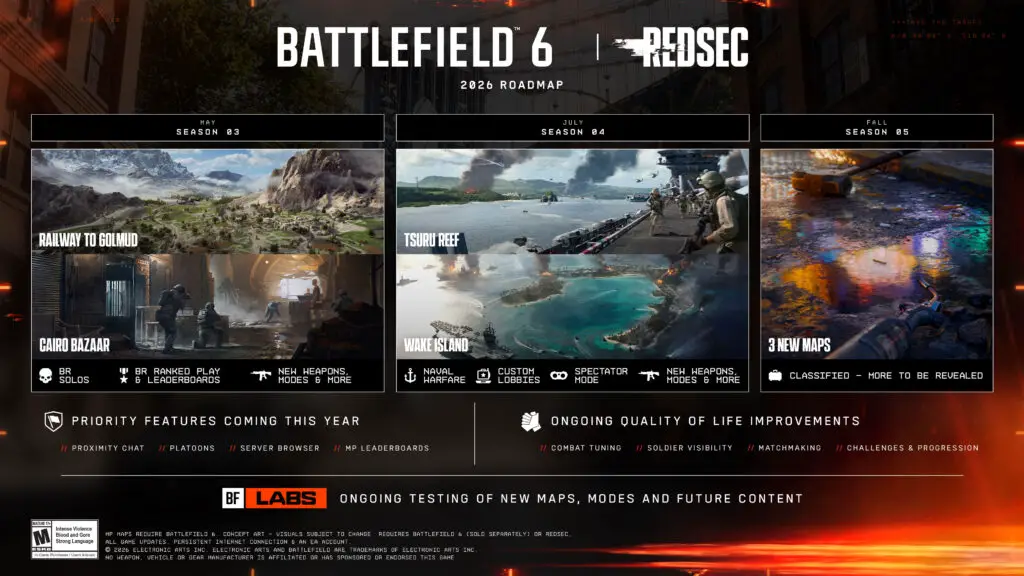
This week marks a significant shift in the narrative surrounding Battlefield 6. As a storyteller and tech enthusiast at Digital Tech Explorer, I’ve navigated many digital launches, but the recent announcement from EA regarding seven new maps arriving this year is particularly striking. These aren’t just minor additions; we are seeing the return of “legitimately huge” locales. Most notably, naval warfare is making a triumphant comeback, addressing a void in the current rotation of landlocked environments. The planned remake of the fan-favorite Wake Island promises to reintroduce those high-stakes asymmetrical beach invasions, complete with functional aircraft carriers that tech-savvy players have been craving.
When looking at the comprehensive 8-month roadmap, it’s easy to envision a version of Battlefield 6 that demands more of our time. However, a looming question remains for every developer and player: when does this vision become a playable reality? In the world of PC games and software development, the gap between a promise and a patch can feel like an eternity.
The Problem with Fragmented Roadmaps
The trajectory of live service updates presents a unique challenge in digital innovation. Developers often treat exact release dates with the secrecy of proprietary source code. Today, seasons are frequently bifurcated into smaller, nebulous pieces. This leaves the average enthusiast guessing which features are imminent and which are relegated to a mid-season “umbrella” update.
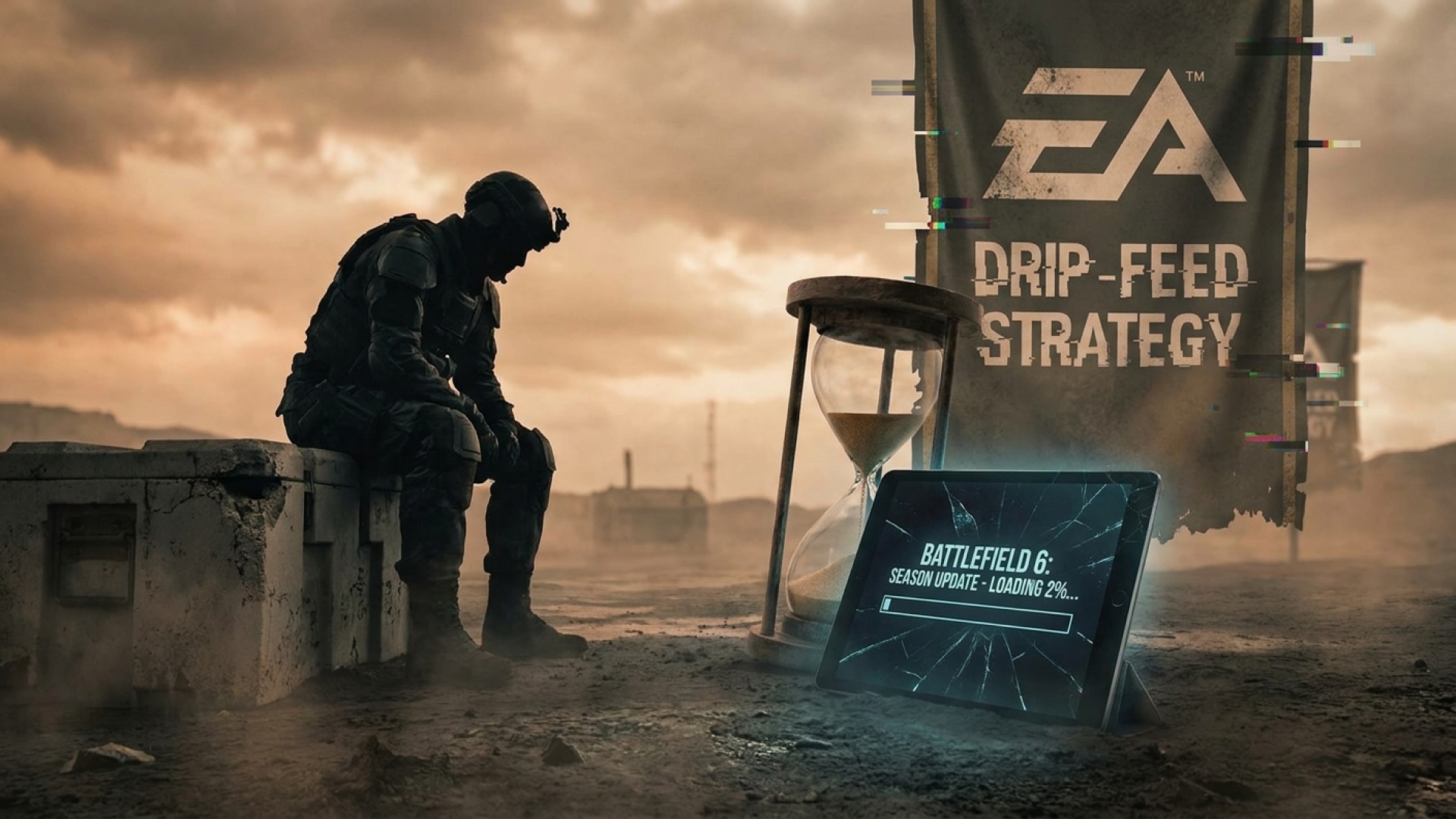
In the context of Battlefield 6, this fragmentation is particularly evident. By splitting seasons into three monthlong mini-seasons—each containing a single gun, an event, or a map—the goal is to maintain constant engagement. However, at Digital Tech Explorer, we’ve observed that this “drip-feed” approach can backfire. Instead of feeling like a living world, the game can feel like it’s struggling to deliver a cohesive experience, making individual updates feel less like milestones and more like minor patches.
| Roadmap Component | Projected Content | Player Impact |
|---|---|---|
| Mini-Season 1 | 1 New Map, 1 Weapon | Initial hype, rapid consumption |
| Mid-Season Update | Themed Event, Cosmetic Drops | Engagement plateaus |
| Seasonal Finale | Naval Warfare/Legacy Maps | Peak player return, “Feature Complete” status |
The Player Experience: A Cycle of Disappointment
Drawing from my background in digital media, I’ve identified a recurring cycle in the 2024 releases landscape that mirrors the current Battlefield sentiment:
- Anticipation: Players read about the vast additions—new maps, features, and modes—and excitement builds.
- Re-engagement: As the new season approaches, players reinstall or update their software.
- Realization: Upon booting Battlefield 6, they find only a fraction of the content is available; the rest is “coming soon” or locked behind battle pass tiers.
- Stagnation: Players test the single new map, but often decide to wait until the season is truly “feature-complete.”
- The Loop: The game is shelved again until the next roadmap announcement, creating a cycle of temporary interest rather than sustained loyalty.
EA appears to operate under the assumption that players are tethered to the game indefinitely. However, the data suggests otherwise. Most gamers don’t have a single “forever game”; they have a rotation of games. When content is spread too thin, they simply move to another title in their rotation that offers a more immediate sense of progression.
Redefining the “Ideal Season”
At its core, a season should function as a free expansion—a significant milestone that acts as a “Welcome Back” beacon for lapsed players. The current paradox is that the best time to play a Battlefield season is right before it ends, when all the content has finally been released. For a platform like Digital Tech Explorer, where we value transparency and thorough research, this setup feels counterintuitive to building a healthy community.

Moving Forward: Make Content Meaningful
Some argue that volume is the solution—that Battlefield simply needs more maps to fill its sub-seasons. While this strategy works for giants like Call of Duty, the real fix lies in delivery. Releasing the promised content at the start of a season makes the occasion meaningful. It transforms a routine update into a genuine event.
As TechTalesLeo, I’ve spent over 80 hours exploring the depths of Battlefield 6. I’m eager for the return of naval combat and the technical complexity of aircraft carrier invasions. But as a consumer in a saturated market, I won’t wait in a cage for DICE to refill the bottle every four weeks. The digital world is vast, and the next great experience is always just a click away.
For more in-depth analyses on software trends and gaming innovation, stay tuned to Digital Tech Explorer.