
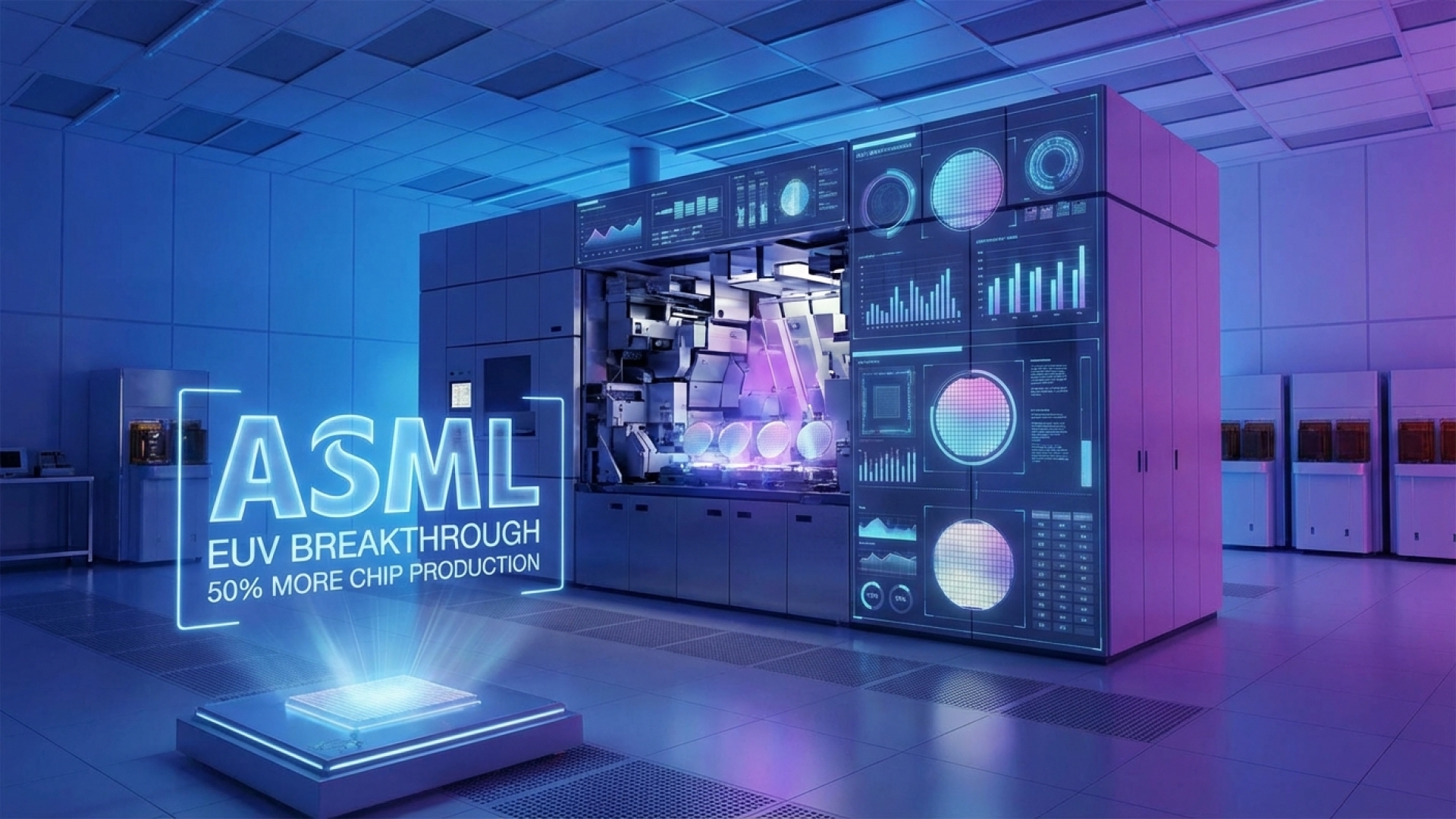
If you haven’t heard of ASML, it’s the company that makes the machines upon which modern computing currently depends. Without ASML, the hardware powering our daily lives would look fundamentally different. Here at Digital Tech Explorer, we keep a close eye on the silicon industry, and right now, ASML is claiming a breakthrough in one of the key bottlenecks for manufacturing cutting-edge processors: a massive boost in light production.
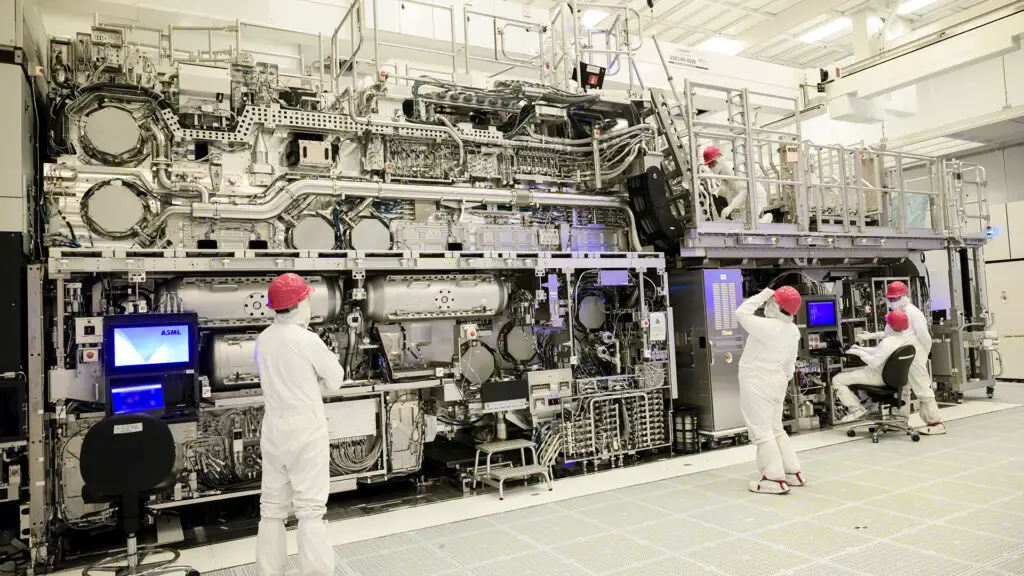
ASML currently maintains a global monopoly on the EUV (Extreme Ultraviolet) lithography market. These massive machines are utilized by industry titans like TSMC and Intel to etch the intricate circuits that define modern processors. To put a complex process into a simple narrative, chips are manufactured by shining intense light through patterned masks onto silicon wafers. By adding a series of chemical treatments, the light “draws” the architecture of the chip onto the silicon surface.
The Science of Precision: Why Wavelength Matters
In the world of digital innovation, size is everything—or rather, the lack of it. The key to advancing performance is making the etched details as small and accurate as possible. This precision is determined by the wavelength of the light being used. The shorter the wavelength, the smaller the features we can etch onto a wafer. This allows engineers to cram more transistors into a single chip, leading to the massive performance gains we see in AI acceleration and high-end gaming.
However, producing and directing enough of this specific light is a monumental engineering challenge. ASML’s machines rely on EUV light, which is notoriously difficult to generate in quantities large enough for mass production.
Directing the Invisible: The Complexity of EUV
Directing EUV light isn’t as simple as using a standard mirror. While visible light bounces easily with minimal loss, EUV is absorbed by almost everything. This means the original source must be incredibly powerful to ensure enough light reaches the silicon after passing through a series of specialized mirrors.
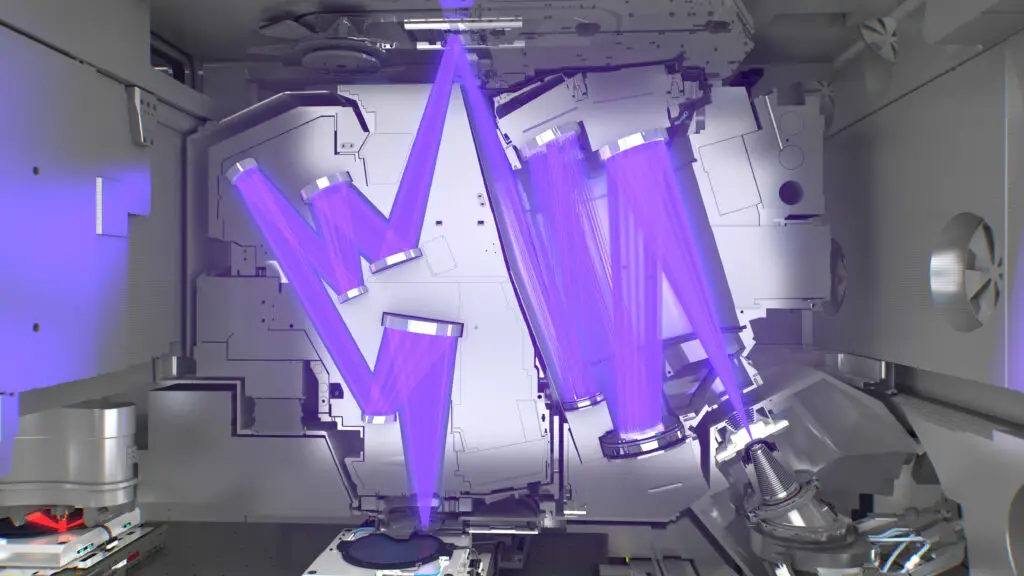
ASML’s current solution is a marvel of engineering: it involves drops of molten tin flying through a vacuum, zapped by high-power lasers twice to create a plasma that emits EUV light. This “preposterous” level of complexity is exactly why ASML has no real competitors; the barrier to entry is simply too high.
The Breakthrough: Boosting EUV Power for 2030
According to reports from Reuters, ASML has achieved a significant milestone in its EUV production technology. By boosting the light source output from the current 600W to a staggering 1,000W, ASML expects to increase chip output by approximately 50%.
This increased power allows wafers to be processed much faster. While it doesn’t necessarily improve the “yield” (the percentage of working chips per wafer), it significantly increases the “throughput” (the total number of wafers completed per hour).
| Metric | Current Standards | New Breakthrough (2030) |
|---|---|---|
| EUV Power Output | 600 W | 1,000 W |
| Wafer Throughput | 220 Wafers/Hour | 330 Wafers/Hour |
| Projected Efficiency | Baseline | +50% Increase |
What This Means for the Future of Tech
For those of us tracking the evolution of AI and high-performance computing, this is a vital development. The computing industry is currently facing massive capacity constraints. However, there is a catch: the transition takes time. ASML expects the target of 330 wafers per hour to be standard by 2030.
Much like the forecasted expansion in memory production, we are several years away from feeling the direct benefits of this technology in our consumer devices. As a storyteller in the tech space, I like to imagine a future where a potential burst in the AI bubble coincides with this massive increase in production capacity. This could lead to a surplus of logic and memory chips, potentially making high-end PC components more accessible than ever.
While that “market glut” might be a bit of a dream for now, ASML’s breakthrough ensures that the roadmap for digital innovation remains on track for the next decade. For more in-depth analyses on the hardware shaping our world, keep exploring here at Digital Tech Explorer.