
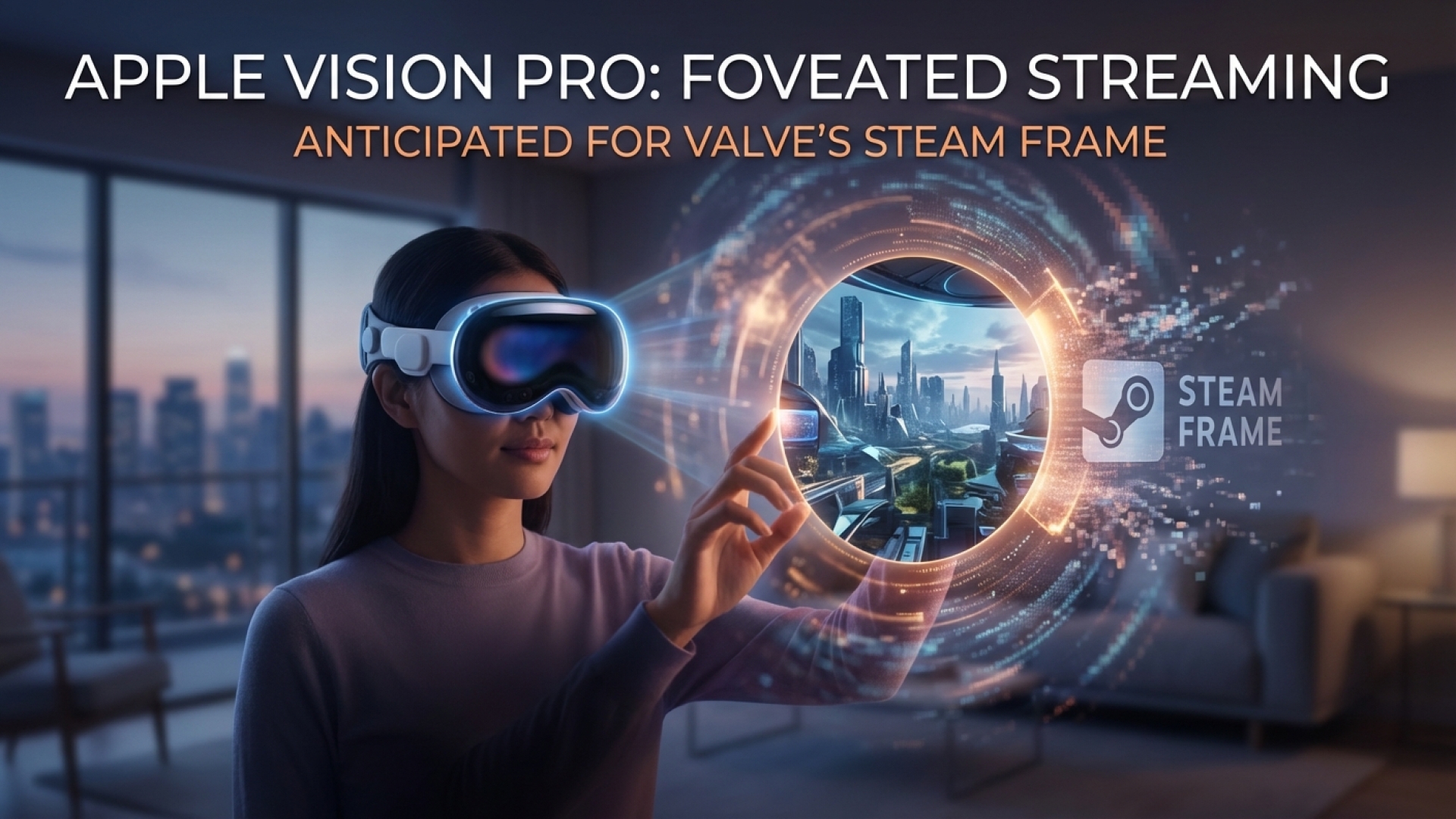
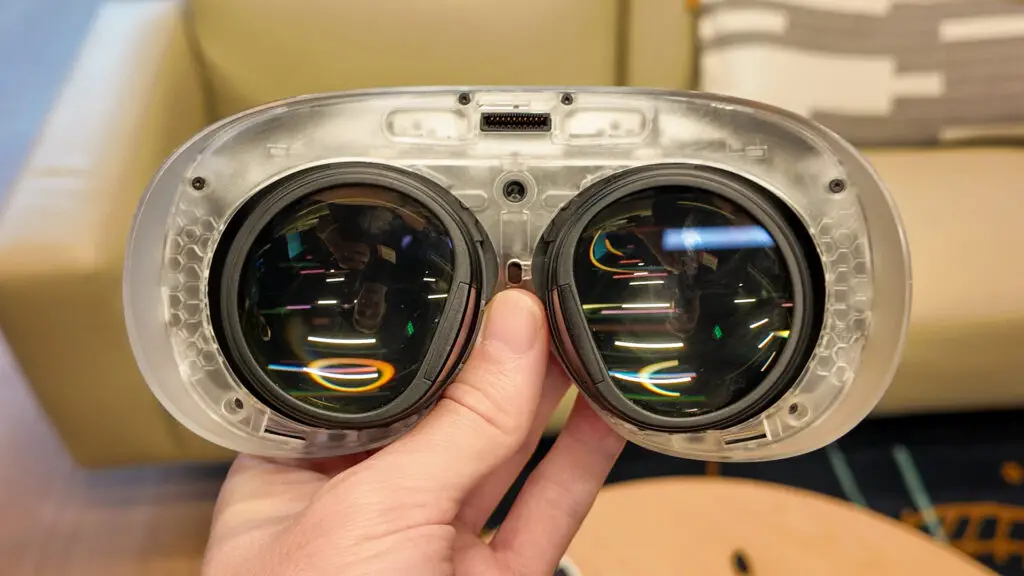
Last year, I had the privilege of stepping into Valve’s Bellevue headquarters to get a first look at the Steam Frame. As a storyteller who has tracked hardware evolution for years, the excitement was palpable. This new Valve VR headset promised to redefine home-based virtual reality by prioritizing user convenience through a sophisticated technology known as foveated streaming. While production hurdles have kept the Steam Frame out of consumers’ hands, the industry’s interest in the technology is only growing—and now, Apple is officially joining the race.
Understanding Foveated Streaming Technology
At its core, foveated streaming is a bandwidth-saving masterpiece. It works by dynamically limiting the bitrate of streamed data based on the user’s focal point. By leveraging eye-tracking sensors, the device identifies the “fovea”—the area of the eye with the highest visual acuity—and delivers maximum detail only to that specific region. This is a game-changer for gaming and wireless AI-accelerated applications where wireless connections often struggle with the massive bandwidth required for high-fidelity VR.
This method shares DNA with foveated rendering and variable rate shading, techniques that reduce hardware strain by prioritizing detail where it matters most. While Sony’s PS VR2 already utilizes foveated rendering, the “streaming” aspect of this tech is what makes high-end, PC-quality VR possible on lightweight, standalone headsets.
| Technology | Primary Function | Key Requirement | Benefit |
|---|---|---|---|
| Foveated Rendering | Reduces GPU workload by lowering peripheral detail. | Eye-Tracking Sensors | Higher frame rates and better performance. |
| Foveated Streaming | Reduces wireless data consumption by prioritizing focal bitrate. | High-speed wireless + Eye-Tracking | PC-quality VR on standalone/cloud devices. |
Apple Vision Pro Integrates Foveated Streaming
In a move that signals a massive shift in digital innovation, Apple’s latest developer documentation reveals that foveated streaming is coming to visionOS 26.4+ beta for the Apple Vision Pro. This update allows the headset to establish high-efficiency connections with local and cloud-based streaming endpoints.

Apple’s documentation notes that the “endpoint host streams high quality content only where necessary based on information about the approximate region where the person is looking.” This confirms that Apple is looking to optimize its “spatial computing” experience by offloading heavy processing to remote servers or local PCs without sacrificing visual quality.
One fascinating use case highlighted by Apple involves “hybrid” rendering. In a flight simulator, for instance, the Vision Pro could render the interactive cockpit locally using RealityKit while simultaneously streaming the vast, 8K-resolution landscape from a cloud server. This maximizes the device’s internal processor for immediate interactions while the background environment is handled remotely.
Valve’s VR Hardware Faces Production Challenges
While Apple moves forward, Valve’s ambitious hardware lineup remains in limbo. The Steam Frame is currently stalled due to a global memory and storage crisis. Valve has been transparent about its inability to provide firm release dates or pricing for its new suite of products, which includes the long-awaited Steam Machine and Steam Controller revisions.
Even the popular Steam Deck has felt the sting, with Valve recently noting that the handheld might face regional availability issues. It is a frustrating time for enthusiasts, as we see revolutionary tech like foveated streaming ready for the limelight, yet the physical hardware is caught in the gears of a volatile supply chain. As we continue to bridge the gap between complex tech and everyday usability here at Digital Tech Explorer, we’ll be monitoring whether Valve can overcome these hurdles before Apple dominates the high-end spatial computing market.
Stay ahead of the latest trends in AI and GPU technology by following our in-depth analyses. All content on Digital Tech Explorer is for informational and entertainment purposes only.