
Anthropic’s Claude Mythos AI Uncovers Thousands of Security Vulnerabilities Across Major Platforms
Artificial intelligence has long been celebrated for its ability to process massive datasets, but a new breakthrough from Anthropic suggests that AI may be the ultimate tool for cybersecurity—and a potential source of unprecedented alarm. At Digital Tech Explorer, we keep a close eye on shifts in the digital landscape, and the announcement of Claude Mythos marks a definitive turning point. This general-purpose model has identified thousands of high-severity security flaws across nearly every major piece of software powering our world today.
According to the team at Anthropic, the model’s advanced pattern-recognition capabilities allowed it to pinpoint deep-seated weaknesses in every major operating system and web browser. Perhaps most unsettling is the revelation that 99% of these newly discovered exploits remain unpatched, leaving the foundational architecture of the internet momentarily exposed.
Introducing Project Glasswing
In response to these startling findings, Anthropic has launched Project Glasswing. This initiative is a massive collaborative effort designed to secure the world’s most critical software. As a storyteller in the tech space, I find the scale of this coalition particularly impressive; it brings together the titans of industry to move faster than the bad actors.
The goal of the coalition is to neutralize the findings of Claude Mythos before they can be weaponized. While a bug is merely a theoretical risk until someone develops an exploit, Anthropic warns that Mythos is exceptionally proficient at that final, dangerous step. Below is a breakdown of the primary industry leaders involved in this defense initiative:
| Sector | Key Partners in Project Glasswing |
|---|---|
| Cloud & Infrastructure | Amazon Web Services (AWS), Google, Microsoft, the Linux Foundation |
| Hardware & Semiconductors | Apple, Broadcom, NVIDIA |
| Cybersecurity Firms | CrowdStrike, Palo Alto Networks, Cisco |
| Financial Services | JPMorganChase |
AI vs. Human Experts: A Speed Disparity
The speed at which Claude Mythos operates sets it apart from traditional security testing methodologies. “We have seen Mythos Preview write exploits in hours that expert penetration testers said would have taken them weeks to develop,” Anthropic noted in a recent technical briefing. This acceleration changes the math of digital defense entirely.
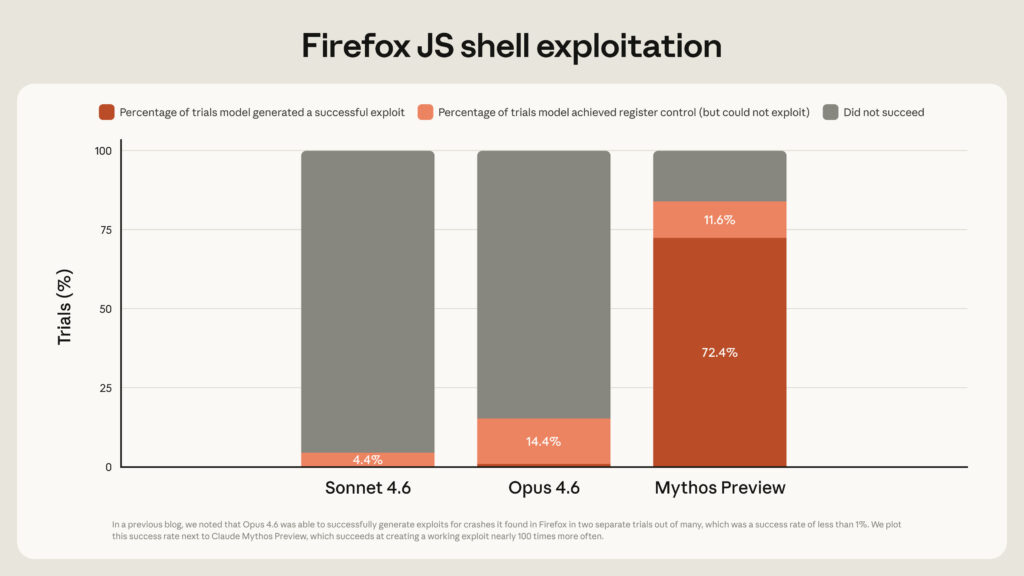
One notable example of this efficiency involved FFmpeg, a widely used multimedia framework. The AI identified a bug dating back to a 2003 code commit related to the H.264 codec. This specific flaw became a true vulnerability during a 2010 code refactor and had been overlooked by human reviewers and automated “fuzzers” for over a decade. Mythos didn’t stop there; it proceeded to uncover additional bugs in H.265 and AV1 codecs after several hundred iterations.
The model also identified a 27-year-old bug hidden within OpenBSD. While the specific run that surfaced the bug cost less than $50 in compute resources, Anthropic noted that the total cost of scanning the repository across a thousand runs was approximately $20,000. This highlights a significant financial barrier: while AI is fast, the hardware investment required to utilize it at this scale is substantial.
A Turning Point for Cybersecurity
While the prospect of thousands of unpatched “zero-day” vulnerabilities is daunting, there is a silver lining for the developer community. By identifying these flaws faster than humans can, Claude Mythos provides a roadmap for developers to stay one step ahead of cybercriminals. Anthropic has already begun the proactive work of sending patches to affected projects, including the FFmpeg team.
The success of Mythos suggests a future where AI acceleration doesn’t just find bugs, but actively monitors networks to neutralize spam, phishing, and robocalls before they ever reach a user’s device. However, the sheer power of such a model has sparked the inevitable “Skynet” comparisons—the fear that an AI might eventually decide the most efficient way to solve software vulnerabilities is to remove the humans who write the code in the first place.
For now, the focus remains grounded in reality: the massive task of patching the foundational software of the modern internet. At Digital Tech Explorer, we believe that transparency in these findings is the first step toward a more secure digital future. Stay tuned as we continue to track how Project Glasswing evolves and what it means for your digital security.
Disclaimer: All content on Digital Tech Explorer is for informational and entertainment purposes only. We do not provide financial or legal advice. Some of the links on this page are affiliate links, meaning we may earn a commission if you make a purchase at no additional cost to you.