
At Digital Tech Explorer, we’ve always maintained that the heart of a great PC build isn’t just about raw power—it’s about balance. However, with 32 GB DDR5 memory kits currently sporting colossal price tags, many gaming enthusiasts are questioning if a full platform upgrade is even feasible. The common consensus on forums is adamant: settling for less than 32 GB of system memory in 2026 is a mistake. But as a storyteller and tech analyst, I wanted to see if this narrative holds up under the pressure of real-world hardware testing.
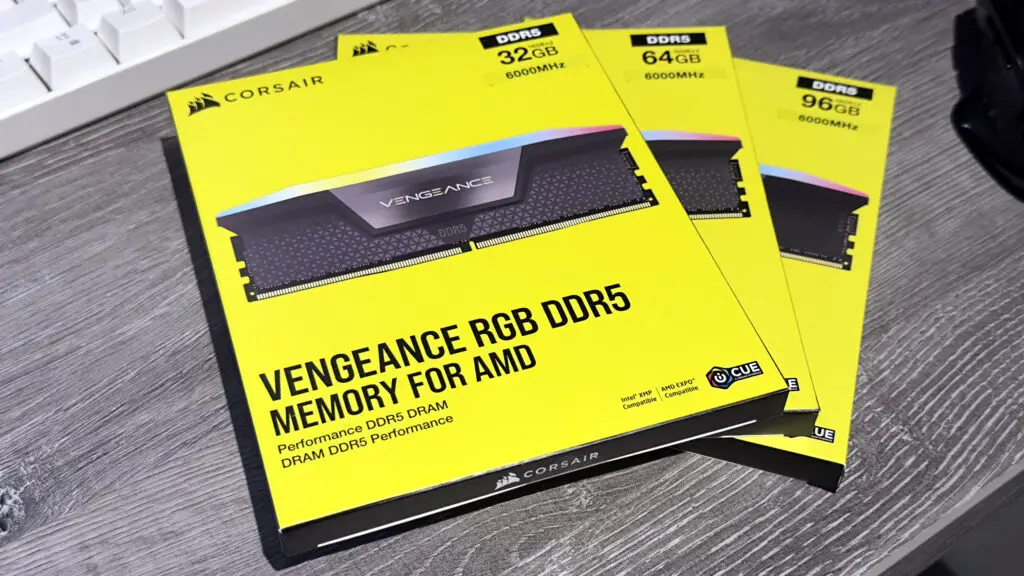
A few months ago, DDR5 was genuinely affordable. Today, the landscape has shifted. A 16 GB kit of DDR5-6000 CL30 costs roughly $230, while a 32 GB kit jumps to $370. That $140 difference could be the deciding factor between a mid-range GPU and a high-end one. To see if the extra investment is mandatory, I put 16 GB and 32 GB configurations to the test across some of the most memory-hungry titles currently available.
The Testing Methodology
I selected eight representative games from a pool of 27 modern titles. To push the limits, all were tested at 4K resolution with maxed-out settings, using DLSS Performance to maintain playable frame rates. To understand how Video RAM (VRAM) interacts with system RAM, I ran these tests on two distinct setups:
- High-End: NVIDIA RTX 5090 (32 GB VRAM)
- Mainstream: NVIDIA RTX 5070 (12 GB VRAM)
Benchmark Comparisons: 16 GB vs. 32 GB
The following table summarizes how 16 GB of system RAM performed across different PC games and hardware configurations:
| Game Title | RTX 5090 (32GB VRAM) Experience | RTX 5070 (12GB VRAM) Experience | 16GB System RAM Verdict |
|---|---|---|---|
| Cyberpunk 2077 | Identical Performance | Stable | Pass |
| Stalker 2 | Smooth | 11% Drop in 1% Lows | Marginal |
| Escape from Tarkov | Minor Stutters | 34% Drop in 1% Lows | Fail |
| MS Flight Simulator 2024 | Stable | Memory Thrashing/Freezes | Fail |
| Star Citizen | System Warning/Stutters | Abysmal Frametimes | Fail |
High-End GPU Results (RTX 5090)
When paired with the massive 32 GB VRAM of the RTX 5090, most games showed negligible differences between 16 GB and 32 GB of system memory. Titles like Cyberpunk 2077, Kingdom Come: Deliverance 2, and Black Myth: Wukong performed almost identically. Even Stalker 2, an open-world Unreal Engine 5 game, ran smoothly with 16 GB. This suggests that high VRAM capacity on the GPU can mask some system RAM limitations by reducing the need to constantly stream assets from the system DRAM.
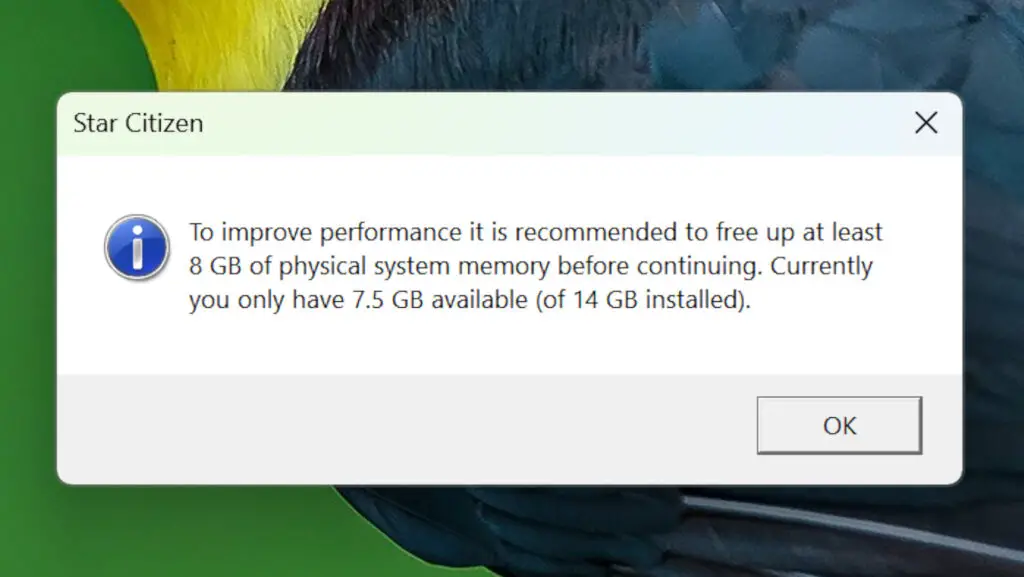
However, Star Citizen is a different beast. Upon launching with 16 GB, the game issued an immediate warning. While technically playable, the 1% low frame rates were significantly worse than the 32 GB configuration, proving that unoptimized or massive-scale AI-heavy environments still demand higher capacities.
Mainstream GPU Results (RTX 5070)
The limitations of 16 GB became stark when using the RTX 5070. With only 12 GB of VRAM, the system is forced to lean harder on system memory. In Stalker 2, moving to 32 GB improved the 1% lows by 11%. Escape from Tarkov saw a massive 34% jump in smoothness with the higher capacity—a life-or-death difference in a high-stakes extraction shooter.
The most dramatic failure was Microsoft Flight Simulator 2024. At 4K Ultra, the RTX 5070’s 12 GB VRAM is simply overwhelmed. With only 16 GB of system RAM, we experienced “memory thrashing.” This is where data is constantly swapped between the GPU and system memory, leading to jarring stutters and occasional freezes during takeoffs in dense urban areas.
The Multitasking Reality
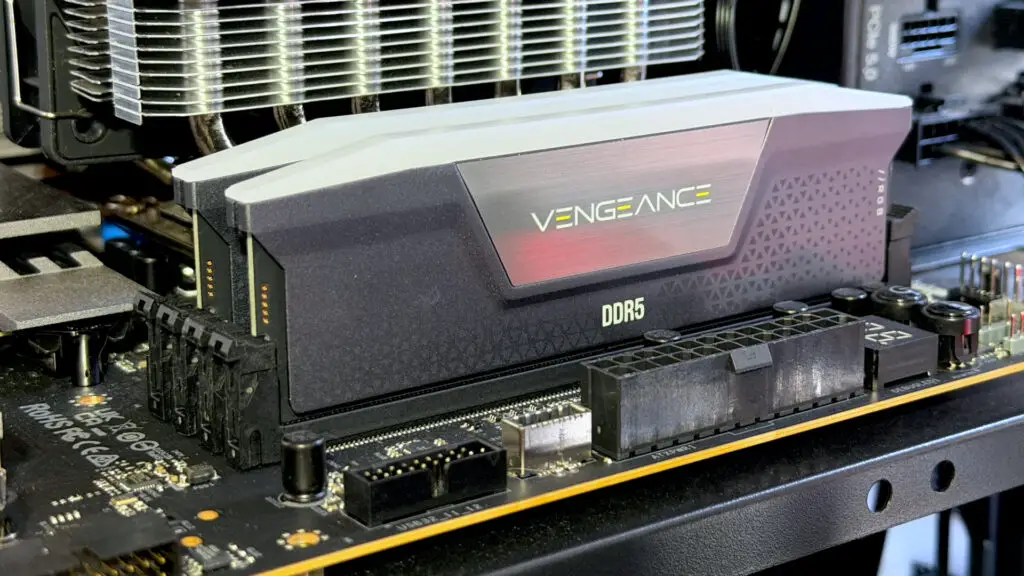
At Digital Tech Explorer, we believe in real-world testing. My benchmarks were conducted on a “clean” OS, but that isn’t how most of us use our PCs. In a typical session, you likely have Discord, several Chrome tabs, or perhaps a streaming tool running. With a modern game active, a 16 GB system typically has only 3 to 5 GB of spare memory remaining. One heavy browser tab can push you into a performance wall, causing hitches that no high-end GPU can fix.
The TechTalesLeo Final Verdict
Is 16 GB of system memory still enough for gaming in 2026? The answer is a qualified yes, but with caveats. If you are on a strict budget and need to prioritize every dollar toward your graphics card, 16 GB will get you through most titles—provided you are disciplined about closing background apps and managing settings in extreme cases like Flight Simulator.
However, for the “set it and forget it” gamer, 32 GB has officially become the gold standard. It provides the breathing room necessary for modern VRAM-limited GPUs and the multitasking habits of today’s users. If you can afford the $140 leap, it is one of the most impactful stability upgrades you can make for your rig.
Affiliate Disclaimer: Some of the links on Digital Tech Explorer are affiliate links. This means we may earn a commission if you click through and make a purchase, at no additional cost to you. Our recommendations are based on thorough research and personal experience.
General Disclaimer: All content on Digital Tech Explorer is for informational and entertainment purposes only. We do not provide financial or legal advice.