At Digital Tech Explorer, we are always tracking how digital innovation reshapes the way we consume entertainment. Recently, World of Warcraft has made significant strides in accessibility by introducing story mode. This solo-friendly version of endgame content allows casual players to witness the narrative climax of a patch without the logistical hurdles of a large raid team. However, despite these advancements, a legacy hurdle remains: the frustrating practice of time-gating.
Much like the Looking For Raid (LFR) system, story mode content is frequently locked behind a mandatory waiting period—often seven days or more after a new patch goes live. This artificial delay feels increasingly out of place in a modern gaming landscape that prioritizes user agency and immediate narrative gratification.
The Contradiction of Time-Gated Narratives
The logic behind staggering LFR releases usually centers on maintaining the prestige of organized raiding guilds and allowing developers to monitor server stability. However, for a mode specifically designed for story consumption, these arguments fall short. Blizzard’s stated mission for The Worldsoul Saga is to provide a more inclusive and streamlined narrative experience. While the storytelling in PC games like World of Warcraft: Midnight has introduced compelling character arcs and high-stakes plot twists, the delivery mechanism remains flawed.
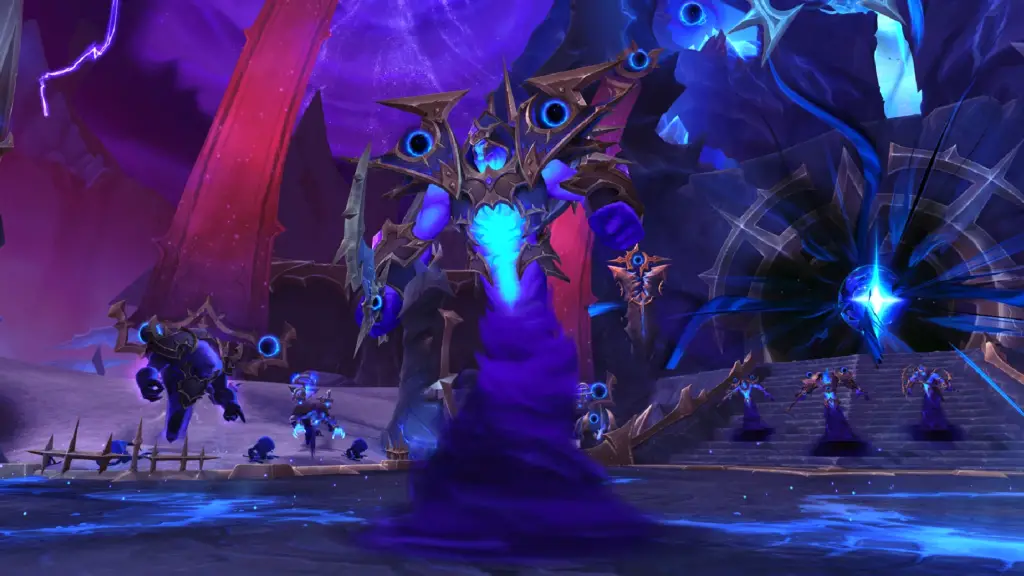
A fearsome raid boss awaits heroes in the depths of World of Warcraft: Midnight.
For the solo player, the momentum built through campaign quests often hits a brick wall. You reach the narrative peak, ready to confront the antagonist, only to be told to “wait a week.” This disruption breaks the immersion that TechTalesLeo often champions as the core of a great digital experience.
Comparing Endgame Entry Points
To understand why the community is pushing for change, it is helpful to look at how different raid difficulties handle player progression. The following table highlights the differences between the current solo and queue-based options:
Feature
Story Mode
Looking For Raid (LFR)
Primary Focus
Narrative & Solo Play
Group Mechanics & Gear
Difficulty Level
Low (Accessible to all)
Moderate (Requires group coordination)
Release Pacing
Often Time-Gated
Staggered Wing Releases
Reward Type
Quest Completion / Lore
Mid-tier Gear / Transmog
The Quest for Immersive Gameplay
The pressure to avoid spoilers has become a game in itself. When the Voidspire raid launched, many players felt forced into “Normal” difficulty groups not for the gear, but simply to see the ending before it was plastered across social media. These “pick-up groups” (PUGs) often come with their own set of stressors—group politics, performance anxiety, and toxicity—which directly contradict the relaxed environment story mode is supposed to provide.
When compared to other giants in the genre, such as Final Fantasy 14, which integrates its narrative milestones more fluidly into the leveling experience, WoW still feels like it is clinging to an outdated subscription-retention model. As we explore new AI-driven scaling and solo-centric features like Delves, the technical excuses for these delays are becoming harder to justify.
Modern MMOs are constantly evolving to balance hardcore challenges with accessible storytelling.
Moving Beyond the Seven-Day Barrier
At this stage in the evolution of World of Warcraft, the prestige of being the “first to see a cinematic” has largely moved to the background. Most players just want to experience the story at their own pace. Story mode is explicitly tuned to minimize friction, so it’s unlikely that developer balancing is the primary cause of the delay.
If Digital Tech Explorer has learned anything from analyzing software trends, it’s that user experience (UX) should always come first. By forcing solo players to play “spoiler dodgeball” for a week, Blizzard is undermining the very demographic they are trying to attract. For story mode to truly succeed, it needs to be available the moment the narrative leads players to the raid’s entrance.
Stay tuned to Digital Tech Explorer for more in-depth analyses of gaming trends and tech innovation.