
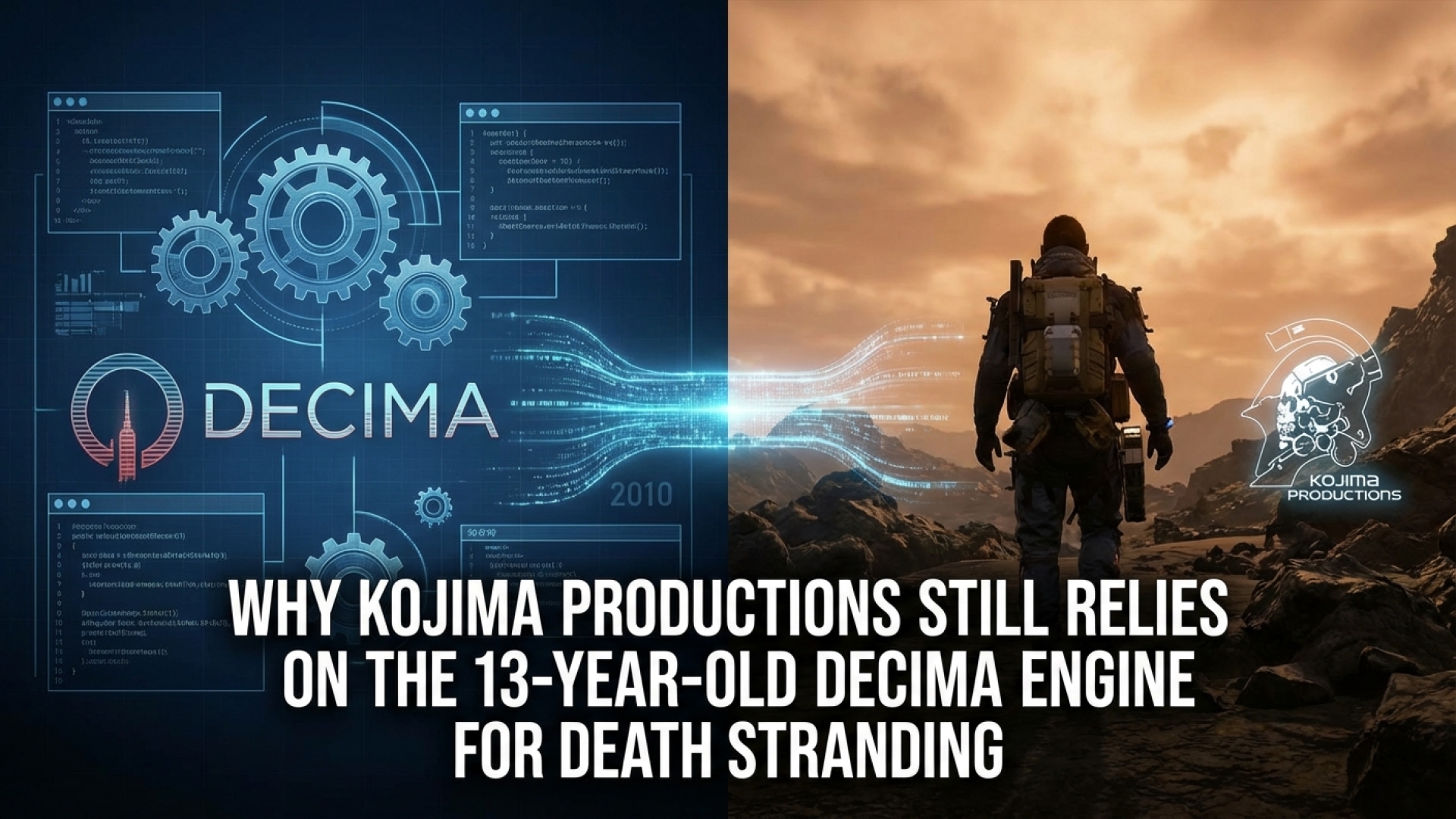
At Digital Tech Explorer, we are constantly fascinated by the invisible architecture that brings our favorite digital worlds to life. When diving into the visually breathtaking landscapes of modern gaming, it’s often the underlying technology that enables such immersive experiences. Two prime examples, Horizon Zero Dawn and Death Stranding, have consistently wowed players with their stunning environments and intricate details. Both titles, and their high-profile sequels, famously leverage the 13-year-old Decima engine, a masterpiece of software engineering developed by Guerrilla Games.
Akio Sakamoto, CTO of Kojima Productions, recently shared insights into why this specific toolset remains the backbone of their creative process. “It offered many of the capabilities needed to build an open-world game,” Sakamoto noted. “While some aspects are less immediately approachable than commercial engines, its runtime rendering analysis tools stood out.” For tech enthusiasts and developers following the evolution of hardware and software, this testament highlights how specialized features can often outweigh the convenience of “off-the-shelf” solutions.
Decima Engine’s Unmatched Scale and Performance
A standout feature of games like Death Stranding is the sheer scale and fidelity of their worlds. The original title transported players across vast, snow-capped mountains that weren’t just background dressing—they were fully traversable, physics-driven environments. Its sequel, Death Stranding 2: On the Beach, continues this trend, presenting an immense desert landscape defined by colossal sandstone formations that push GPU capabilities to their limits.

Sakamoto shared impressive technical details regarding the sequel’s performance: “The final polygon count reached approximately 25 million, yet the scene still maintained a stable frame rate.” He directly attributed this remarkable achievement to Decima’s efficient rendering pipeline. This balance of high-detail density and performance is a recurring theme for PC games and console exclusives powered by this engine.
A Collaborative Legacy: Guerrilla Games and Kojima Productions
The success of the Decima engine isn’t just about its technical prowess; it’s a story of synergistic digital innovation. The partnership between Guerrilla Games and Kojima Productions has fostered a unique development environment. When Kojima Productions implements enhancements—such as improved atmospheric effects or AI acceleration for NPC behavior—these modifications are often shared back with the Horizon developers at Guerrilla.
| Feature | Impact on Gameplay | Notable Title |
|---|---|---|
| Procedural Generation | Creates vast, diverse ecosystems efficiently. | Horizon Forbidden West |
| Advanced Physics | Realistic terrain interaction and weight. | Death Stranding |
| High Polygon Throughput | Allows for 25M+ polygons while maintaining FPS. | Death Stranding 2 |
| Global Illumination | Dynamic lighting that reacts to environmental changes. | Horizon Zero Dawn |
Sakamoto modestly remarked on this reciprocal relationship, noting that the mutual exchange of advancements has enriched both franchises. By sharing technical breakthroughs, both studios have been able to push the boundaries of what a bespoke engine can achieve in an era of zunehmend standardized tools.
Decima’s Enduring Relevance in a Shifting Landscape
In an industry where many major players are migrating toward commercial solutions like Unreal Engine, the continued reliance on Decima stands out. It demonstrates a commitment to a tool meticulously refined over a decade to meet specific creative visions. As TechTalesLeo often explores, the bridge between complex technology and everyday usability is found when developers master their tools so thoroughly that the tech becomes invisible to the player.

Sakamoto reaffirmed this commitment, stating, “While no engine is the best choice in every scenario, Decima enables us to accomplish many things that would be difficult to achieve elsewhere.” At Digital Tech Explorer, we believe this dedication to specialized innovation is what keeps the gaming industry moving forward. Whether it is through AI integration or groundbreaking rendering, the Decima engine remains a titan in the world of digital storytelling.
All content on Digital Tech Explorer is for informational and entertainment purposes only. Some of the links on our platform are affiliate links; we may earn a commission if you click through and make a purchase, at no additional cost to you.