

The tech landscape is currently grappling with a massive memory and storage supply crisis. Driven by the explosive growth of AI applications, the demand for high-speed data access has reached a fever pitch. Here at Digital Tech Explorer, we’ve been tracking how manufacturers are pivoting to meet this challenge. Storage titan Western Digital has just unveiled a potential game-changer: a new class of magnetic hard drives engineered to deliver “flash-like” performance, aimed at easing the global pressure on NAND memory and SSDs.

Western Digital’s Engineering Breakthrough
In a move that feels like a narrative shift for mechanical storage, Western Digital detailed two pioneering hardware innovations designed to bridge the gap between traditional spinning platters and modern flash memory. As a storyteller in the tech space, I find these developments particularly intriguing because they breathe new life into a medium many thought was reaching its peak.
- High Bandwidth Drive Technology (HBDT): This allows for multiple tracks to be read and written simultaneously, breaking the linear limitations of traditional drives and drastically boosting data transfer rates.
- Dual Pivot Technology: By integrating a second actuator, WD can enhance both the storage density and the overall responsiveness of the drive, allowing for more precise and faster data positioning.
Comparing Performance: HDDs Reaching Flash Speeds
The synergy of these technologies produces staggering results. Western Digital claims these advancements provide a “4x throughput gain” without compromising the economic benefits that make HDDs attractive for large-scale storage. By combining 2-track HBDT with dual pivot technology, throughput jumps from a standard 300 MB/s to a blistering 1.2 GB/s. Looking toward future iterations, 8-track HBDT could theoretically reach 4.8 GB/s—matching the speeds of many PCIe Gen 4 SSDs.
| Technology Phase | Estimated Throughput | Primary Benefit |
|---|---|---|
| Standard Enterprise HDD | ~300 MB/s | High capacity, low cost |
| 2-Track HBDT + Dual Pivot | ~1.2 GB/s | High throughput, enterprise scale |
| Future 8-Track HBDT | ~4.8 GB/s | Flash-like performance |
Fueling AI and Data Lakes
While these numbers are exciting, the primary target isn’t your home office—it’s the massive data centers driving AI acceleration. Western Digital’s strategy focuses on throughput per terabyte (MB/s/TB), making these drives ideal for AI training, object storage, and exabyte-scale video streaming. For developers and tech professionals managing massive datasets, these high-performance HDDs offer a cost-effective way to scale without the prohibitive price tag of all-flash arrays.
How This Benefits the Consumer PC Market
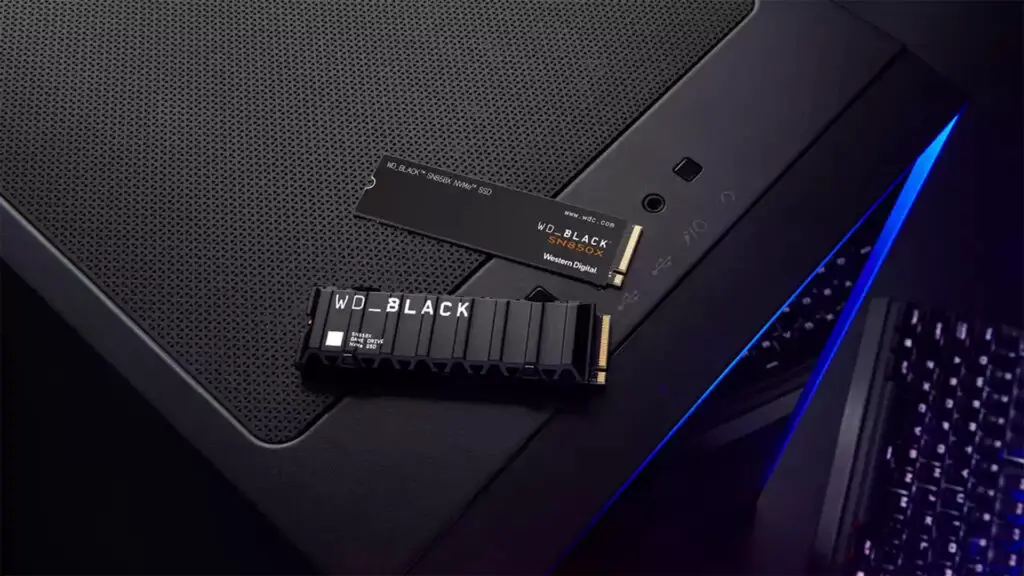
You might be wondering: “If these are for data centers, why should a enthusiast care?” The answer lies in supply chain dynamics. Currently, the gaming and PC hardware markets are feeling the pinch as enterprise giants scoop up NAND supply for SSDs. If these new HDD technologies can handle a significant portion of enterprise workloads, it will alleviate the demand for NAND memory.
This “trickle-down” effect could lead to more stable pricing and better availability for the SSDs we use in our rigs. At Digital Tech Explorer, we believe this innovation is a win-win, allowing the enterprise sector to scale efficiently while potentially lowering the barrier to entry for high-speed consumer storage.
Availability and Final Thoughts
Western Digital has yet to set a firm commercial release date for these specific HBDT-enabled drives. However, with the current storage crunch showing no signs of slowing down, the industry is watching closely. Stay tuned to Digital Tech Explorer as we continue to follow this story and provide in-depth analysis on how these innovations will shape the future of digital innovation.
Disclaimer: All content on Digital Tech Explorer is for informational and entertainment purposes only. We do not provide financial or legal advice. Some links may be affiliate links, meaning we may earn a commission at no additional cost to you.