
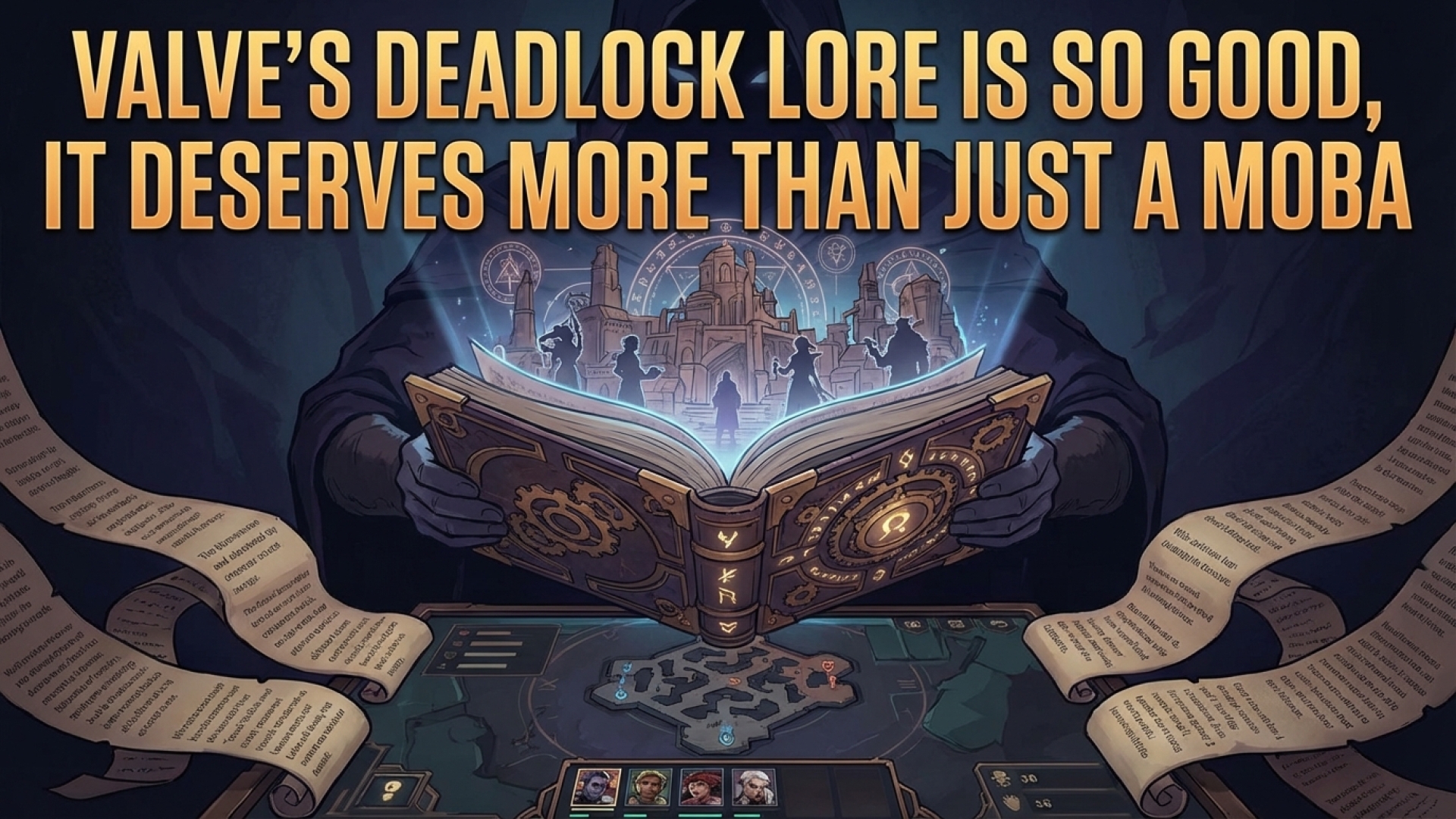
I have always had a complex relationship with MOBAs, but Deadlock—especially following the Old Gods, New Blood update—has pulled me back into the genre with an intensity I didn’t see coming. As someone who spent over 2,400 hours in Dota 2 during my university years, finding myself at 183 hours (and counting) in Valve’s latest project feels like coming home to a house that’s been beautifully, strangely renovated.
I am currently caught in that classic dopamine loop, captivated by the mechanics even while navigating the occasionally spicy social atmosphere of online matchmaking. But beyond the gameplay, I’ve found myself deep in the lore, consuming every voiceline and world-building detail I can find. It’s this rich narrative layer that creates a fascinating sense of malaise—not because the setting is lacking, but because it is so exceptionally realized that I find myself wanting more than a single genre can provide.
Deadlock’s Rich and Fantastical Setting
From a storytelling perspective, Deadlock is easily one of the most compelling video game settings in recent memory. It is set in a fantastical reimagining of 1950s America where magic is an integrated, albeit volatile, reality. A cataclysmic event known as the Maelstrom opened Astral Gates across the globe, including the “Cursed Apple” right above New York City. The MOBA structure serves as the framework for two powerful patrons attempting to manifest in a world flooded with magic, utilizing players as their primary agents on the ground.
Unpacking the Lore: A World of Intrigue
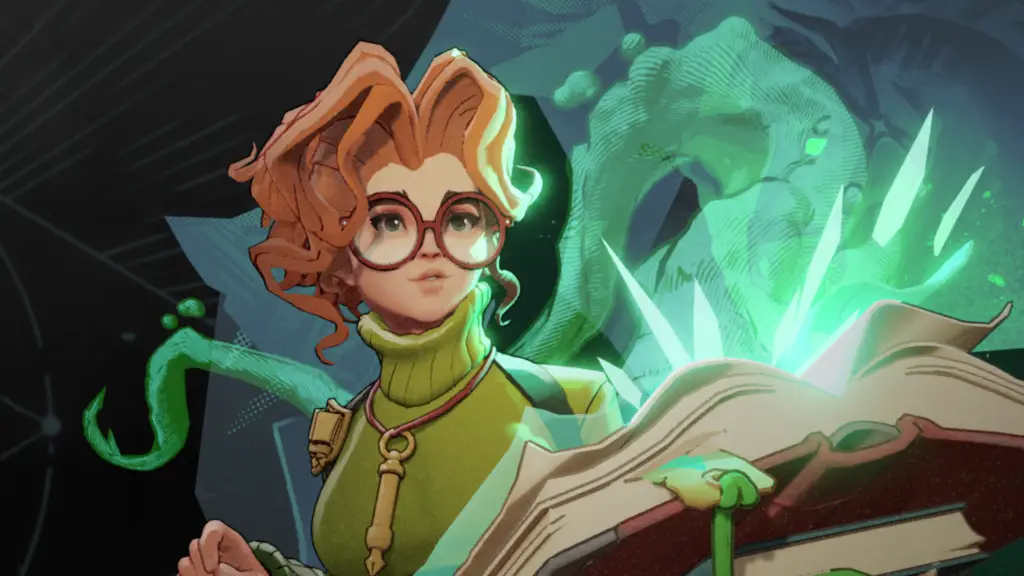
Valve’s character artists and narrative designers have lean into this concept with incredible creativity. The depth of the world-building is best seen in the small details scattered throughout the character interactions and environmental cues. To illustrate the breadth of this universe, I’ve categorized some of the most intriguing elements of the Deadlock world below.
| Lore Category | Fascinating World Detail |
|---|---|
| Government & Espionage | The Sandmen: A governmental agency specializing in invading people’s dreams. |
| Religious Militaries | The Vatican utilizes elite supersoldier exterminators known as Venators. |
| Extra-Dimensional Geography | Ixia (the setting’s ‘Hell’) is permanently connected to Earth; South Ixia is technically a U.S. state. |
| Social Dynamics | A complex Vampire society exists with its own baronies and Masquerade-style politics. |
| Anomalies | The Paradox thieves guild uses time-jumping to display priceless items in pop-up museums. |
| Urban Occultism | New York City maintains its own Municipal Coven of witches for local magical oversight. |
A World Deserving More Than Just a MOBA
At Digital Tech Explorer, we often look at how software and game design evolve. Deadlock is currently in a state where some models (like Vyper) are still rough, but the polish Valve is applying elsewhere is stunning. The map design is becoming increasingly immersive—I find myself genuinely impressed whenever I navigate through the bass-heavy atmosphere of The Hidden King’s base.
However, the MOBA genre is inherently restrictive. By its nature, the story is confined to three lanes and a single map. While Valve has a history of expanding lore through animated shorts and comics (much like Team Fortress 2), the setting of Deadlock feels substantial enough to support its own single-player RPG or a tactical first-person shooter.
“Deadlock presents an infinitesimal slice of a much more interesting world that begs for broader exploration.”
Dreaming of Deadlock Across Genres
There is enough narrative “juice” here to fuel a Deadlock MMO or a complex Tabletop RPG. I find myself wanting to explore the corridors of the OSIC, run errands for the Municipal Coven, or witness the visual splendor of Ixia firsthand. The concept of a turf war between vampire baronies or a high-stakes chase against a Paradox time-thief offers gameplay possibilities that a standard MOBA simply can’t contain.

While these remain “pie-in-the-sky” dreams, they are a testament to the quality of the world Valve is building. Deadlock boasts an ocean-deep skill ceiling and incredible mechanical complexity, but its greatest asset might just be the world it has only begun to show us. Having a problem where your audience is hungry for more lore is a great position for any developer, and I salute the team at Valve for cooking up something this intriguing.