
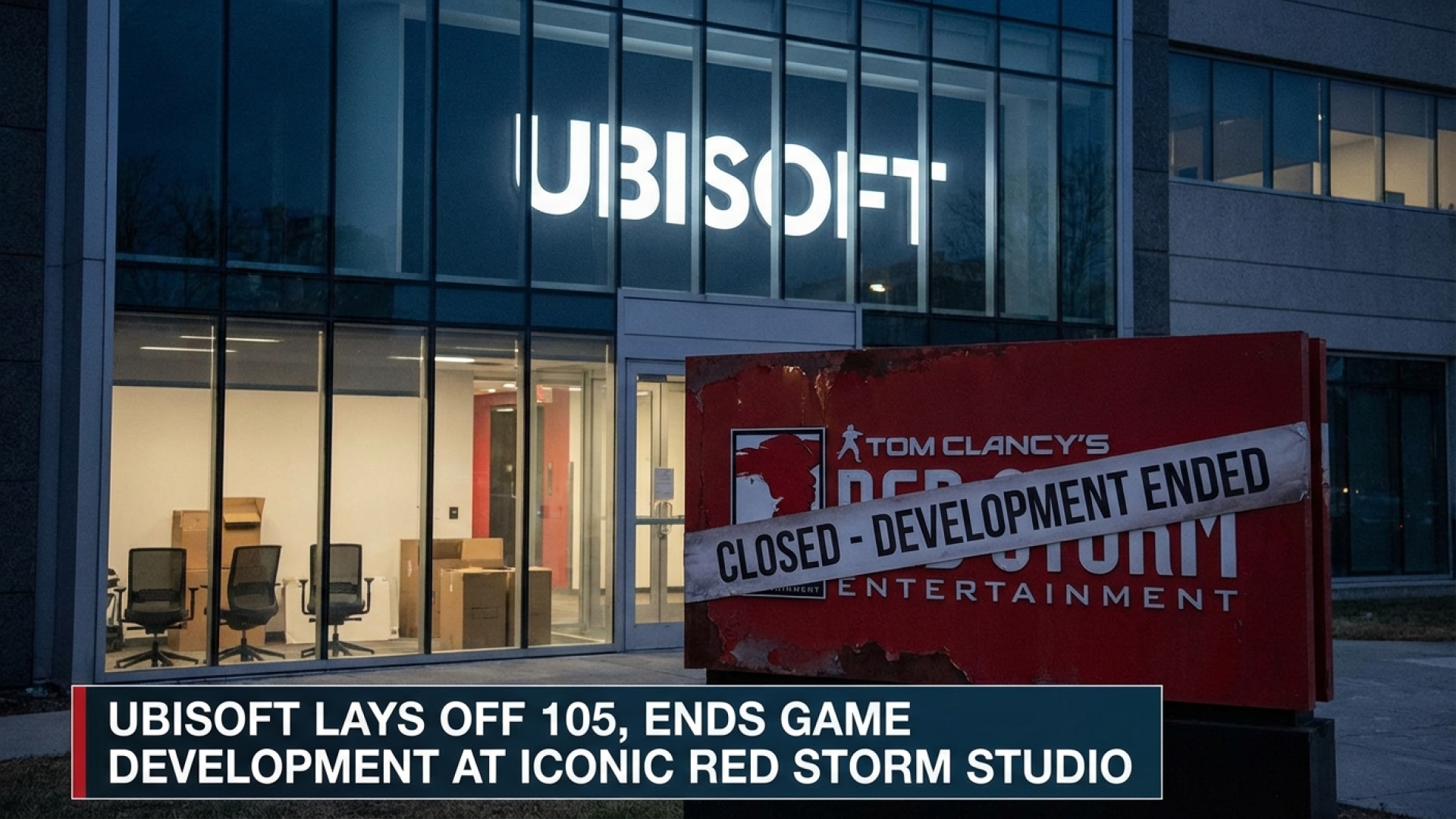
Ubisoft Lays Off 105 at Red Storm, Iconic Tom Clancy Studio Shifted to Support Role
In a move that signals a significant shift in the landscape of tactical shooters and legacy game development, Ubisoft has officially ended lead game development at the legendary Red Storm Entertainment. This decision, part of a broader global cost-cutting initiative, results in the layoff of 105 employees. While the studio doors remain open, the mission has fundamentally pivoted: the team will now serve as a specialized support unit focused on IT infrastructure and the development of Ubisoft’s proprietary Snowdrop engine.
For those of us at Digital Tech Explorer who have followed the evolution of gaming technology and software engineering for decades, Red Storm’s transition feels like the end of a cornerstone era. Founded in 1996 by the master of techno-thrillers, Tom Clancy, alongside Doug Littlejohns, the studio was the birthplace of some of the most influential tactical simulations in history.

For nearly thirty years, Red Storm was the creative heart of the Tom Clancy brand. They didn’t just make games; they defined a genre with the original Rainbow Six and Ghost Recon titles. However, as the digital landscape evolved, the studio’s recent trajectory struggled to find a consistent footing. Since 2012’s Ghost Recon: Future Soldier, Red Storm moved away from traditional lead roles on flagship titles, experimenting heavily with virtual reality.
Despite their technical prowess in developing projects like Star Trek: Bridge Crew and Assassin’s Creed Nexus, these VR ventures struggled to capture the commercial lightning that their earlier tactical shooters once held. The studio also weathered a series of high-profile cancellations, including a Splinter Cell VR project and the much-anticipated free-to-play survival shooter, The Division: Heartland.
Summary of Red Storm’s Recent Studio Evolution
| Period | Primary Focus | Notable Projects/Outcomes |
|---|---|---|
| 1996 – 2012 | Tactical Lead Development | Rainbow Six, Ghost Recon, Future Soldier |
| 2013 – 2023 | VR & Experimental Media | Star Trek: Bridge Crew, Assassin’s Creed Nexus |
| 2024 – Present | IT & Engine Support | Snowdrop Engine maintenance and IT Infrastructure |
This restructuring is a piece of a much larger puzzle within Ubisoft’s internal reorganization. The publisher is currently consolidating its massive portfolio into five distinct “creative houses.” In this new hierarchy, Rainbow Six has transitioned to Vantage Studios, while legacy brands like Ghost Recon, Splinter Cell, and The Division have been placed under a newly formed creative division.
From a software engineering perspective, shifting Red Storm to a support role for the Snowdrop engine is a strategic—if painful—utilization of their technical expertise. While the loss of lead development capabilities is a blow to fans of their narrative-driven tactical gameplay, Ubisoft maintains that it remains fully committed to the Tom Clancy ecosystem. The company confirmed that development for future titles in the The Division and Ghost Recon series will proceed under the new management structure.
As we continue to track these shifts at Digital Tech Explorer, it is clear that the industry is moving toward a more centralized model of production. For a studio that started with a submarine simulator and redefined the hardware requirements for tactical gaming, Red Storm’s new chapter as a technical backbone for Snowdrop marks a somber but necessary pivot in Ubisoft’s current fiscal strategy.
At Digital Tech Explorer, we will keep a close eye on how these organizational changes impact the quality and delivery of the Tom Clancy titles that many of us grew up playing. Stay tuned for more in-depth analyses of how shifting corporate strategies are reshaping the world of PC games and digital innovation.
Disclaimer: All content on Digital Tech Explorer is for informational and entertainment purposes only. We do not provide financial or legal advice. Some of the links on Digital Tech Explorer are affiliate links. This means we may earn a commission if you click through and make a purchase, at no additional cost to you.