
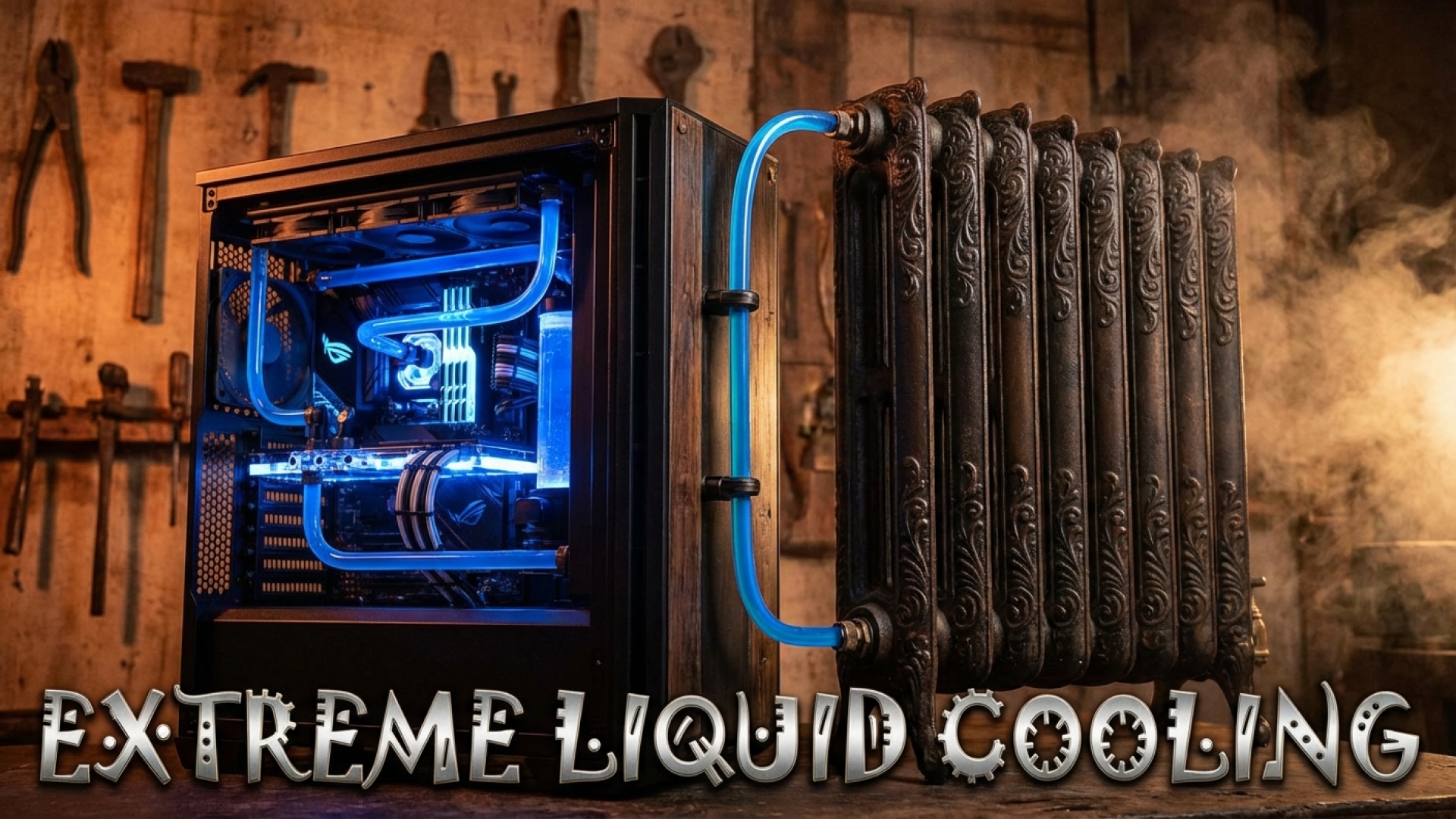
In the world of custom PC builds, we often see flashy RGB and sleek tempered glass, but every so often, a project comes along that truly redefines the boundaries of hardware innovation. At Digital Tech Explorer, we are always on the lookout for stories that bridge the gap between complex engineering and artistic expression. One such project by Billet Labs has recently concluded, and the result is a liquid-cooled masterpiece that is as “steampunk” as it is high-performance.
Billet Labs recently released a video documenting the monumental task of integrating a high-end gaming rig into a genuine Victorian cast-iron radiator. This isn’t just a PC strapped to a frame; the radiator itself serves as the primary heat exchanger for the cooling loop, making it a fully functional, liquid-cooled behemoth.

A Design Challenge of Herculean Proportions
The journey began with a “catastrophically heavy” cast-iron unit. While the team initially estimated the unfilled weight at 50 kg, the reality was much more taxing—closer to 80 kg before any components or coolant were even added. Beyond the physical weight, working with vintage iron presents a unique set of challenges, most notably internal rust and debris, which became a persistent obstacle throughout the three-month build.
The goal was simple in theory but complex in execution: create a high-spec gaming PC that utilizes an object designed to radiate heat away from a room, repurposed to pull heat away from a CPU and GPU.
Under the Hood: The Specifications
To ensure this wasn’t just a museum piece, Billet Labs outfitted the rig with cutting-edge components. Using 3D scanning technology, they mapped the radiator’s base to create a custom 3D-printed tray that nests the internals within the bottom loops of the chassis. The hardware selection is a dream for any PC gamer looking for top-tier performance.
| Component | Specification |
|---|---|
| Processor (CPU) | AMD Ryzen 7 9800X3D |
| Graphics Card (GPU) | NVIDIA RTX 5080 |
| Memory (RAM) | 32 GB High-Speed DDR5 |
| Cooling Capacity | 18 Liters of Liquid Coolant |
| Total Build Weight | 99 kg (approx. 218 lbs) |
The Intricacies of the Steam-Powered Aesthetic
The water-cooling loop is where the project truly shines as a piece of digital innovation. Billet Labs fabricated a series of copper pipes equipped with a built-in filtration system. This was a critical addition, designed to catch internal debris from the aging radiator before it could reach and destroy the pump. To keep the Victorian theme alive, the power button is an antique brass gear lever, and the front of the machine features two functional pressure gauges.
A custom T-piece system was also engineered to allow the radiator and the PC’s internal cooling loop to be filled separately. This ingenious design means the PC components can be serviced or removed without the nightmare of draining the entire 18-liter radiator system every time.
Cast-iron radiator water-cooled gaming PC build 9800X3D/5080/32GB – 99kg from r/PcBuild
Fighting the Elements: Rust and Air Bubbles
No great tech tale is without its struggles. After the initial cleaning and assembly, filling the system led to an eight-hour battle with air pockets. Once the power was finally toggled, more issues surfaced: a fan caught on its shroud, the pump began clicking due to copper particles, and the CPU temperature spiked when radiator debris clogged the filters. At one point, Billet Labs was forced to physically push the nearly 100 kg radiator around his home just to dislodge stubborn air bubbles.
Final Verdict: A Triumph of Engineering
Despite the noisy pump and the sheer difficulty of the build, the final results are impressive. Stress testing in Cyberpunk 2077 showed peak CPU temperatures of 68 °C—all with the fans turned off. The massive surface area of the cast iron provides enough passive cooling to reach a thermal equilibrium that standard radiators simply cannot match.
At Digital Tech Explorer, we believe that technology is at its best when it challenges our expectations. While few builders will have the patience (or the floor-strengthening) to house a 99 kg radiator PC, Billet Labs has proven that with enough copper, solder, and determination, even a Victorian relic can be part of the future of AI-accelerated gaming and high-end computing.
For more deep dives into unique hardware and digital trends, follow TechTalesLeo on Digital Tech Explorer.