
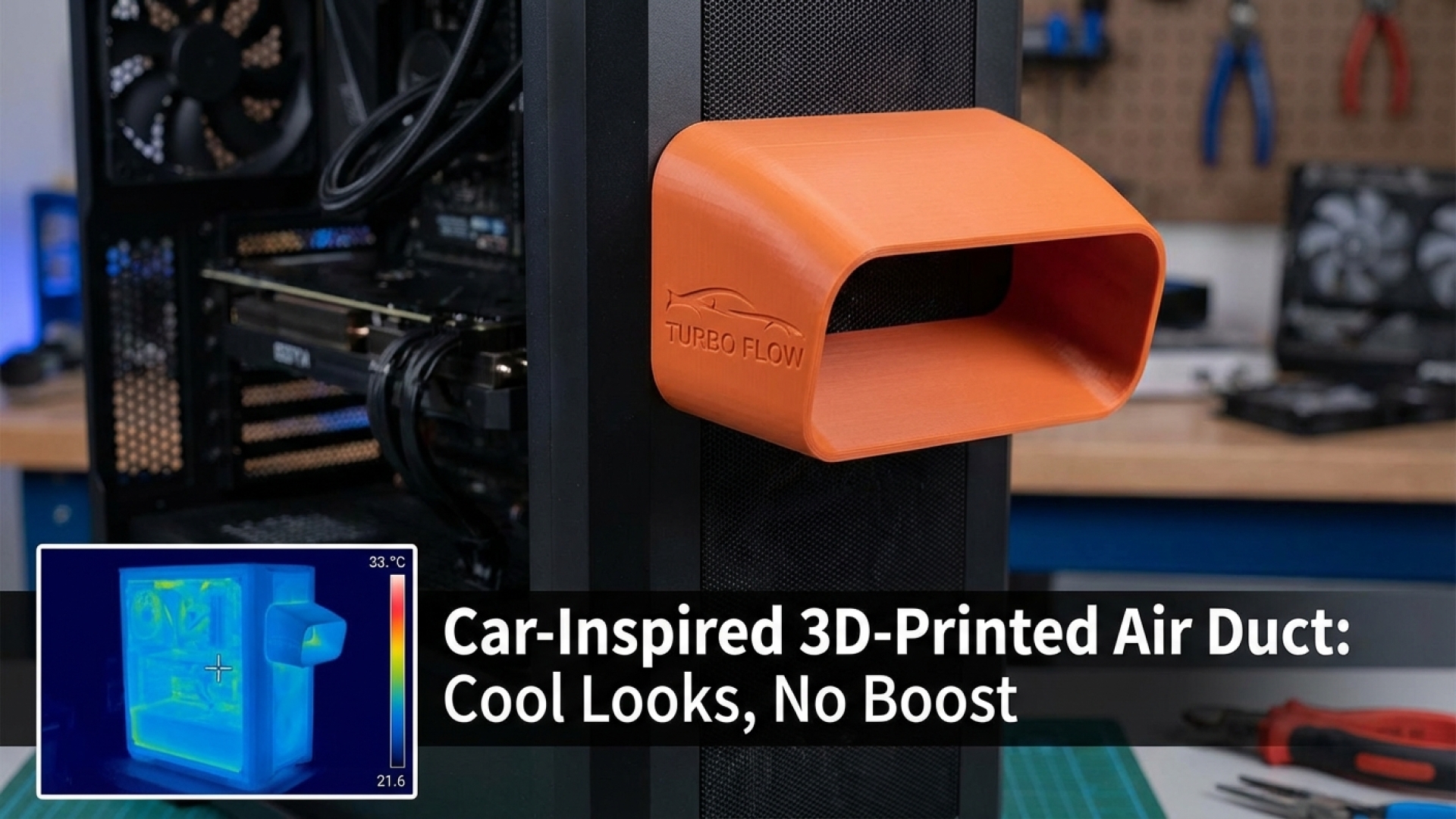
At Digital Tech Explorer, we are always on the lookout for the intersection of automotive engineering and high-performance computing. Recently, a project surfaced that perfectly captures this spirit: a full-on air duct integrated into a gaming PC. While the idea of a car-inspired cooling system might sound like a gimmick, the execution is visually stunning, even if the thermal performance tells a more complicated story.
A Story of Innovation: The 3D-Printed GPU Shroud
As a storyteller in the digital space, I often see mods that prioritize function over form, but Reddit user Esra-Zander took a different path on the Nvidia subreddit. By merging a passion for automotive design with PC hardware, they created a custom-designed intake manifold for their GPU. Drawing inspiration from creators like Optimum and traditional car intake systems, this project highlights how 3D printing is revolutionizing the way enthusiasts personalize their rigs.
Design Mechanics and Installation
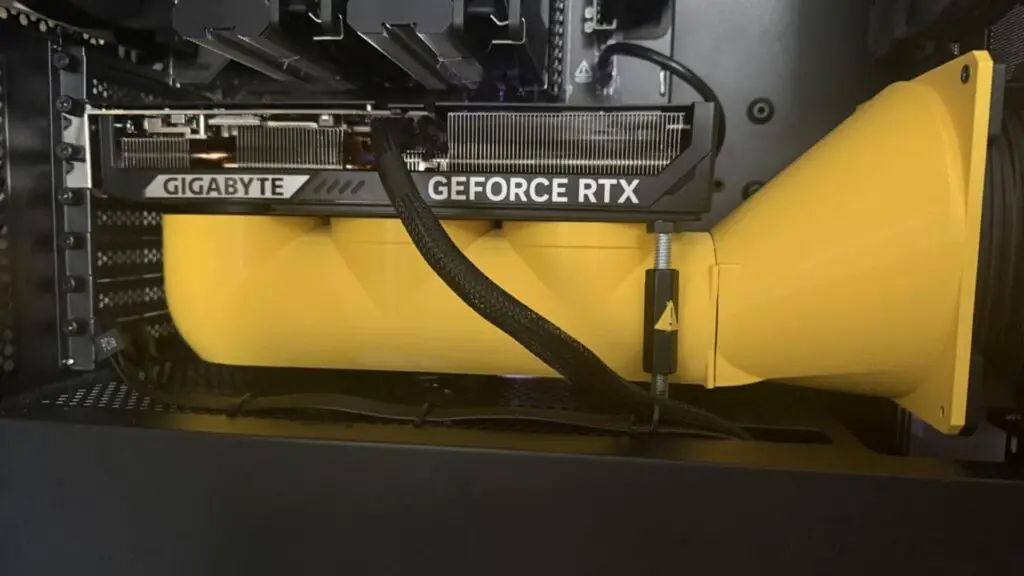
The centerpiece of the build is a vibrant yellow duct, meticulously measured to fit the specific dimensions of an RTX 5070. The component is mounted directly to the bottom of the GPU, with the intake mouth positioned at the lower front of the chassis to pull in fresh air. Unlike a standard open-air setup, this design uses three precisely placed holes on the top surface that transition into a cone-shaped exhaust point, engineered to mate perfectly with a standard PC case fan. It is a masterclass in custom fitment, even if the physics of airflow proved to be a formidable opponent.
Benchmarking the Results: Aesthetics vs. Performance
Transparency is a core value here at Digital Tech Explorer, and the benchmarking results for this mod offer a valuable lesson in fluid dynamics. While the visual impact is a 10/10, the real-world thermal data was a mixed bag. In a follow-up post, Esra-Zander revealed that while synthetic benchmarks showed promise, daily usage told a different story. The duct essentially restricted the GPU’s ability to breathe naturally, causing the fans to work harder and increasing acoustic output.
| Scenario | Temperature Performance | Acoustic Impact |
|---|---|---|
| Heaven Benchmark | Improved (Lower Temps) | Quieter |
| Idle State | Degraded (Higher Temps) | Louder |
| Active Gameplay | Degraded (Higher Temps) | Louder |
As one community member noted, “The duct does nothing but it looks cool.” However, for many in the gaming community, looking cool is half the battle. The project demonstrates the trial-and-error nature of digital innovation and hardware modification.
The Road Ahead for Hardware Modding
Despite the “mixed” performance results, the creator isn’t giving up. “Clearly the design is flawed but I certainly don’t think it’s beyond saving,” Esra-Zander shared. This commitment to refinement is exactly what we advocate for at Digital Tech Explorer—using technology to push boundaries and learn through creation. Whether you are running an Acer Nitro or a custom-built 50-series rig, projects like this remind us that the journey of building is often more rewarding than the final temperature reading.
For more deep dives into hardware mods and the latest in tech trends, stay tuned to our latest updates here at Digital Tech Explorer.