
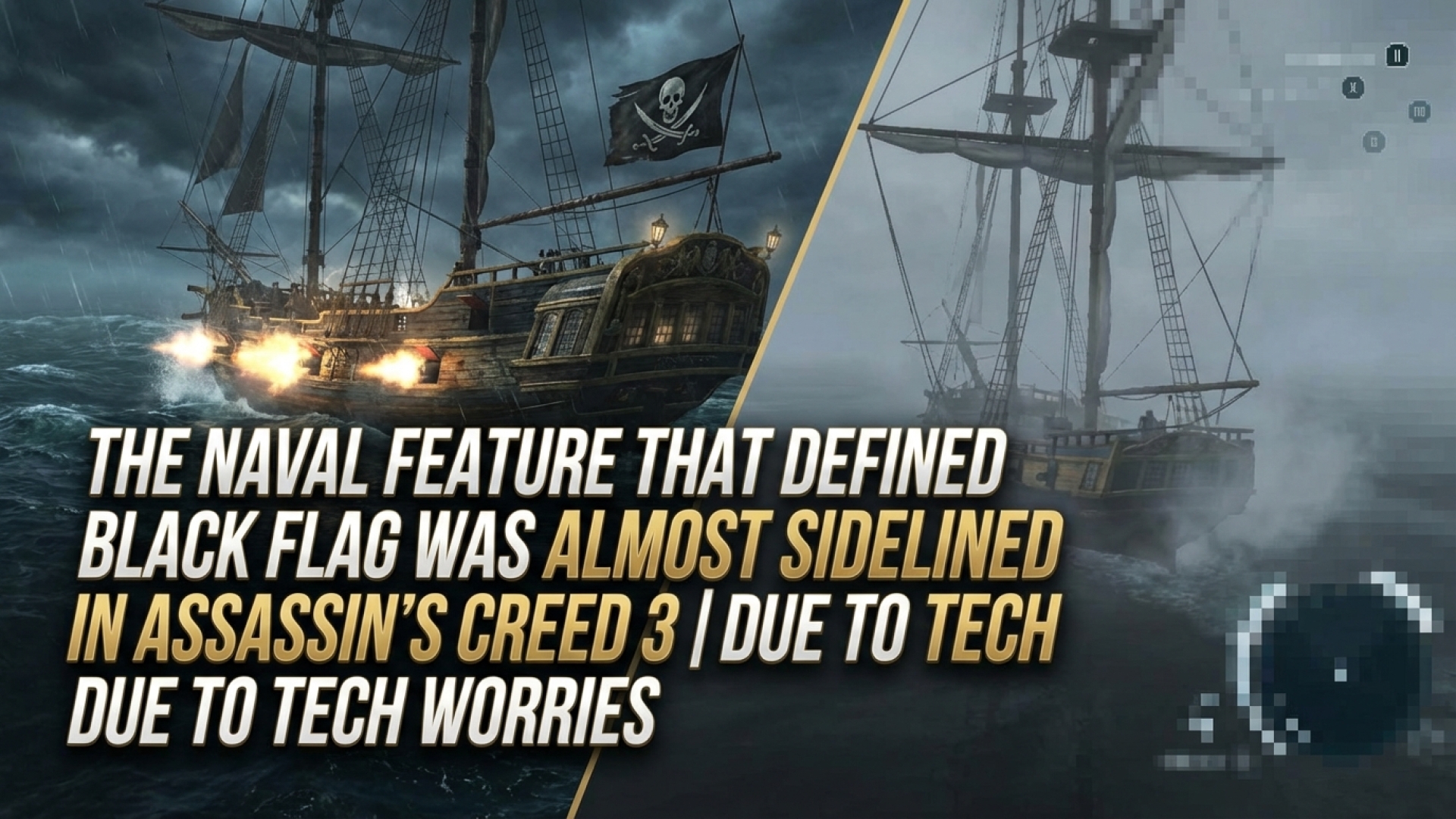
In the grand narrative of digital innovation, Assassin’s Creed 3 stands as a fascinating case study. It wasn’t just another entry in a sprawling franchise; it was a fundamental shift that redefined how PC games approach open-world exploration. While its vast wilderness and compact settlements initially felt like a departure from the series’ urban roots, this experimental architecture provided Ubisoft with a robust blueprint. This model eventually paved the way for massive titles like Origins, Odyssey, Valhalla, and the highly anticipated Shadows. Yet, among all these shifts, one groundbreaking technical achievement stood above the rest: the introduction of naval combat.

The Rise of Naval Combat: From Side Mission to Series Staple
Many fans point to Assassin’s Creed 4: Black Flag as the pinnacle of nautical exploration, citing its seamless integration of ship-to-ship combat and high-seas adventure. However, the foundational hardware-pushing tech was actually pioneered in the often-overlooked naval side missions of AC3. These missions allowed players to navigate the Eastern Seaboard and the Caribbean, testing a gameplay loop that was almost universally praised despite the game’s otherwise polarizing reception. This leads us to a compelling question for any developer: If the mechanic worked so well, why was it relegated to the sidelines initially?
Key Tech Milestones in Assassin’s Creed Naval Evolution
| Game Title | Core Naval Innovation | Impact on Series |
|---|---|---|
| Assassin’s Creed 3 | Physics-based water and ship handling | Proof of concept for maritime mechanics |
| AC4: Black Flag | Seamless open-world naval transitions | Established the “Pirate Fantasy” genre |
| AC Odyssey | Customizable crew and ancient warfare | Integrated naval play into RPG progression |
Ubisoft’s Hesitation: The Fear of Unproven Tech
The hesitation to put ships front and center came down to technical risk management. Alex Hutchinson, the creative director behind AC3 and Far Cry 4, recently shared insights into the development process. “There was a whole fear that the tech wouldn’t work,” Hutchinson admitted. Even for a studio as large as Ubisoft, committing the main storyline to an unproven mechanical engine was a bridge too far. The naval combat feature represented a massive “unknown” for the engineering team, leading to the decision to keep it as an optional, albeit polished, experience.
Once the player data and reviews confirmed that the community loved the nautical elements, the potential was undeniable. Ubisoft quickly pivoted, building Black Flag entirely around these systems and revisiting them in Rogue. This evolution showcases how iterative software development can transform a risky experiment into a brand-defining pillar.
The Limitations of the Traditional “AAA Model”
Hutchinson attributes this conservative approach to the “old AAA model” of game development. Under this structure, the alpha build—the first time a game is actually playable in its entirety—often wouldn’t arrive until roughly two months before the launch date. This was followed by a frantic dash through beta and final certification. This compressed timeline meant developers rarely saw the “total picture” until it was too late to make sweeping changes.
This traditional methodology created a bottleneck for innovation. If the team had been able to stress-test the naval mechanics earlier in the cycle, the entire structure of Assassin’s Creed 3 might have been different, weaving the sea-faring experience directly into the core narrative rather than keeping it at the periphery.

A New Paradigm: Typhoon and Raccoon Logic
After moving on from Ubisoft, Hutchinson co-founded Typhoon (the studio behind the hit Journey to the Savage Planet) and later Raccoon Logic. These smaller, more agile studios have adopted a “tech-first” philosophy. By conducting alpha builds significantly earlier in the development process, they can identify winning mechanics and double down on them with confidence.
This modern approach allows for greater flexibility. As Hutchinson explained, seeing the “shape of the game” early allows a team to say, “This mechanic is fantastic; let’s put it everywhere.” It’s a lesson in digital innovation that applies far beyond gaming—it’s about using early data and testing to mitigate risk while maximizing creative potential.
For more in-depth analyses of game design and the latest in digital innovation, stay tuned to Digital Tech Explorer.