At Digital Tech Explorer, we keep a close eye on the hardware cycles that define our digital experiences. Lately, the industry chatter has turned somber: 8K display technology, once hailed as the next frontier of visual fidelity, is reportedly nearing its end. With heavyweights like LG allegedly halting the production of 8K TV panels and the 8K Association experiencing a mass exodus of members, we have to wonder—is 8K dead on arrival, or is it simply finding a more specialized home in the PC market?
As a software engineer and tech enthusiast, I’ve seen the PC monitor market often trail behind TV trends, as it did with the transition to 1080p and 4K resolutions. Yet, the PC space frequently carves its own path, as evidenced by the massive success of 1440p and ultrawide formats that never quite gained traction in the living room.
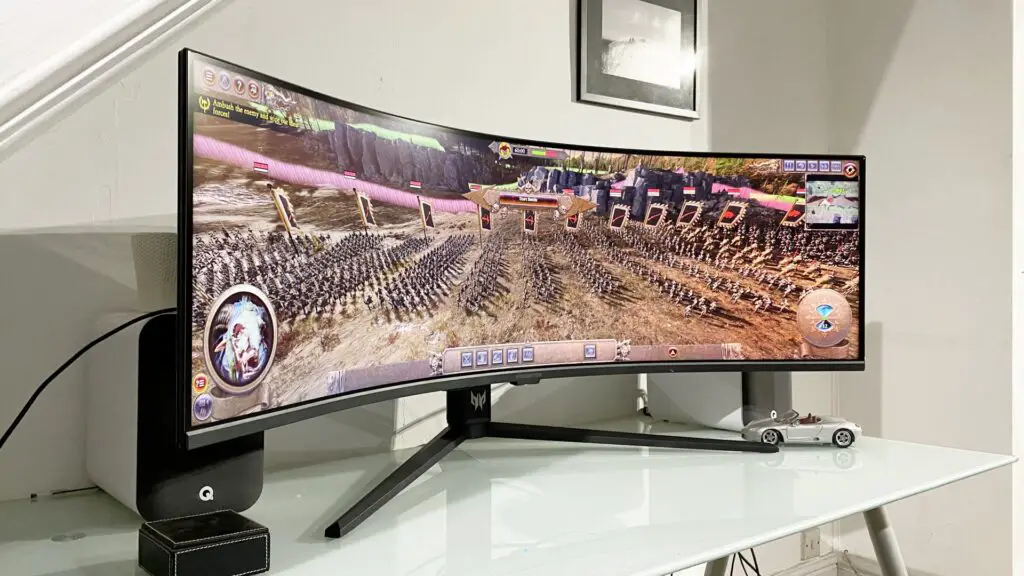
The Acer Predator Z57: Bridging the gap between 4K and 8K.
The Dwindling Dream of 8K on TV Screens
The narrative for 8K TVs began with great promise. Sharp unveiled the first model back in 2012, and LG brought the first 8K OLED to market in 2019. However, the consumer appetite hasn’t matched the engineering ambition. According to data from Omdia, while there are roughly one billion 4K TVs in households worldwide, only 1.6 million 8K units have been sold since 2015.
This stagnation has triggered a retreat. Industry giants like Sony and LG are reportedly scaling back or exiting the 8K sector. The decline is most visible in the industry’s governing bodies:
Metric
2022 Status
Current Status
8K Association Members
33 Companies
16 Companies
Active Manufacturers
Broad Industry Support
Primarily Samsung & Panasonic
Peak Annual Sales
Achieved in 2022
In Steady Decline
The hurdles for 8K in the living room are practical. At standard viewing distances, the human eye struggles to differentiate between 4K and 8K on anything smaller than an 85-inch screen. Furthermore, the content ecosystem is non-existent. Streaming giants like Netflix and YouTube prioritize bandwidth conservation over raw pixel count. From 8K-capable cameras to the massive computational costs of CGI and editing, the production pipeline is simply too expensive for the current market to justify.
8K for PC Gaming: A Different Story?
In the gaming world, we approach the “content problem” from a different angle. Unlike pre-recorded movies, modern PC games render in real-time. If your hardware is powerful enough, you can output 8K today.
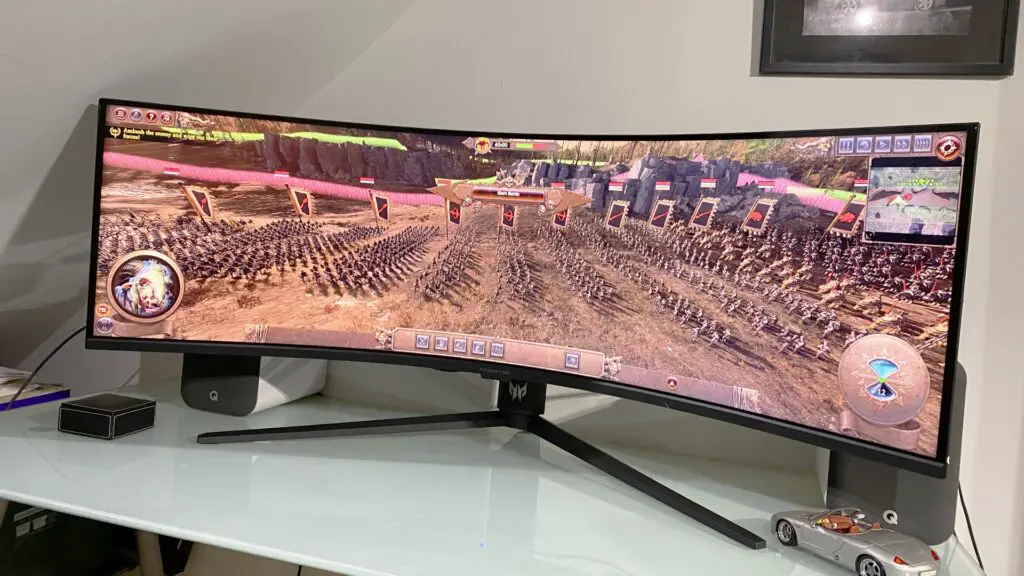
While dedicated 8K monitors remain a niche luxury, the industry is pivoting toward “Dual-4K” solutions. A prime example is the Acer Predator Z57. This 57-inch behemoth offers the horizontal resolution of an 8K display but maintains a vertical pixel count equivalent to 4K. This provides a pixel density comparable to a 32-inch 4K monitor, offering a crisp visual experience without the astronomical hardware requirements of native 8K.
Expansive real estate for developers and gamers alike.
The real game-changer for high-resolution computing is AI acceleration. Technologies like Nvidia’s DLSS allow us to upscale a base 4K image to 8K using sophisticated machine learning models. With an upcoming GPU like the rumored RTX 5090, 8K gaming becomes more than a slideshow—it becomes a playable reality.
Conclusion: A Niche Future
While 8K as a mass-market TV format is undoubtedly fading, its story isn’t over. In the PC space, where enthusiasts push the boundaries of hardware and digital innovation, 8K will likely survive as a premium niche. For those who demand unparalleled detail—whether for high-end coding environments or immersive flight simulators—8K isn’t dead; it’s just waiting for the rest of the world to catch up.