
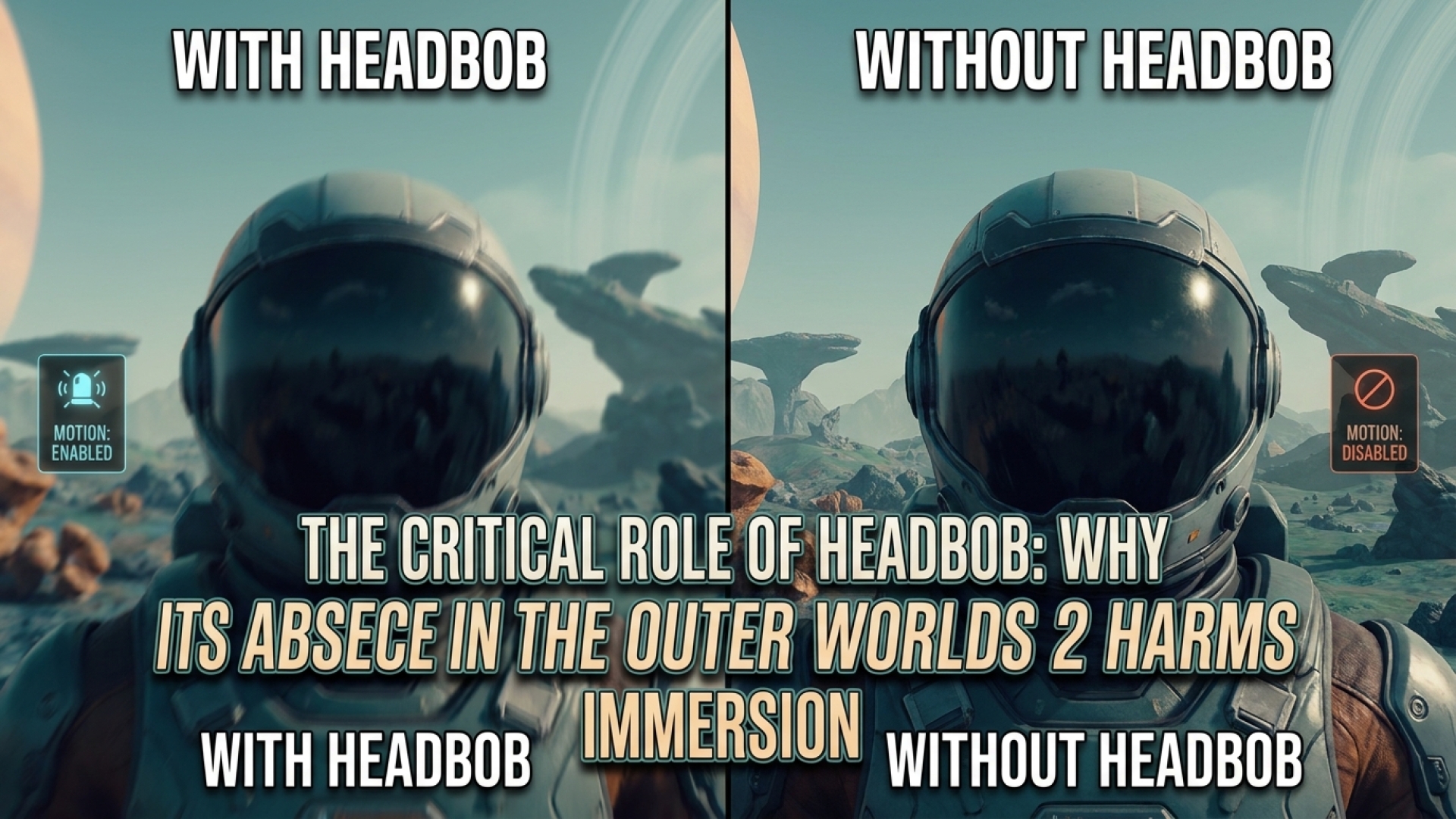
In the intricate world of game design, the smallest technical details often dictate the depth of player immersion. While deep-diving into PC games this week, I spent significant time with The Outer Worlds 2. It led me to a surprising realization: the subtle art of “headbob”—or view bobbing—is the unsung hero of the first-person RPG experience. Without it, the boundary between being an embodied character and a floating camera starts to blur in all the wrong ways.
The Missing Kinetic Feedback in The Outer Worlds 2
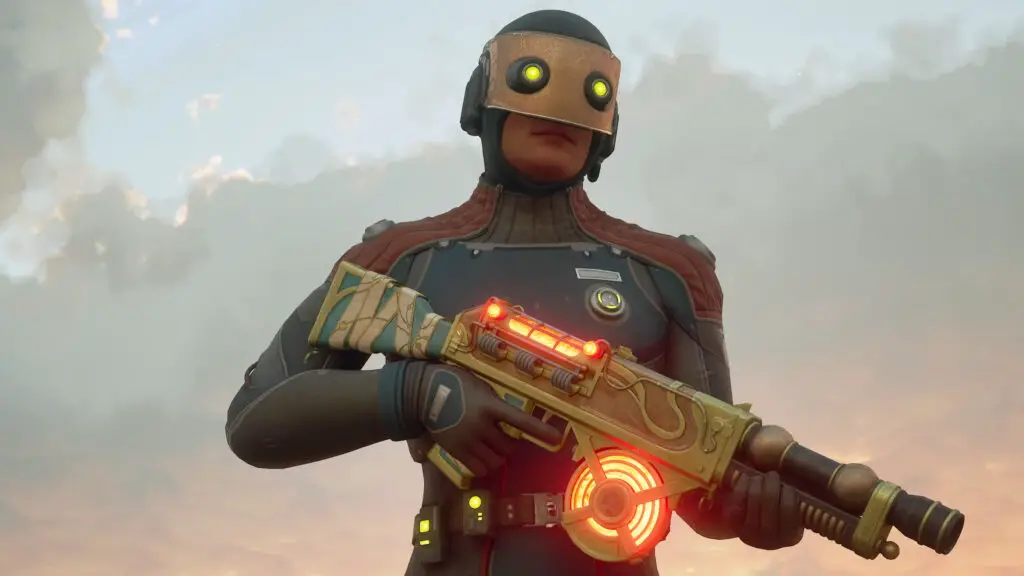
In most modern first-person titles, the camera mimics the natural rhythm of human movement. As you walk, your perspective shifts and sways to reflect the impact of your feet hitting the ground. This kinetic feedback is vital for “grounding” a player. However, in The Outer Worlds 2, this fundamental mechanic is surprisingly absent during standard traversal. Your view remains uncannily stable, as if your character is gliding on a high-end gimbal rather than navigating rugged alien terrain.
As a software engineer and storyteller, I find this omission fascinating. It creates a weightless sensation that detaches the player from the world. Unlike the heavy, grounded movement found in titles like Kingdom Come: Deliverance 2, the lack of organic jostling in Obsidian’s latest sequel makes exploration feel artificially smooth. It’s a reminder that even in 3D gaming, a perfectly still camera can ironically be more distracting than a moving one.
Comparing Movement Mechanics: RPGs vs. Shooters
The decision to omit headbob in a 2024/2025 RPG is a departure from industry standards. Most flagship titles in this genre use camera movement to heighten realism. To better understand where The Outer Worlds 2 sits in the current landscape, let’s look at how different titles handle this mechanic:
| Game Title | Headbob Intensity | Primary Goal |
|---|---|---|
| Cyberpunk 2077 | High | Physicality and immersion |
| Fallout 4 | Low/Moderate | Standard RPG grounding |
| Overwatch 2 | Variable | Character personality & weight |
| The Outer Worlds 2 | Minimal/None | Visual clarity and aiming stability |
Obsidian’s choice likely stems from a desire for “clean” visuals or to assist players who suffer from motion sickness—a common concern in gaming circles. Furthermore, since the game features heavy FPS elements, a static camera ensures more consistent reticle placement, similar to competitive shooters like Counter-Strike. Yet, when compared to the pronounced bob in Cyberpunk 2077 or the subtle sway in Skyrim, the stillness here feels like a missing layer of polish.
The Overwatch Masterclass in Movement Design
For a lesson in how camera movement can enhance digital innovation in game design, we need look no further than Overwatch. Blizzard utilizes varying intensities of camera shake to tell a story about the character you are playing. Heavy tanks like Reinhardt feature a noticeable thud and screen tilt with every step, emphasizing their massive armor. Agile heroes like Mercy glide with zero bob, reinforcing their ethereal nature. Even the erratic rhythm of Junkrat’s camera—compensating for his peg leg—shows how much data a developer can communicate through the camera alone.
When the Illusion Breaks
While The Outer Worlds 2 lacks camera bob, it does feature excellent weapon sway. When your rifle is drawn, the animation of the arms moving provides a sense of motion. However, the immersion break occurs the moment you holster your weapon. In an RPG where you spend significant time interacting with NPCs and exploring cities without a gun in your face, the view reverts to that of a disembodied drone.
At Digital Tech Explorer, we often talk about the intersection of tech and user experience. This “gimbal effect” in first-person perspectives is a prime example of how technical stability can sometimes work against the narrative goal of “feeling” like you are part of the world. As we see more 2024 releases pushing the boundaries of realism, the industry must decide if perfectly smooth gameplay is worth the loss of physical presence. For now, if you’re venturing into the Halcyon colony, prepare for a very smooth—perhaps too smooth—ride through the stars.
For more insights into game mechanics and the latest in digital innovation, stay tuned to Digital Tech Explorer.