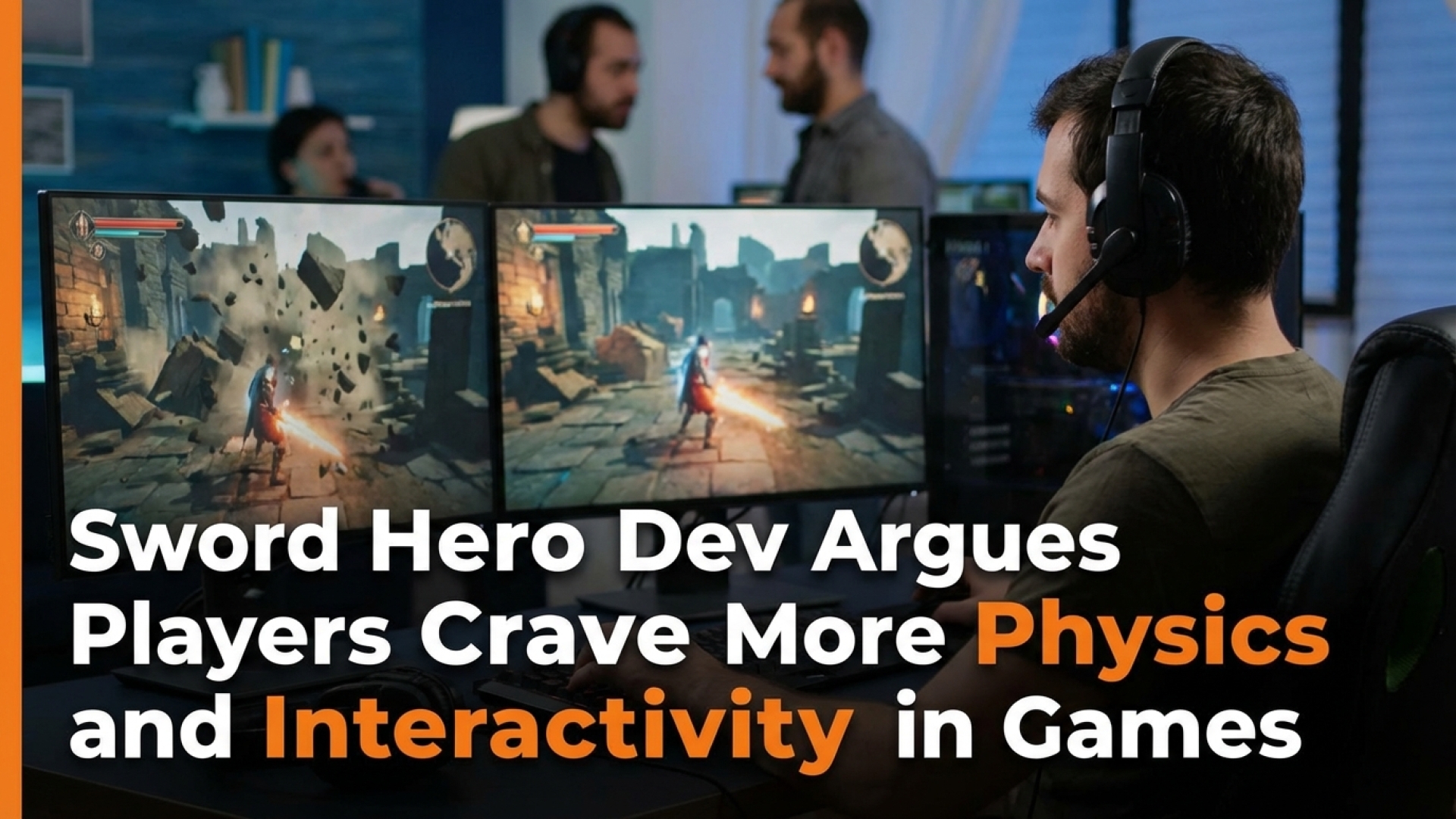
At Digital Tech Explorer, we are always on the lookout for digital innovation that breaks the mold. The story of Csaba “ForestWare” Székely and his project, Sword Hero, is a perfect example of a passion-driven developer redefining expectations. This ambitious, open-ended RPG features complex NPC behaviors and advanced physics interactions that foster truly emergent gameplay. Interestingly, Székely affectionately labels his creation “eurojank”—a term once used for ambitious but unpolished European titles that is now becoming a badge of honor for systemic depth.
The Sword Hero gameplay trailer highlights its reactive world and systemic depth.
While “eurojank” may have started as a slight, the tide has turned. Industry leaders like Larian Studios, CD Projekt Red, and IO Interactive—once considered cult-classic creators—now define the modern PC gaming landscape. This shift signifies a major evolution in what players value: the freedom to interact with a world rather than just looking at it.
The Great Shift: Fidelity vs. Interactivity
As a storyteller in the tech space, I’ve watched the pendulum swing from 2007’s obsession with production value to today’s hunger for agency. Looking back, few would have guessed that the developers behind Divine Divinity or niche Polish fantasy adaptations would eventually outshine industry giants like BioWare. ForestWare provides a compelling perspective on this trend, noting that as development costs soared, resources were often diverted toward texture resolution at the expense of gameplay physics.
ForestWare points to Nvidia PhysX as a turning point in hardware utilization. He recalls titles like Mirror’s Edge as high-water marks for environmental richness. However, as the industry pivoted toward visual fidelity for trailers and screenshots, many environments became “static 3D boxes”—visually stunning but completely non-reactive.
Comparing the focus of mainstream cinematic titles versus the systemic approach of modern reactive RPGs.
The Uncanny Valley of Inert Worlds
The contrast between high-resolution facial rendering and static environments can often break player immersion.
There is a distinct “uncanny valley” effect in modern software when environments look hyper-realistic but remain inert. When every leaf is rendered in 4K but your character cannot move a chair or influence the world, the illusion of immersion shatters. This is why titles like The Elder Scrolls and Baldur’s Gate 3 remain perennial favorites—they offer player agency.
Sword Hero aims to bridge this gap by prioritizing granular interaction. In my analysis of upcoming 2024 releases and beyond, this “systemic depth” is what separates a forgettable experience from a masterpiece. The ability to manipulate the environment isn’t just a gimmick; it’s the foundation of modern digital storytelling.
Join the Evolution: Try Sword Hero
The community response to this vision has been overwhelming. This open-world RPG has already surpassed its initial Kickstarter goals and continues to expand its feature set. For those who want to see the “eurojank” revolution in action, the combat demo on Steam provides a fantastic look at how reactive gameplay changes the feel of combat.
You can dive deeper into Székely’s journey from a chef to a solo developer by reading the full interview with ForestWare. To support this leap in digital innovation, be sure to try the Sword Hero demo and add it to your Steam wishlist.
For more stories on the intersection of software engineering and digital entertainment, stay tuned to Digital Tech Explorer.