
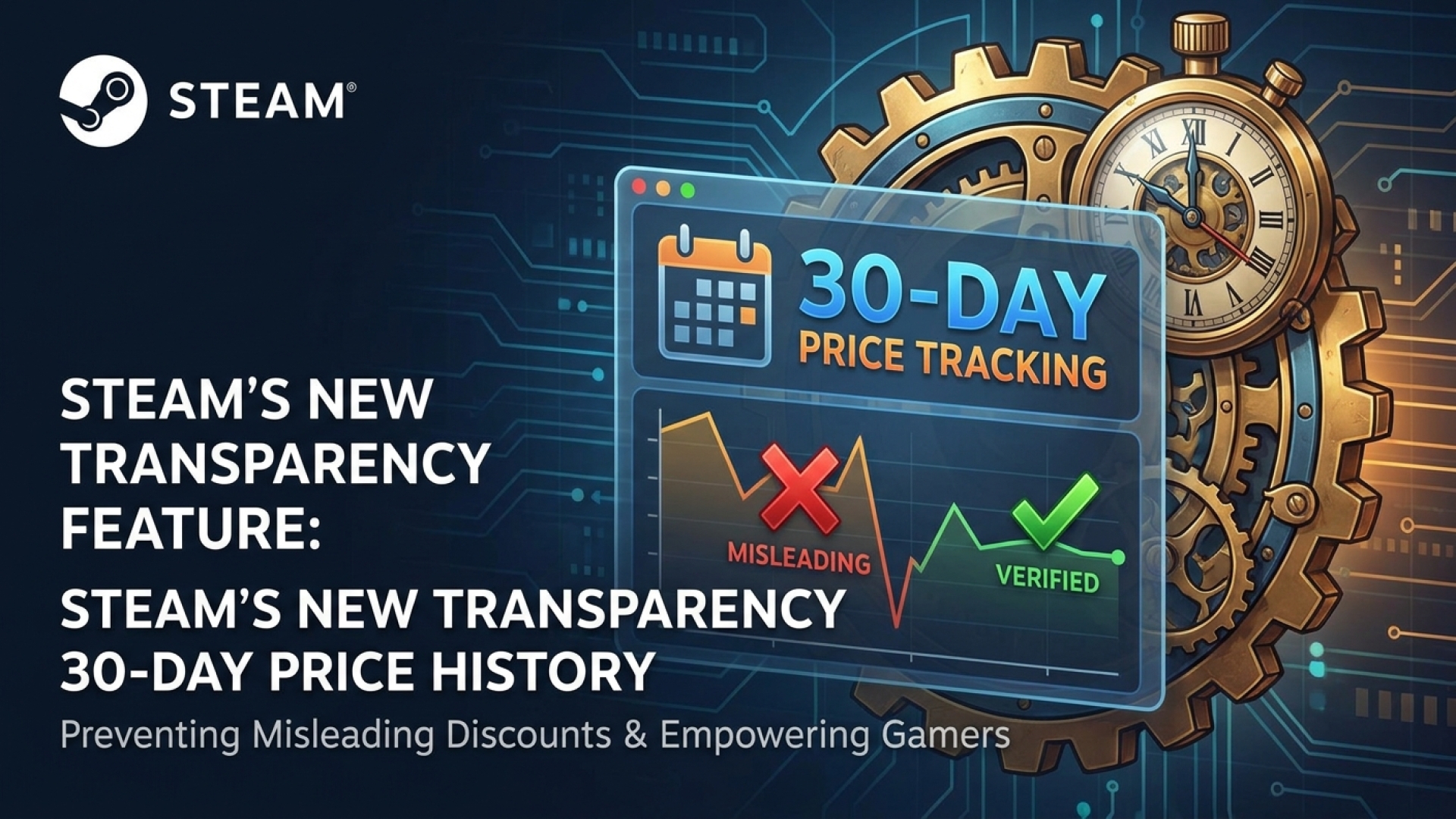
We have all experienced that moment of hesitation during a major Steam sale. You see a game slashed by 75%, but a small voice in your head asks: Is this actually a deal, or was the price hiked yesterday just to make this discount look better? At Digital Tech Explorer, we believe transparency is the backbone of a great gaming experience. Fortunately, Valve seems to agree, as new evidence suggests the platform is preparing to roll out a built-in 30-day price tracking system.
The End of “Phantom” Discounts?
As a storyteller in the tech space, I’ve seen how digital storefronts can sometimes feel like a “black box.” This upcoming update, first identified by @SigaTbh and later detailed by LambdaGeneration, points to a future where Steam store pages will explicitly list a game’s recent price history. Backend code tags such as “30-Day low” and “previously on discount for x%” suggest that Valve wants to put the data directly into the hands of the consumer.
This move is specifically designed to target “price manipulation.” In the past, some publishers were known to inflate a game’s base price shortly before a seasonal event. When the sale hit, the “discount” looked massive, but in reality, the price was simply returning to its standard MSRP. By implementing a rolling 30-day window, Valve is creating a layer of protection that ensures gaming deals are authentic.
Steam’s New Transparency Features at a Glance
| Feature | What It Does | Current Status |
|---|---|---|
| 30-Day Price History | Displays the lowest price a game has hit in the last month. | Testing/Expanding |
| Frame Rate Estimates | Predicts FPS based on users with similar hardware. | In Beta Testing |
| EU Compliance Tags | Mandatory discount transparency for European regions. | Live in EU |
A Global Shift in Consumer Protection
While this might feel like a revolutionary change for gamers in North America and other regions, it is actually a expansion of policies already active in the European Union. Strict consumer protection laws in the EU already require retailers to show the lowest price within the last 30 days. Our research at Digital Tech Explorer suggests that Valve is now streamlining its global backend to bring these standards to all PC games enthusiasts, regardless of their location.
However, no system is perfect. A 30-day window still allows a clever publisher to raise prices 31 days before a sale. While this “loophole” exists, the move is a massive step forward in bridging the gap between complex storefront algorithms and everyday usability. It empowers players to make informed decisions—a core part of our mission here at Digital Tech Explorer.
Advanced Tools for the Savvy Gamer
Beyond price tracking, Valve is also working on a system to provide frame rate estimates for games. By leveraging performance data from users with similar hardware and GPU configurations, Steam could soon tell you exactly how a title will perform on your specific rig before you ever hit “Buy.”
If you don’t see the 30-day price history in your region yet, I highly recommend using SteamDB. It remains the gold standard for third-party price history and data analysis. Whether you are looking for Minecraft alternatives or the latest 3D gaming experiences, verifying the price trend ensures you never overpay for your digital library.
As we move through the 2024 releases, stay tuned to Digital Tech Explorer for more insights into how AI and digital innovation are changing the way we play. We are committed to keeping you ahead of the curve with real-world testing and transparent reporting.
Affiliate Disclaimer: Some of the links on Digital Tech Explorer are affiliate links. This means we may earn a commission if you click through and make a purchase, at no additional cost to you. Our recommendations are based on thorough research and personal experience. All content is for informational purposes only.