
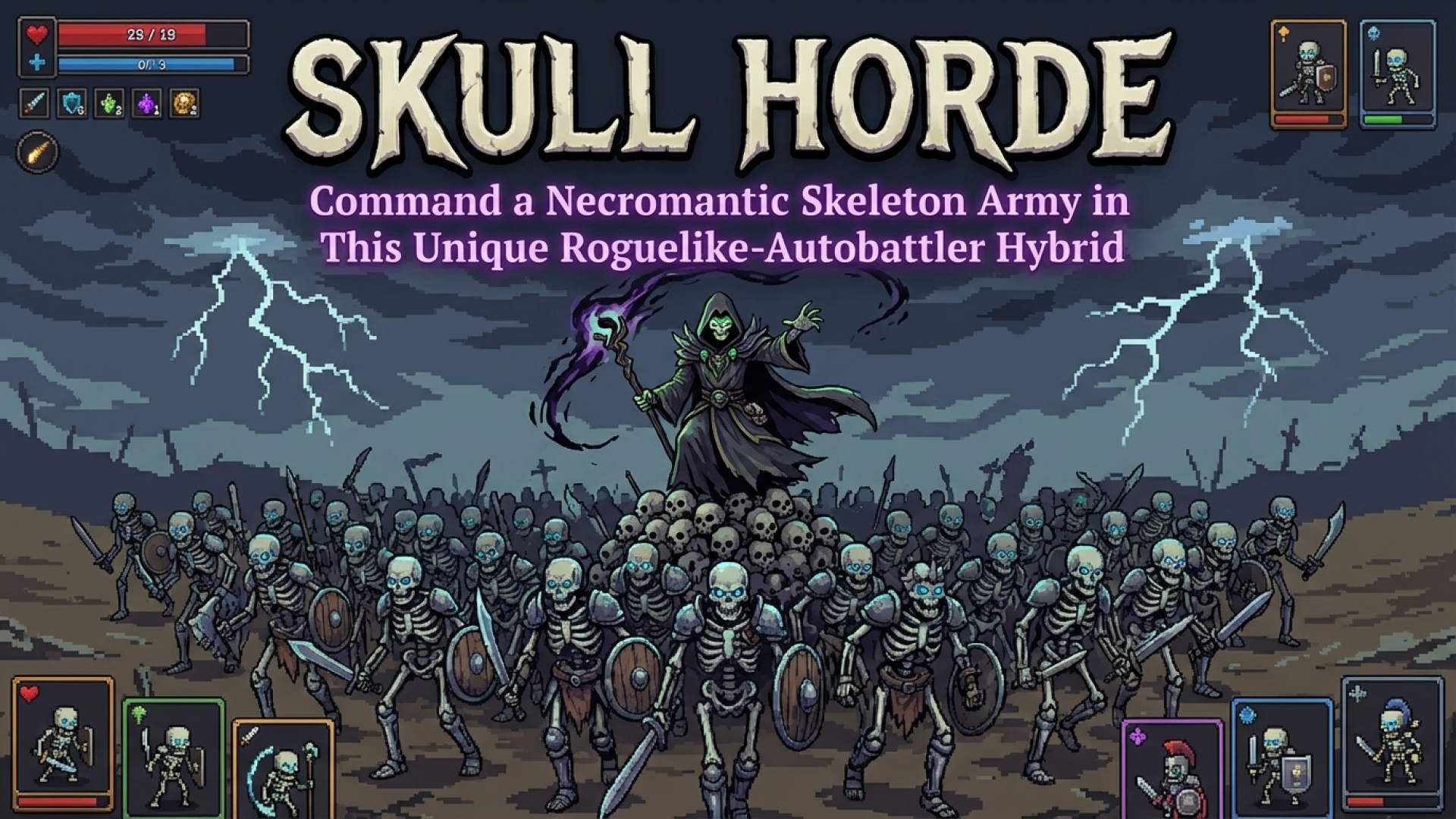
At Digital Tech Explorer, we are always on the lookout for innovative titles that push the boundaries of established genres. Every so often, a game arrives with a premise so delightfully macabre it demands a closer look. Enter Skull Horde, a title that asks: what happens when a necromancer’s body rebels against its own head? In this narrative-driven tactical survival game, you aren’t just playing a character; you are a severed, magical skull rising from the earth to reclaim your immortality from your own headless corpse.

Unleash Your Undead Army
As a storyteller in the digital space, I found the core loop of Skull Horde to be a masterful fusion of popular mechanics. It blends the high-octane survival of gaming hits like Vampire Survivors with the deep, calculated unit management of an auto-battler like Teamfight Tactics. Navigating through dark dungeon corridors, your minions handle the dirty work, automatically engaging enemies while you focus on movement, resource collection, and survival.
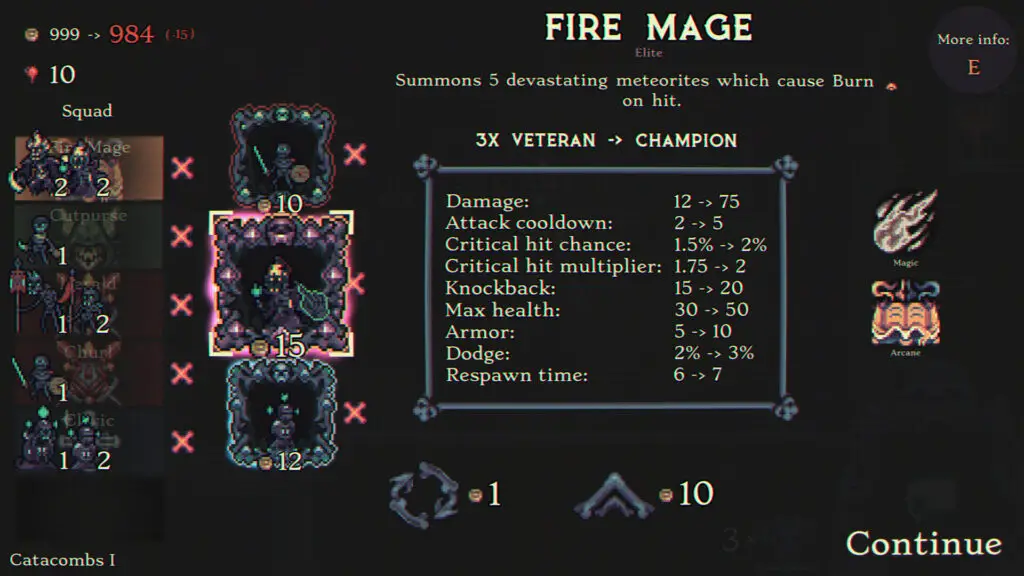
The strategic “between-floor” segments are where the software logic and tactical planning truly shine. You aren’t just collecting units; you are building an ecosystem. With a limit of six distinct unit types, you must choose between brute force and arcane utility. From skeletal rats that overwhelm with numbers to ice mages that provide crowd control, the variety is impressive. To help visualize the progression system, here is how unit evolution functions within the game:
| Unit Tier | Requirement | Combat Value |
|---|---|---|
| Minion | Standard Recruitment | Basic stats; foundation of the army. |
| Veteran | Merge 3 identical Minions | Significantly increased health and damage. |
| Champion | Merge 3 identical Veterans | Unlocks powerful set bonuses (Vanguard, Siege, etc.). |
Tactical Combat and Risk Management
During my deep-dive testing for Digital Tech Explorer, I initially favored a “Vanguard” heavy build. By stacking armored warriors and clerics, I hoped to create an unbreakable wall of bone. However, Skull Horde punishes stagnation. The game incorporates a clever time-pressure mechanic: the longer you dwell on a floor, the more aggressive the enemy spawns become. Efficiency is just as important as defense in this PC games landscape.
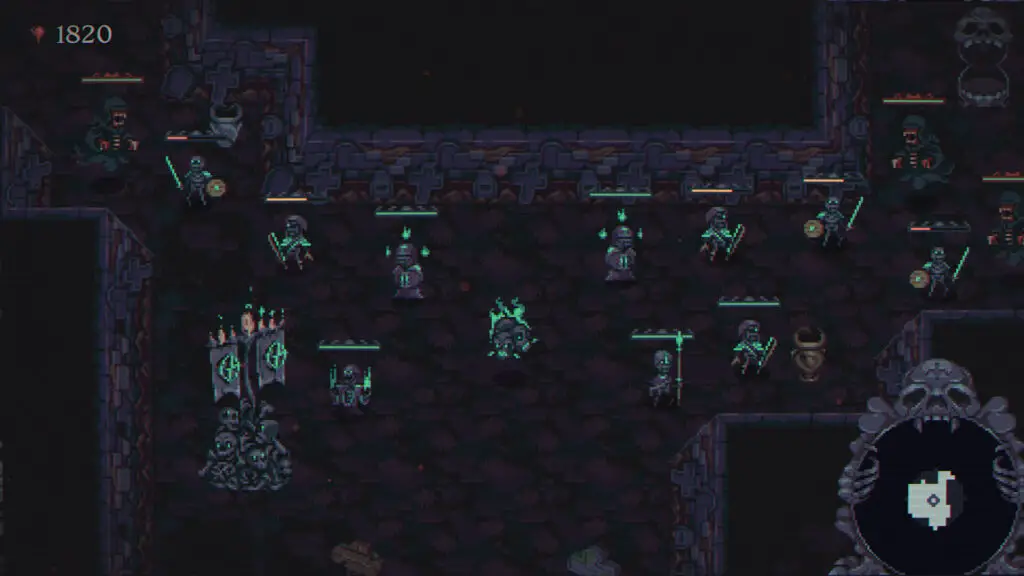
The “Fury Spell” is your primary tool for direct intervention. While you don’t micromanage every swing of a sword, you can command your legion to rally to your position or enter a state of bloodlust. There is also a unique risk-reward mechanic regarding health: any damage taken by your floating skull is shared across the entire horde. This adds a layer of vulnerability that forces you to decide between aggressive pushes for treasure chests or retreating to preserve your army’s integrity.
Progression and Future Builds
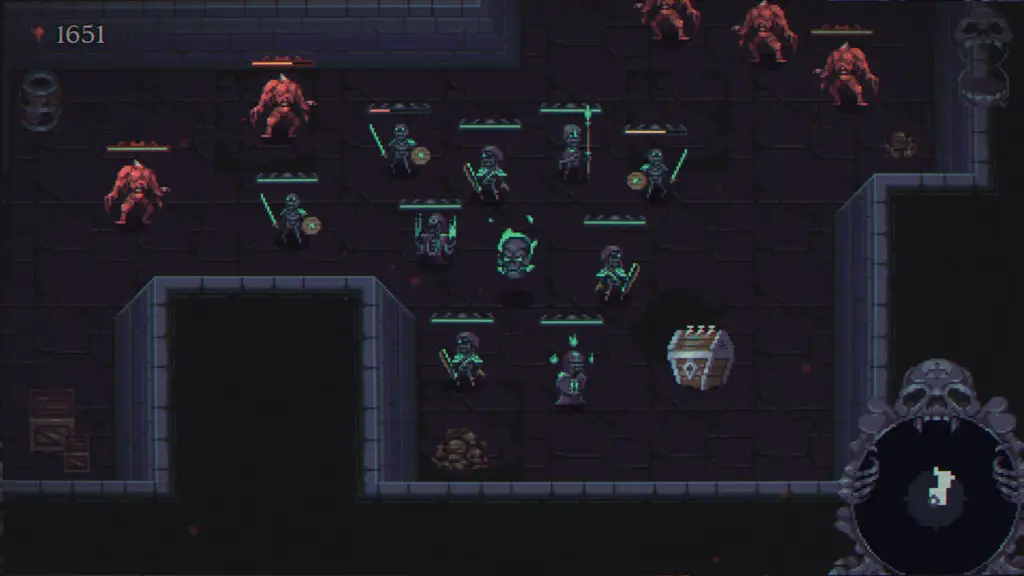
Failure is a learning tool in the world of roguelikes. My first run ended at the hands (or rather, the appendages) of a flesh tower creature that simply out-spawned my defensive line. However, the meta-progression system allows you to invest skill points into specialized trees, bridging the gap between a novice player and a seasoned commander. As TechTalesLeo, I appreciate how this turns every defeat into a new chapter of growth.
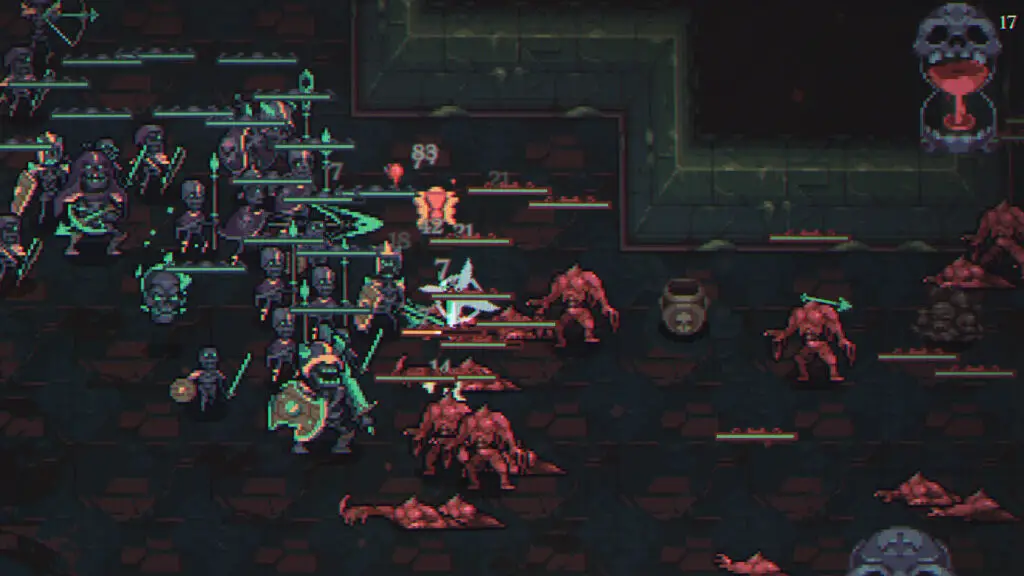
While the early game leans heavily toward the Vanguard archetype, the potential for diverse builds is exciting. I am already eyeing a “Horde” build—one that focuses on overwhelming numbers and reaping benefits from the constant death and respawning of low-tier units. Additionally, the unlockable character “Garg” offers a new challenge for those who can master high-armor multipliers. This variety ensures that the gameplay remains fresh and intriguing for those who love to experiment with digital systems.
Skull Horde is currently available on Steam. If you are looking to test your tactical mettle, there is a special 25% discount available until April 24. For more insights into the latest 2024 releases and tech trends, stay tuned to Digital Tech Explorer.
Check out more from TechTalesLeo for in-depth analysis and the stories behind the software.