
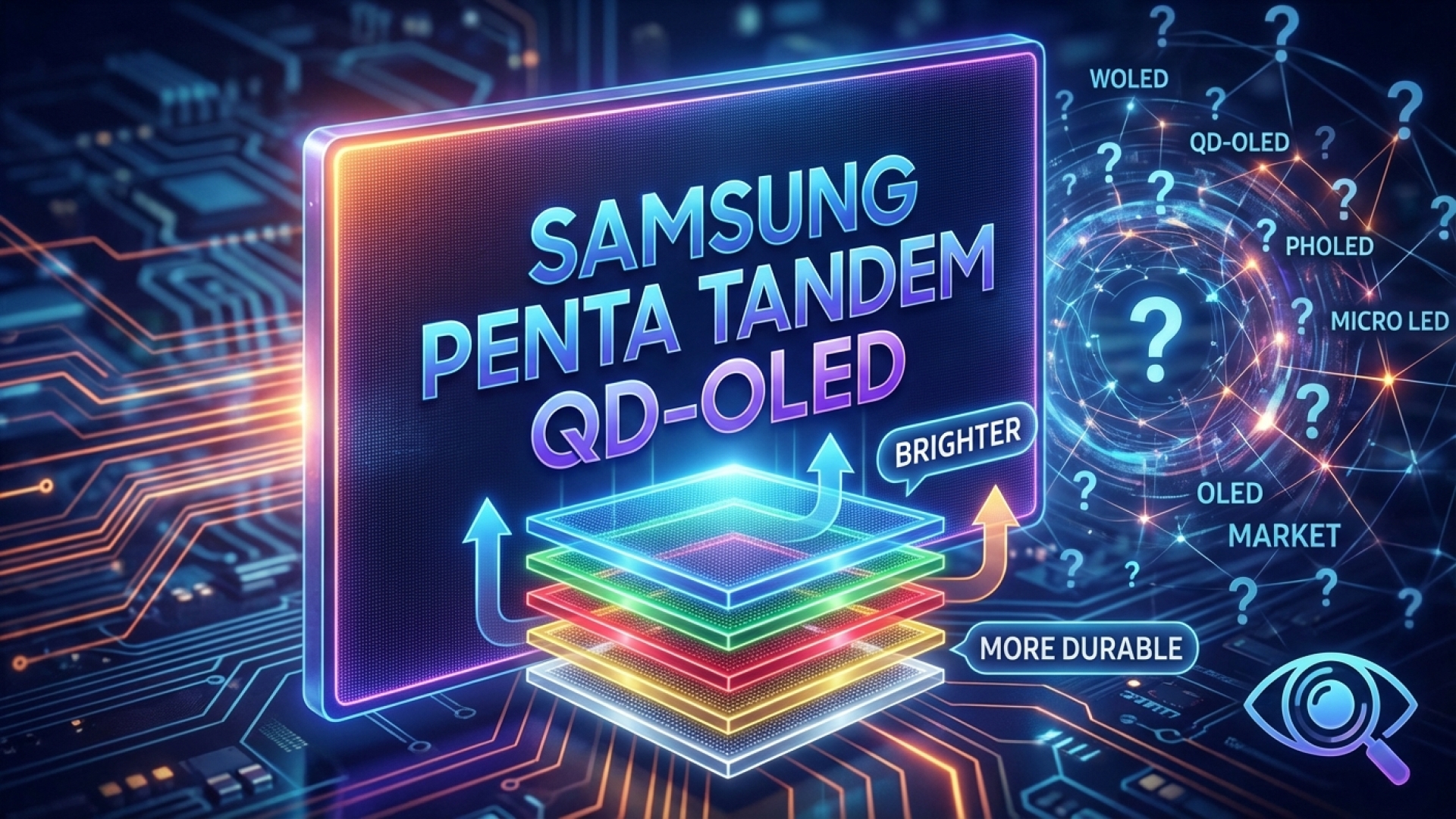
The landscape of display technology is shifting once again, and here at Digital Tech Explorer, we are diving deep into Samsung’s latest breakthrough. Samsung has recently unveiled a significant advancement in PC gaming hardware: a new panel technology that promises substantial improvements in both brightness and long-term durability. This innovation, branded as Samsung QD-OLED Penta Tandem, aims to redefine the standards of the competitive OLED market, even if the nomenclature feels a bit complex at first glance.
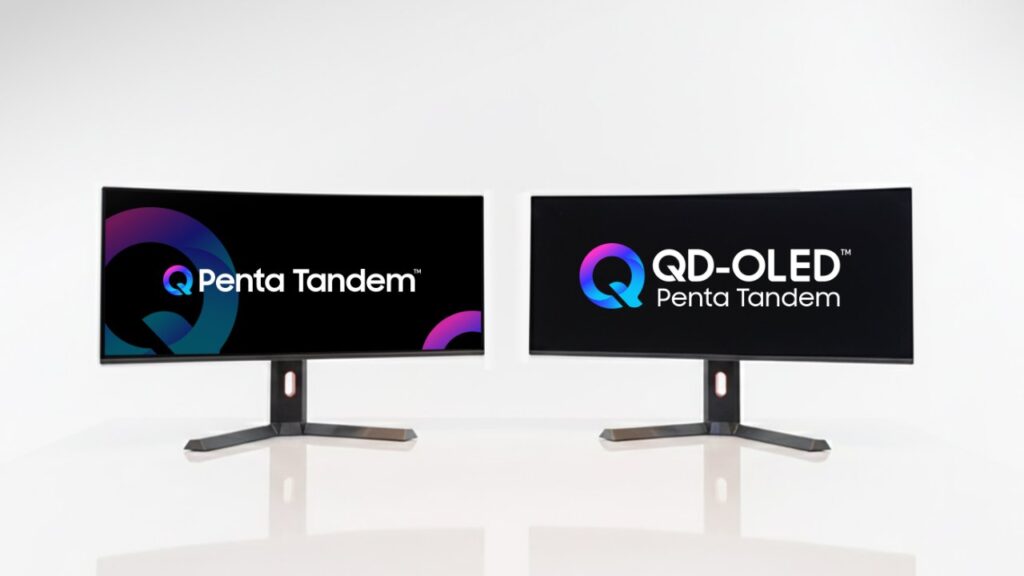
According to our analysis of Samsung’s specifications, this updated panel is 1.3 times brighter and boasts double the lifespan of previous generations used in desktop monitors. The “Penta” designation refers to its five-layer construction, a sophisticated design intended to combat the traditional Achilles’ heel of OLED: longevity. Through our research into gaming trends and previous long-term tests, we’ve seen that earlier Samsung panels already showed strong resistance to burn-in. If this new generation effectively doubles that resistance, the anxiety surrounding screen degradation may soon be a thing of the past for the average user.
Understanding the OLED Landscape: Samsung vs. LG
As TechTalesLeo, I find the rivalry between Samsung and LG to be one of the most intriguing stories in tech today. The introduction of the Penta Tandem adds another layer to an already complex market. LG currently utilizes its own “Tandem” variants, specifically LG Tandem WOLED (Primary RGB Tandem) and LG Tandem OLED. While the word “Tandem” generally refers to a stacked or dual-layer structure, the engineering philosophies between the two giants differ significantly.
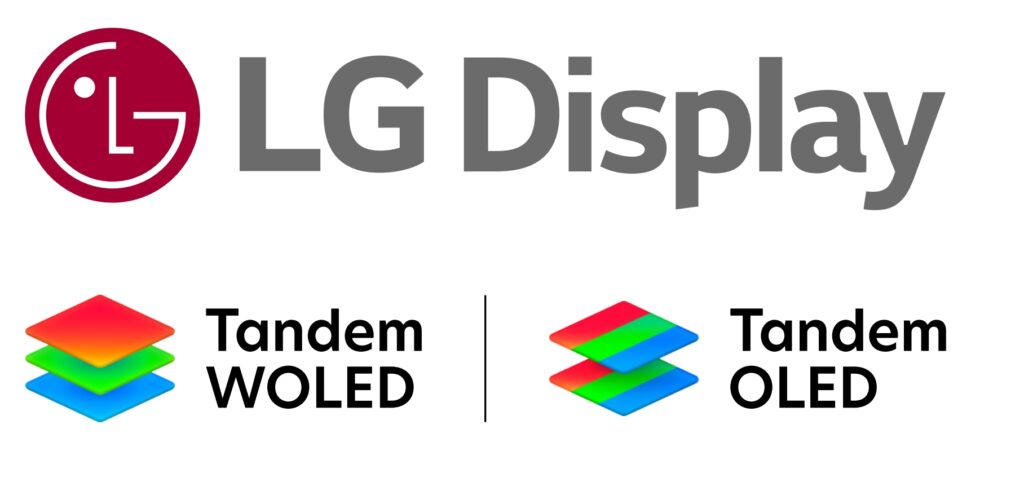
LG’s WOLED panels utilize four emissive layers—comprising two blue, one red, and one green—to generate a white light that is subsequently filtered into subpixels. Interestingly, the “W” no longer denotes a dedicated white subpixel but rather the white light stack itself. Conversely, LG’s standard Tandem OLED features two layers of RGB LEDs, where each subpixel uses matching unfiltered light sources. It’s a sophisticated dance of photons designed to maximize output without overtaxing the organic materials.
The Science of Samsung’s QD-OLED
Samsung’s approach remains distinct. Rather than filtering white light, their technology projects blue light through an emissive quantum dot layer. These quantum dots absorb the blue light and convert it into pure red or green, while the blue subpixel allows the base emission to pass through. This method is celebrated for its color purity and vibrancy.
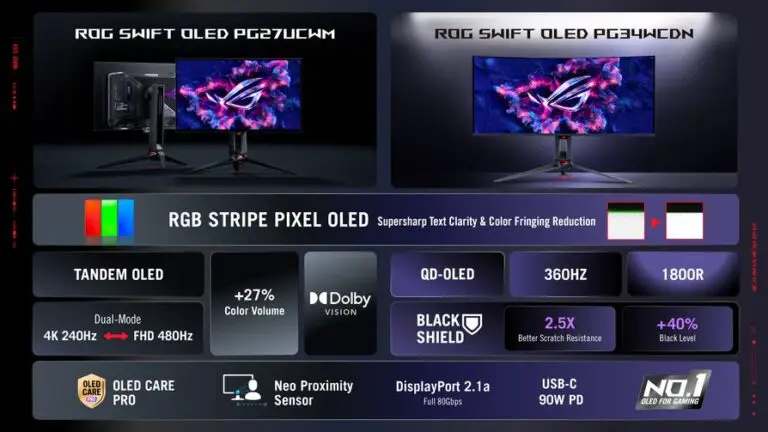
The Penta Tandem innovation takes this further by stacking three layers of blue emissive material with two layers of green. This five-layer configuration is designed to boost overall luminance while distributing the electrical load to extend the hardware’s life. While some LG panels currently lead in raw full-screen nits (around 350 nits vs Samsung’s 300), QD-OLED excels in “Color Volume,” delivering brighter, more saturated colors without relying on a white subpixel to “cheat” its way to higher peak brightness.
Is the Penta Tandem Already in Your Home?
Surprisingly, this “new” technology is already on shelves. Our investigative team at Digital Tech Explorer has noted that monitors like the MSI MPG 272URX are already utilizing this architecture. Initially marketed as “five-layer Tandem OLED with EL 3.0,” Samsung has effectively rebranded this existing high-end tech under the Penta Tandem moniker to better compete in the marketing war against LG.
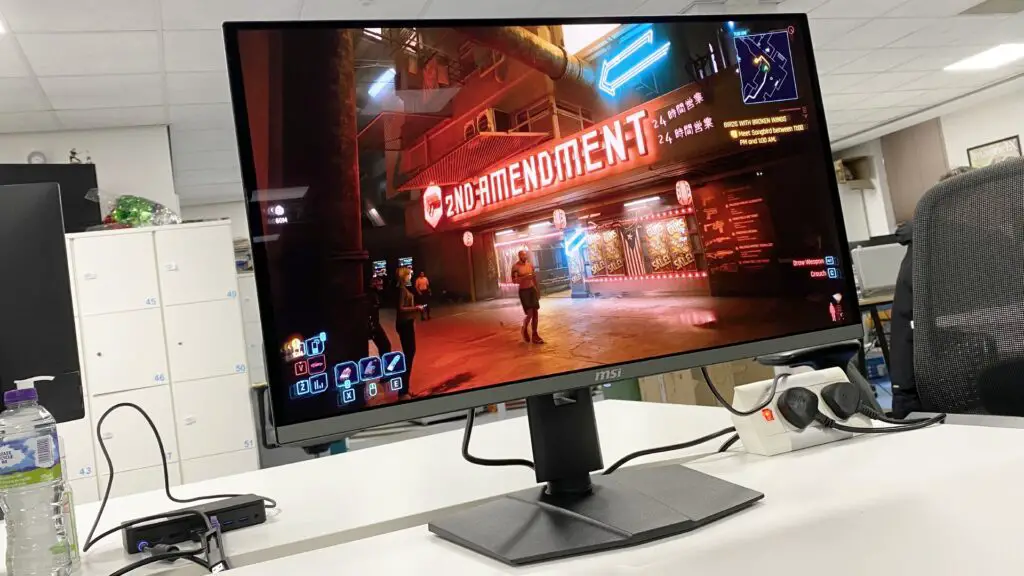
It is worth noting that the 1.3x brightness boost is not universal. In our review of 4K resolution monitors, we’ve found that pixel density plays a role; the tiny pixels in a 27-inch 4K panel may not reach the same peak levels as the larger pixels found in 1440p or 34-inch ultrawide displays. Regardless, this advancement represents a major win for consumers, signaling a future where OLED displays are not only more beautiful but far more durable. Stay tuned to Digital Tech Explorer as we continue to test these panels in real-world scenarios.