
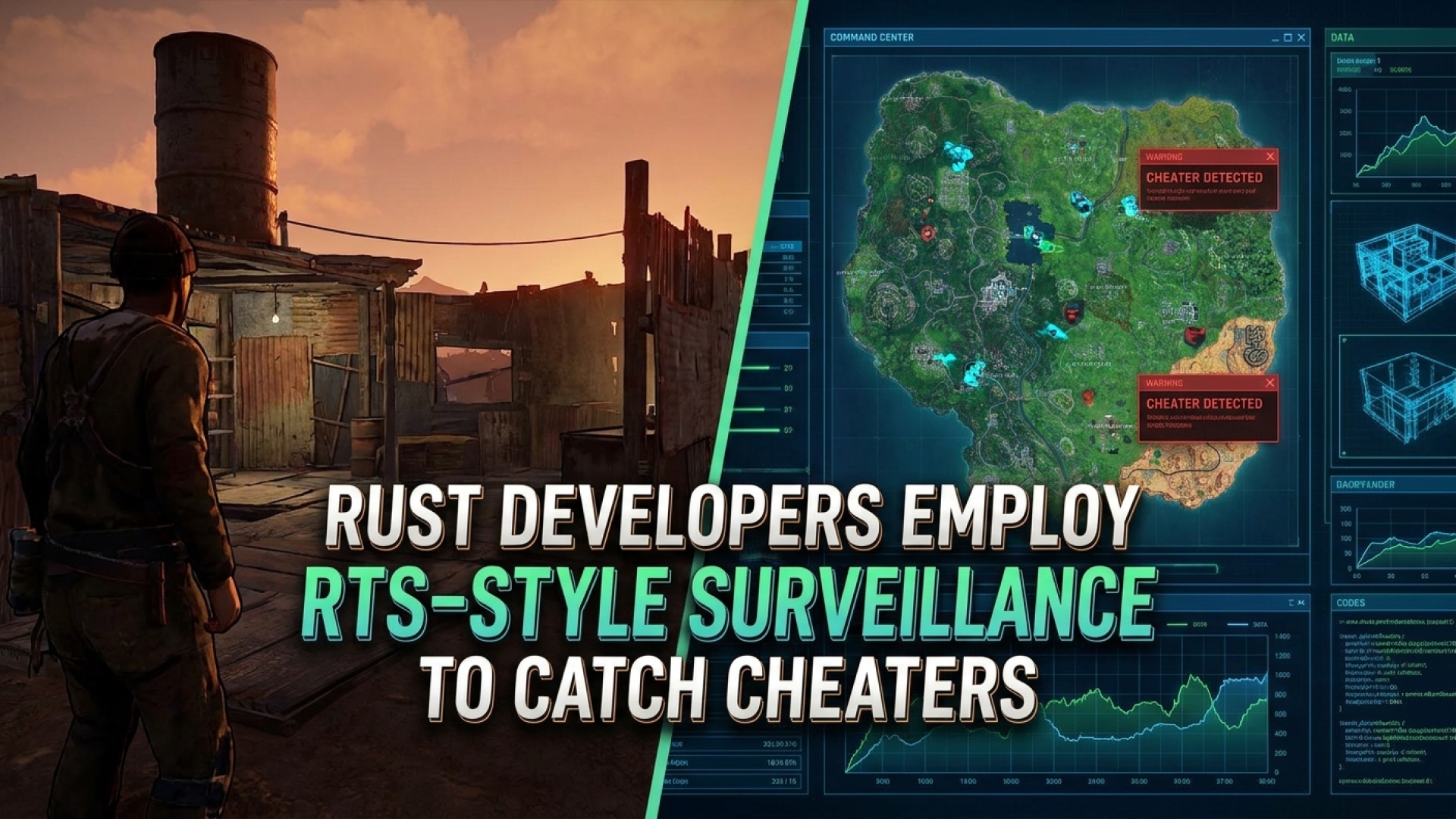
The frustration of encountering a cheater in any survival game is a universal experience, often compounded by the feeling of powerlessness as you send a report into what feels like a digital void. However, here at Digital Tech Explorer, we’ve been tracking how developers are utilizing advanced surveillance to reclaim the integrity of online spaces. For players of the popular survival title Rust, it turns out your actions—both legitimate and illicit—are under a level of observation that rivals a high-stakes security operation.
Facepunch Studios: Watching Rust Like an RTS Game
According to Facepunch COO Alistair McFarlane, the developers maintain a comprehensive surveillance system over the game’s servers that goes far beyond simple log files. McFarlane revealed in a recent update that their team can monitor servers remotely as if they were playing a Real-Time Strategy (RTS) game. This advanced system captures every nuance of the gaming experience.
“Every gun shot, every message, every dropped item, and every interaction is logged, recorded, and can be played back or watched live,” McFarlane shared. This means that even when admins appear to be offline, their anti-cheat measures are actively capturing data. This level of transparency highlights a major shift in how PC games are moderated, debunking the common misconception among cheaters that they can operate safely under the cover of night.
The Multi-Layered Defense: Automation and Human Oversight
As TechTalesLeo, I’ve seen many developers struggle to balance automated bans with manual reviews. Facepunch seems to have found a sweet spot. Cheat reports are fed into sophisticated automated systems—leveraging logic that mirrors AI-driven acceleration—to analyze player behavior patterns. These systems can initiate immediate flags or delayed “ban waves” to keep cheat developers guessing.
Beyond the algorithms, a dedicated staff continuously monitors high-priority reports. Accounts receiving a surge of complaints are automatically escalated for human investigation. This hybrid approach ensures that while technology does the heavy lifting, the final “hammer” often comes from a place of careful scrutiny.
| Anti-Cheat Layer | Functionality | Impact |
|---|---|---|
| RTS-Style Monitoring | Live and recorded playback of all player interactions. | Eliminates “blind spots” on servers. |
| Automated Analysis | Logs movement, accuracy, and item interaction patterns. | Rapid identification of common scripts. |
| Hardware Requirements | Mandatory Secure Boot and TPM (Trusted Platform Module). | Prevents hardware-level spoofing and recurring offenders. |
| Manual Review | Dedicated staff reviewing high-priority player flags. | Reduces false positives and handles complex cases. |
Rising Hardware Standards: Secure Boot and TPM

Facepunch’s commitment to security is also moving toward the hardware layer. The studio recently announced a move toward requiring Secure Boot and Trusted Platform Module (TPM) for Rust. While currently an opt-in feature for certain servers, these requirements are expected to become the industry standard. This transition mirrors moves by other major titles like Valorant and Call of Duty.
The push for stricter hardware requirements has not been without controversy. It effectively ended support for Linux platforms and Steam Deck’s Proton layer, as the developers stated that platforms lacking these rigorous security checks are “not serious about anti-cheat.” While some users find these measures intrusive, the data suggests they are effective at stopping the “revolving door” of banned players returning on new accounts.
The Future of Integrity in Online Gaming
The battle against illicit software is a permanent arms race. By combining real-time surveillance, automated analysis, and stringent hardware checks, Facepunch Studios is signaling a future where fair play is non-negotiable. At Digital Tech Explorer, we believe these innovations are essential for the longevity of competitive gaming.
Whether you are a veteran survivor or a newcomer to the landscape of Rust, knowing that the developers are watching—like a commander in an RTS game—provides a sense of security that the “wild west” of survival gaming is finally being tamed. Stay tuned to our TechTalesLeo column for more deep dives into how digital innovation is changing the way we play.