
“Just because your DNA is a one in a billion match doesn’t mean you can be a princess,” says Dr. Monroe. “Get moving, tiara.”
I’ve won the lottery in the strangest possible way. After growing up in a Californian megacity overrun by poverty, I’ve been handed an invitation to the Avatar Program. Five years of cryosleep later, I’m thrust into Hell’s Gate, a colonial military base on the distant planet of Pandora. “You start growing a conscience,” warns one jarhead, “and you’ll end up on the dead end of a Na’vi spear.”
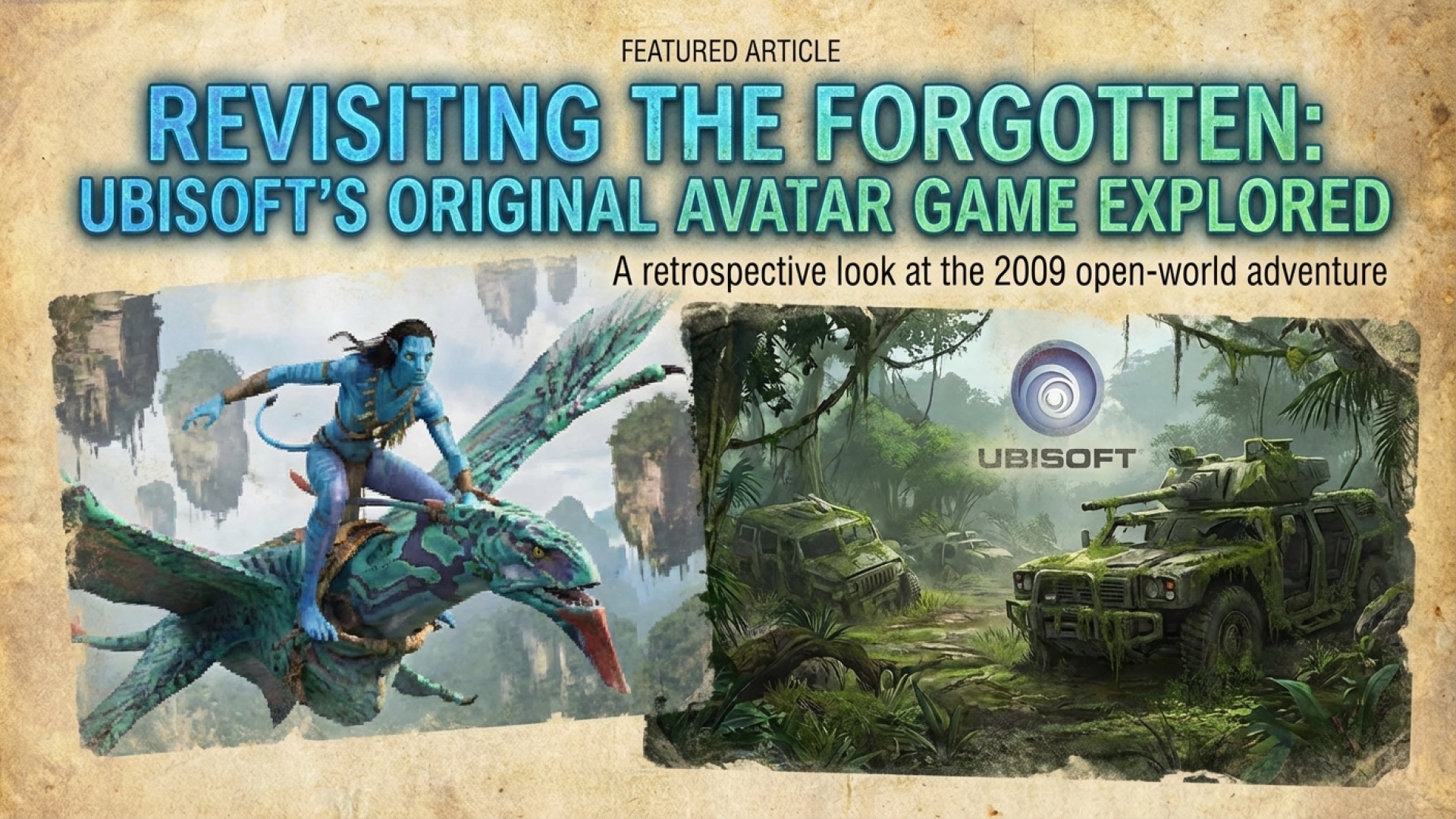
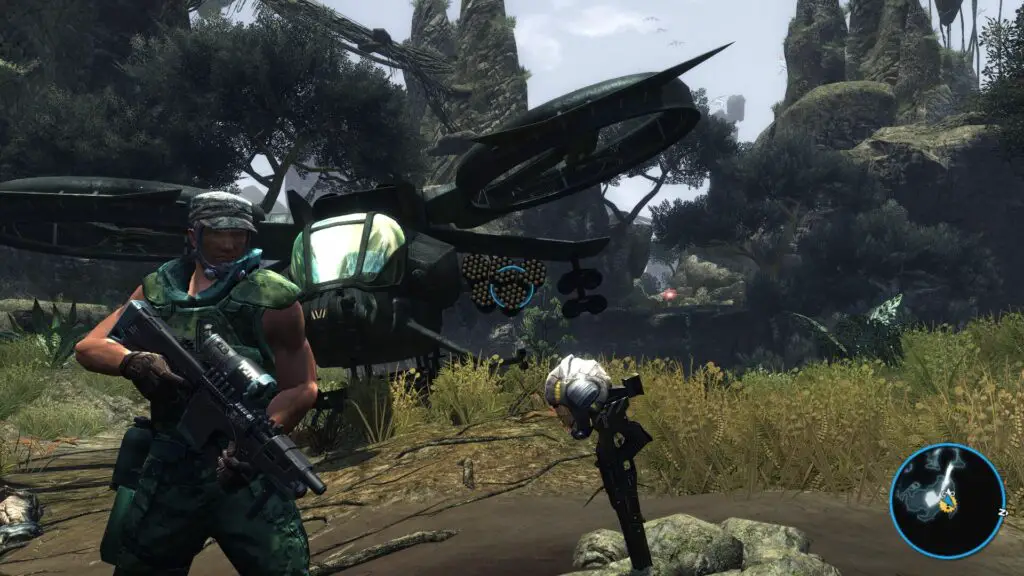
My name is ‘Able’ Ryder, and I’m the protagonist of a forgotten Ubisoft relic. Long before the lush visuals of Frontiers of Pandora, there was another attempt to capture James Cameron’s vision. At Digital Tech Explorer, we love digging into the archives of PC games to see how far hardware and software have evolved. Fourteen years before the latest release, Ubisoft launched a third-person shooter alongside the original blockbuster film.
A Snapshot of Ubisoft’s Evolution
James Cameron’s Avatar: The Game arrived during a pivotal era for Ubisoft. Having just released Far Cry 2 and Assassin’s Creed II, the publisher was beginning to define the open-world formula that would dominate the industry for over a decade. However, this title feels like a vestige of an older philosophy: the licensed movie tie-in.
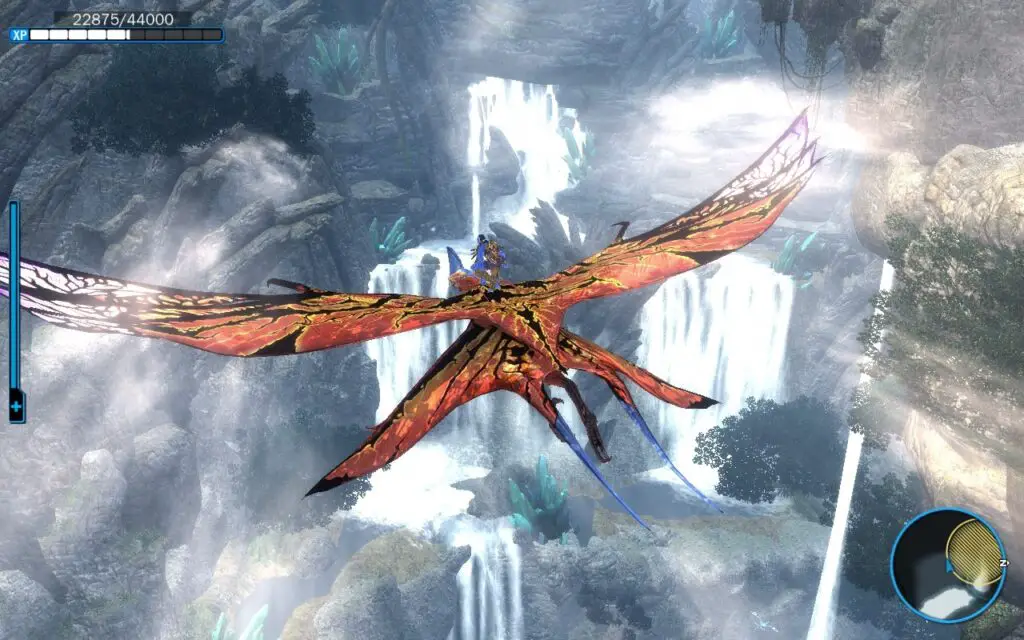
While Ubisoft previously found success with their King Kong adaptation, this project clearly struggled with Hollywood’s rigid deadlines. The animations lack the fluidity of Ezio Auditore, and the lighting in Pandora doesn’t quite match the atmospheric brilliance found in Far Cry 2‘s African savannas. Yet, as a storyteller exploring digital innovation, I find these technical limitations fascinating artifacts of their time.
The Pivotal Choice: Na’vi or RDA?
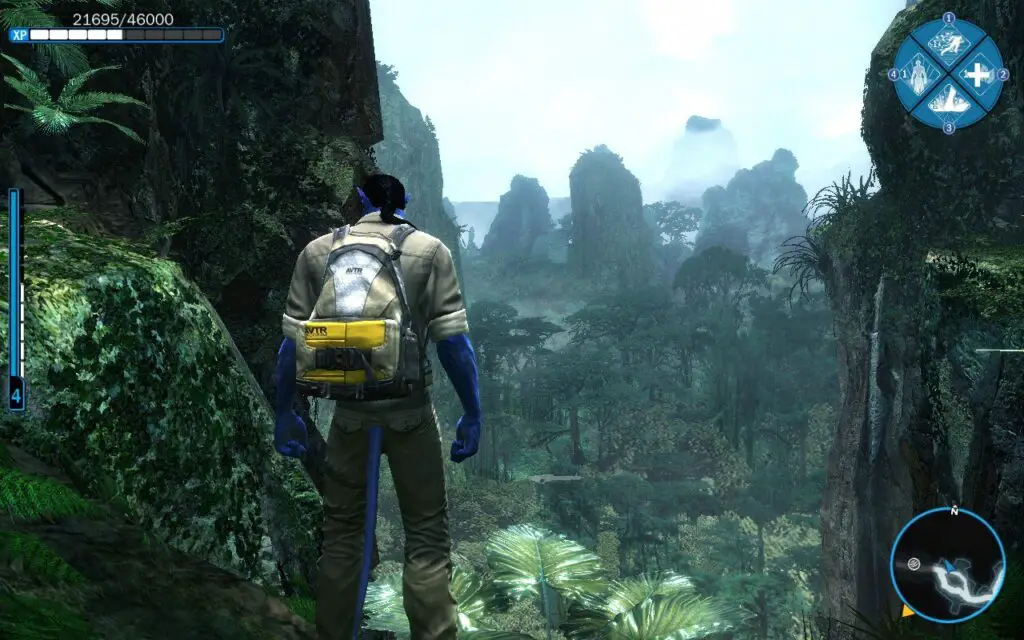
Despite its flaws, the game introduced an ambitious narrative fork. Early in the campaign, you are forced to choose: will you follow Jake Sully’s path and join the Na’vi, or will you remain loyal to the RDA corporation that funded your journey? This duality is a rare feature in modern licensed gaming.
Opting for the RDA offers a unique perspective rarely seen in the franchise. In the modern Frontiers of Pandora, you are naturally agile, navigating the world like a parkour expert. In this 2009 title, playing as an RDA-aligned Avatar feels cumbersome—you are essentially a giant, brightly colored soldier. It makes you wonder about the internal logic of the RDA’s program when your weaponry remains nearly identical to your human counterparts.
Comparing the Generations
To understand the leap in technology, here is how the 2009 title compares to the modern standard:
| Feature | Avatar: The Game (2009) | Frontiers of Pandora (2023) |
|---|---|---|
| Perspective | Third-Person Shooter | First-Person Action-Adventure |
| World Design | Linear Paths / “Warrens” | Seamless Open World |
| Playable Factions | Dual Campaign (Na’vi & RDA) | Na’vi Only |
| Engine | Dunia (Early version) | Snowdrop Engine |
A Technicolor Vietnam Experience
When playing as the RDA, the game takes on the vibe of a stylized Vietnam War film. Your mission involves securing “tuning crystals” to triangulate a Well of Souls. The RDA’s ultimate goal is to find a backdoor into Eywa, theoretically severing the Na’vi connection to their goddess. It is a dark, industrial objective that contrasts sharply with the vibrant environment.
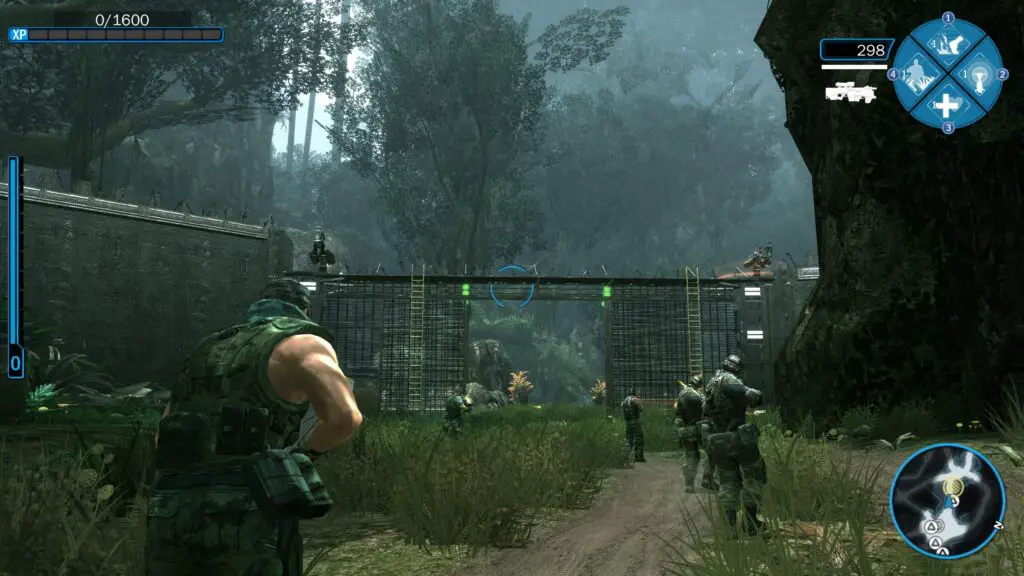
The level design is restrictive by modern standards. Instead of an open world, the jungles are constructed as winding paths filled with hostile flora. Plants emit poison gas, vines strike out at passersby, and some flora acts as organic mines. In this hostile ecosystem, the flamethrower becomes an essential tool for survival, emphasizing the RDA’s “conquer and destroy” mentality.
Vehicular Mayhem in the Jungle
Ubisoft integrated a variety of vehicles to diversify the gameplay. You can pilot the iconic RDA exosuits or drive buggies through the dense undergrowth. However, the physics are often unforgiving; one wrong move on a narrow tree trunk can send your vehicle plummeting into the canopy below.
While the controls are somewhat clunky, the ability to swap vehicles on the fly gives the game a “solo-Battlefield” sensation. It provides a level of chaotic fun that highlights the developer’s early experiments with systemic gameplay and AI interactions.
The Legacy of Pandora’s First Outing
As the campaign reaches its conclusion, the repetitive nature of the objectives becomes apparent. The story ends with a somewhat ambiguous light-show involving Sigourney Weaver’s character, leaving the player wondering if their efforts actually changed the course of Pandora’s history.
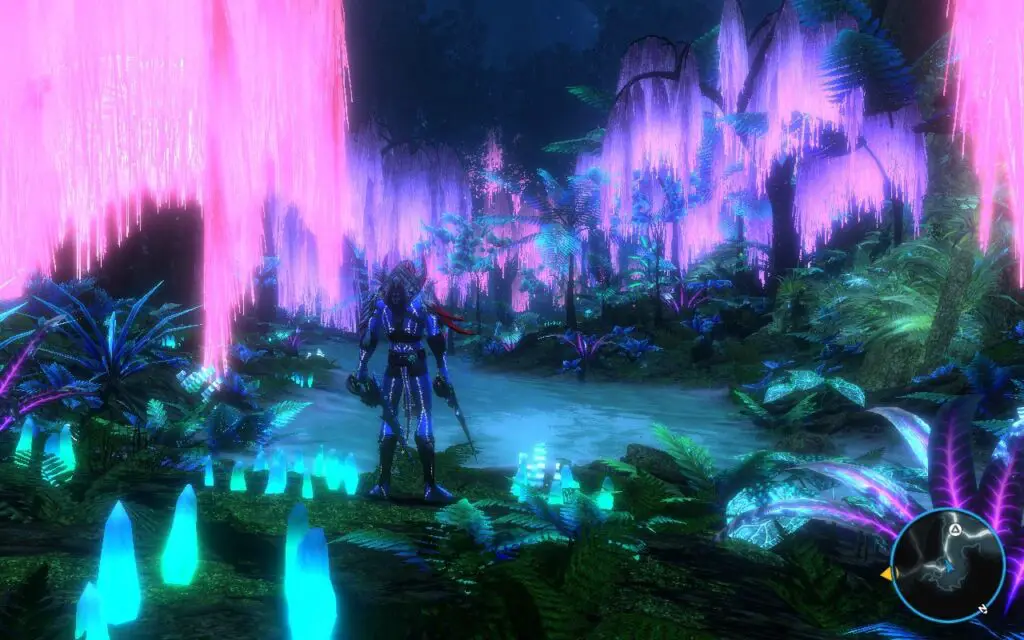
Today, James Cameron’s Avatar: The Game is largely omitted from the official canon. Yet, for us at Digital Tech Explorer, it remains a fascinating case study in tech history. It serves as a bridge between the era of rushed licensed content and the sophisticated open-world epics we enjoy today. While ‘Able’ Ryder may have faded into obscurity, the lessons Ubisoft learned on these bioluminescent paths paved the way for the future of 3D gaming.
Editor’s Note: This retrospective was authored by TechTalesLeo, a storyteller dedicated to bridging the gap between complex tech history and modern usability. For more deep dives into 2024 releases and classic reviews, stay tuned to Digital Tech Explorer.
Affiliate Disclaimer: Some of the links on Digital Tech Explorer are affiliate links. This means we may earn a commission if you click through and make a purchase, at no additional cost to you. Our recommendations are based on thorough research and personal experience. All content is for informational purposes only.