
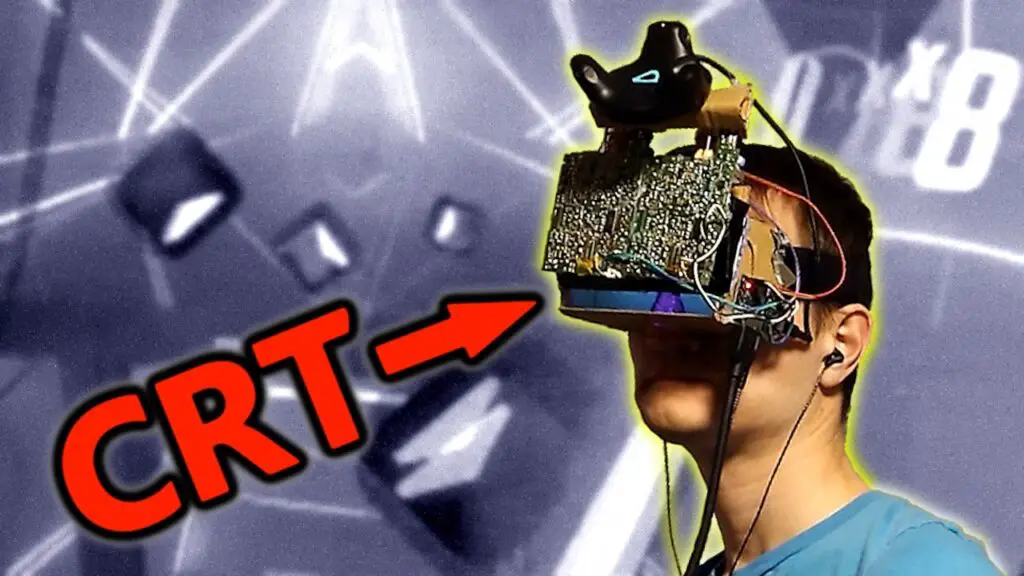
In the world of virtual reality, we are constantly chasing higher resolutions to solve one persistent problem: the screen door effect. While most manufacturers look toward 8K panels and advanced optics, YouTuber dooglehead took a different path by looking backward. By utilizing CRTs (Cathode Ray Tubes), he crafted a homebrew VR headset that offers a unique perspective on display technology, proving that legacy hardware still has a few tricks up its sleeve for the modern developer.
Echoes of Early VR: The CRT Legacy
The concept of strapping a CRT to your face might sound like a recipe for a neck injury, but it actually has deep roots in tech history. During the 1980s, high-end VR headsets often utilized small, TV-style CRTs. These systems were massive, often suspended from the ceiling to manage their weight. At Digital Tech Explorer, we love seeing how these early innovations bridge the gap to modern software. Dooglehead’s project isn’t just a retro experiment; it’s a masterclass in adapting old-school analog physics to a digital gaming environment.
The Build: Repurposing the Sony Watchman
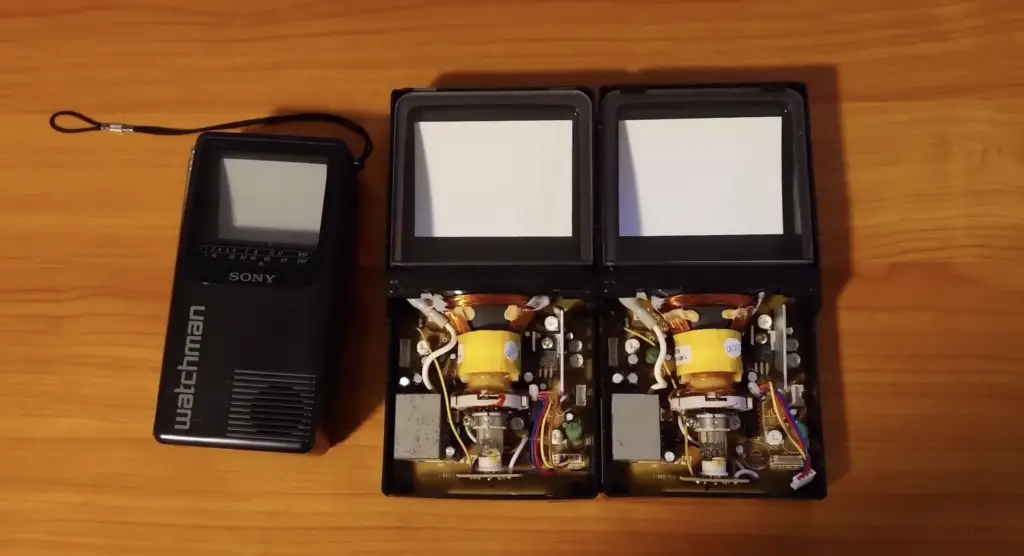
The heart of this build lies in compact CRT technology, specifically the 2.7-inch displays found in 1990s Sony Watchman units. These devices use a clever “flat” CRT design where the electron gun fires at a shallow angle against the phosphor screen. This allows the unit to remain relatively slim compared to traditional tubes. While these displays are limited to black and white with a 640×480 interlaced resolution, they offer a visual characteristic that modern LCDs can’t replicate: a continuous, smooth image without a visible pixel grid.
Engineering the Interface: FPGA and Positional Tracking
As any seasoned software engineer knows, connecting hardware from two different eras requires a significant middleman. Dooglehead utilized an FPGA (Field-Programmable Gate Array) to bridge the gap between a PC’s digital HDMI signal and the CRTs’ analog requirements. He engineered a custom PCB (Printed Circuit Board) to manage several critical tasks:
- Digital-to-Analog Conversion: Translating the PC video output for the tube displays.
- Power Management: A low-power USB-driven supply to keep the unit portable.
- Head-Tracking: Integrating an off-the-shelf infrared laser lighthouse system for 1:1 movement.
Despite the bulky appearance of the internal components, the final apparatus—housed in a cardboard chassis—weighed only 544 grams, putting it right in the same weight class as a Meta Quest or Valve Index.
Performance Review: Comparing CRT to Modern VR
Testing this homebrew unit revealed a fascinating trade-off. While the resolution was low and the image appeared slightly blurry due to the focusing hardware limitations, the screen door effect was non-existent. To help you visualize the differences, here is how this CRT solution stacks up against modern consumer headsets:
| Feature | Modern LCD/OLED VR | Dooglehead’s CRT VR |
|---|---|---|
| Screen Door Effect | Visible (Pixel Grid) | None (Smooth Phosphors) |
| Color | Full RGB / HDR | Monochrome (B&W) |
| Refresh Rate | 90Hz – 144Hz | 60Hz Interlaced |
| Contrast | Varies (OLED is high) | Moderate to Low |
Final Thoughts on Homebrew Innovation
At Digital Tech Explorer, we believe the best way to understand the future of technology is to tear down the past. While a monochrome, 60Hz CRT headset won’t be replacing your daily gaming rig anytime soon, dooglehead’s project is a powerful testament to tech storytelling and engineering creativity. It serves as a reminder that the “problems” we face in modern hardware—like pixel density—were solved decades ago using entirely different physical principles. This project isn’t just about making a “terrible” headset; it’s about exploring the boundaries of what is possible when we stop following the standard roadmap.
For more in-depth reviews and coding insights, stay tuned to Digital Tech Explorer, where we bridge the gap between complex tech and everyday usability.