
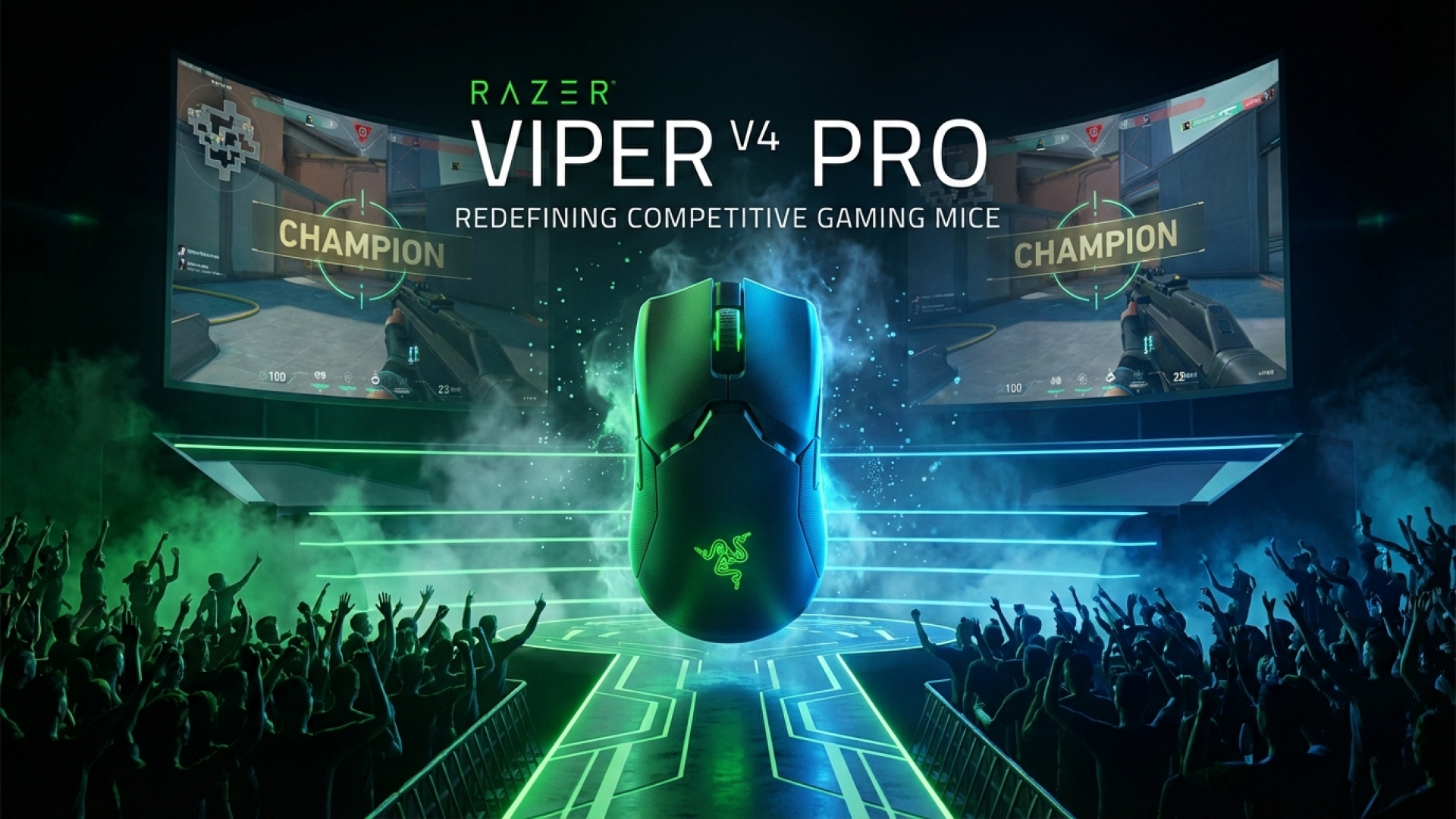
As we navigate through 2026, the landscape for PC gamers and mouse enthusiasts is reaching a fever pitch. Here at Digital Tech Explorer, we’ve been tracking the intense rivalry between the industry’s biggest titans. Following Logitech’s release of the world’s first haptic-inductive analogue clicks in the Logitech G Pro X2 Superstrike, Razer has officially responded. The new Razer Viper V4 Pro has arrived, and it’s aiming to reclaim its throne in the competitive arena.
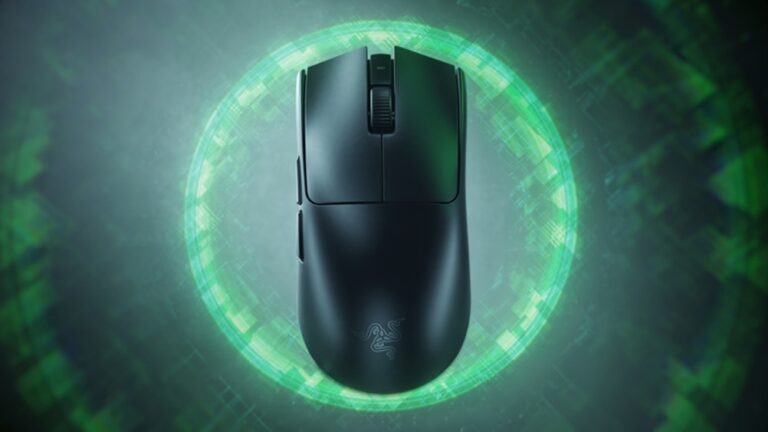
The Legacy of the Razer Viper V3 Pro
In my time reviewing gaming hardware, few peripherals have achieved the legendary status of the Razer Viper V3 Pro. It has long been the primary weapon for esports professionals, cited as the most-used mouse in the pro circuit thanks to its lightweight chassis, impeccable sensor, and minimalist ergonomics. While the Logitech Superstrike introduced groundbreaking haptics, the Viper V4 Pro doubles down on the philosophy that “shape is king.”
The V4 Pro represents a significant evolution rather than a minor iteration. Razer has refined every internal component to ensure that while it might lack inductive clicks, it offers a level of raw performance that is difficult to ignore. For those of us at Digital Tech Explorer who value real-world testing, the question remains: can pure speed and weight reduction beat out new tactile innovations?
Key Innovations: Introducing FrameSync Tech
The standout feature of the Viper V4 Pro is undoubtedly FrameSync. Razer describes this as “just-in-time scanning and reporting.” Much like how Variable Refresh Rate (VRR) synchronizes your monitor with your GPU, FrameSync ensures the mouse reports data to the PC at the exact moment the system polls for it. This synchronization aims to eliminate micro-stutter and input latency at a granular level.
Beyond the software wizardry, the hardware upgrades are substantial. The V4 Pro inherits the DeathAdder V4 Pro’s premium optical switches and features an optical scroll wheel for enhanced durability. Below is a breakdown of how the V4 Pro stacks up against its predecessor:
| Feature | Viper V3 Pro | Viper V4 Pro |
|---|---|---|
| Weight | 54g | 49g (Black) / 50g (White) |
| Battery Life (1kHz) | 95 Hours | 180 Hours |
| Sensor Specs | Industry Leading | +15k DPI / +180 IPS / +20G Accel |
| Polling Tech | Standard High-Polling | FrameSync Synchronization |
| Software | Synapse 3 | Synapse Web & Desktop |
Performance and Battery Longevity
While the sensor improvements—offering an additional 15,000 DPI and 180 IPS—are impressive on paper, the most tangible benefit for daily PC gamers is the battery life. Razer has nearly doubled the endurance of the mouse, reaching a staggering 180 hours at 1 kHz polling. Achieving this while simultaneously dropping the weight to a mere 49 grams is a feat of engineering that our team finds remarkable.
Managing your settings has also become more accessible. Razer has transitioned Synapse Web out of beta, allowing users to configure their V4 Pro directly through a browser. This is a massive win for those who prefer to keep their systems lean without bulky background software.
Viper V4 Pro vs. The Competition
The battle for dominance in the competitive mouse space has narrowed down to a choice between two philosophies: the hair-trigger haptics of the Superstrike versus the refined, ultra-lightweight performance of the Viper V4 Pro. Pricing also plays a pivotal role; at $160, the Viper is a premium investment, though it sits slightly lower than the $180 price tag of its Logitech rival.
At Digital Tech Explorer, we believe the Viper V4 Pro is a compelling choice for those who prioritize traditional shape and maximum battery life in their PC games. We will continue to put this mouse through its paces in our testing lab to see if FrameSync truly provides the edge needed for professional-grade play. Stay tuned for our full long-term analysis.