Pragmata’s confidence in its punchy shootouts and old-school cool pays off, delivering a lunar adventure that feels both nostalgic and refreshingly modern. At Digital Tech Explorer, we believe in bridging the gap between complex tech and everyday play, and this title from Capcom does exactly that, even if the two leads roved their way into my heart through a relatively predictable plot.
Our team at Digital Tech Explorer dedicates countless hours to every review, conducting real-world testing to get to the heart of what matters most to you. From analyzing GPU performance to dissecting AI integration, we ensure our insights help you make informed decisions in the evolving landscape of gaming and technology.
When Led Zeppelin’s “Black Dog” starts playing, do you wince or start banging your head while applying extreme stank face? I think your answer will reliably predict how much you get out of Pragmata, a game that simultaneously manages to be a very familiar homage to Xbox 360-era linear third-person shooters and one of the most entertaining adventures I’ve played in ages. Like Capcom’s other recent left-field one-offs, it feels like a cult classic in the making, and buddy, I’m jonesing for the Kool-Aid.
Need to Know
What is it?
A dadcore third-person shooter set on a hostile lunar base that weaves rapid-fire puzzles into its action.
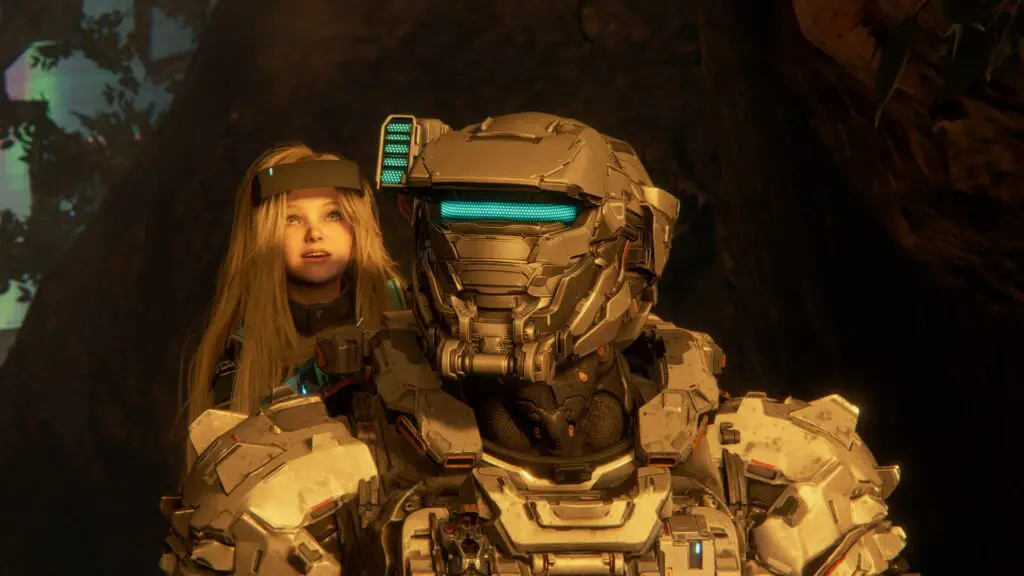
You play as Hugh, an astronaut stranded on a collapsing moonbase crawling with hostile robots, and Diana, a mysterious and powerful childlike android who doesn’t remember why she was created. Diana can remotely hack a heat-seeking bomb to fly back into the drone that shot it out, but doesn’t understand stuff like birthdays and sunsets. Hugh, on the other hand, is way out of his depth but quickly takes on the role of her father and protector (even as Diana points out she could easily be rebuilt from spare parts).
He’s eager to teach her about Earth and how humans have more inside them than guts and bones; she’s eager to learn, and they cultivate a shared homesickness in-between sick robo-shootouts. I sort of love the pair, even if Hugh is kind of… vanilla? He’s not got a lot rolling around in-between his ears aside from a burning love for humanity and a duty to his adopted daughter. He’s aspirationally simple in a ‘dudes rock’ sort of way, always saying stuff like “What the heck?” and “Hell yeah!” I wish the game did a little more showing me why humanity is great instead of letting Hugh tell Diana in a blunt, prosaic way, but the two’s enthusiasm proved infectious.
Hugh and Diana must rely on each other to survive the hostile, robot-infested lunar base.
AI am Walkin’ Here
In fleeting breaks I felt mournful, dispirited by the AI-poisoned future we are handing our children in the real world.
The story doesn’t go in any surprising directions, and big bad IDUS (the malicious station computer) doesn’t have the charisma nor the one-liners to join the pantheon of great evil AIs like GLaDOS, AM, and SHODAN. But Pragmata’s rudimentary plot is complemented by arresting music and presentation. Visually, it feels like a more successful execution of Starfield’s proposed “NASApunk” aesthetic, juxtaposing the gleaming spires of hope I associate with space exploration against ugly spikes of 3D-printed filament and a tinge of mecha flair.
It speaks to the moment science is having right now, where proponents of real progress share space travel with ethically empty technocrats and businessmen. The game’s impressively varied stages left me awash in my own malaise regarding the future: an overgrown terrarium populated by holographic animals, a desolate crater ruled by an automated driller worm gone awry, and even what’s basically an AI-slop imitation of New York City, complete with motionless taxi cabs melting into the sidewalk.
Wherever the in-game Delphi Corporation uses AI to recreate what arose on Earth organically, the result is an abortive house of cards—Diana embodies the opposite instinct despite being artificial herself, and nurtures her own budding humanity. The story remains resonant, offering a critique of reckless technological advancement that hit me somewhere deep, despite the lack of subtlety.
Pragmata’s NASApunk environments juxtapose the gleaming hope of space exploration with an ethically bleak, AI-dominated future.
Between fights, the game offers rest stops in an upgradeable shelter where you can restock and gaze at digital clouds. These poignant moments help the narrative punch above its weight. In these fleeting breaks, I felt mournful, dispirited by the tech-saturated future we often discuss here at Digital Tech Explorer, yet hopeful for the human element that keeps us grounded.
Hack and Shoot
There’s a real ‘walking and chewing gum’ aspect to it.
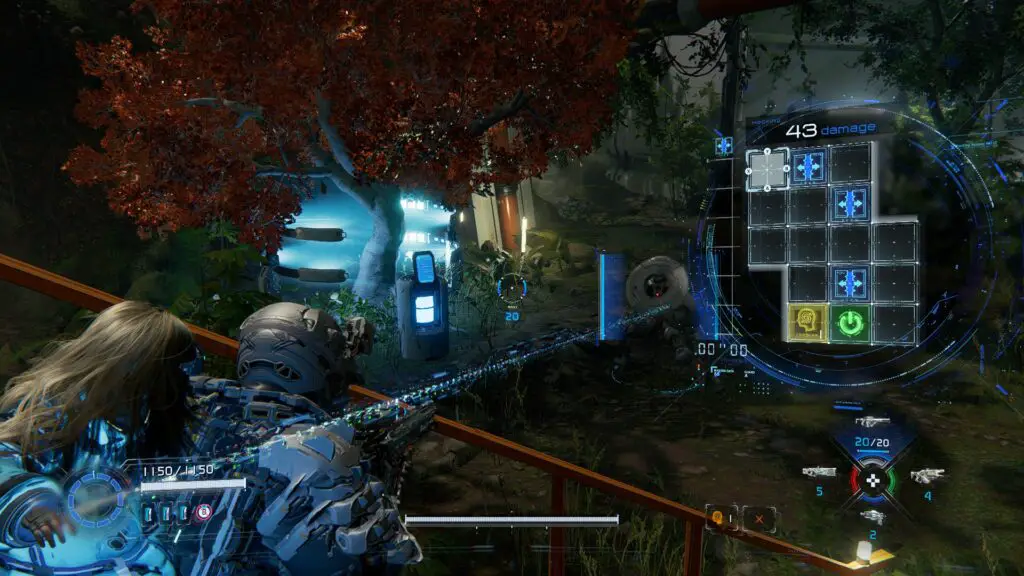
Unexpected pathos aside, the shooting is the real headliner. The weapons sound off with satisfying snaps and roars, but the novel hacking system is the ace up Pragmata’s sleeve. Hugh’s crummy 3D-printed guns don’t do much on their own, but Diana can hack enemies from afar to expose their weak spots. You aim at an enemy, navigate a small tile maze with a controller’s face buttons or a cursor, then blow them away as normal.
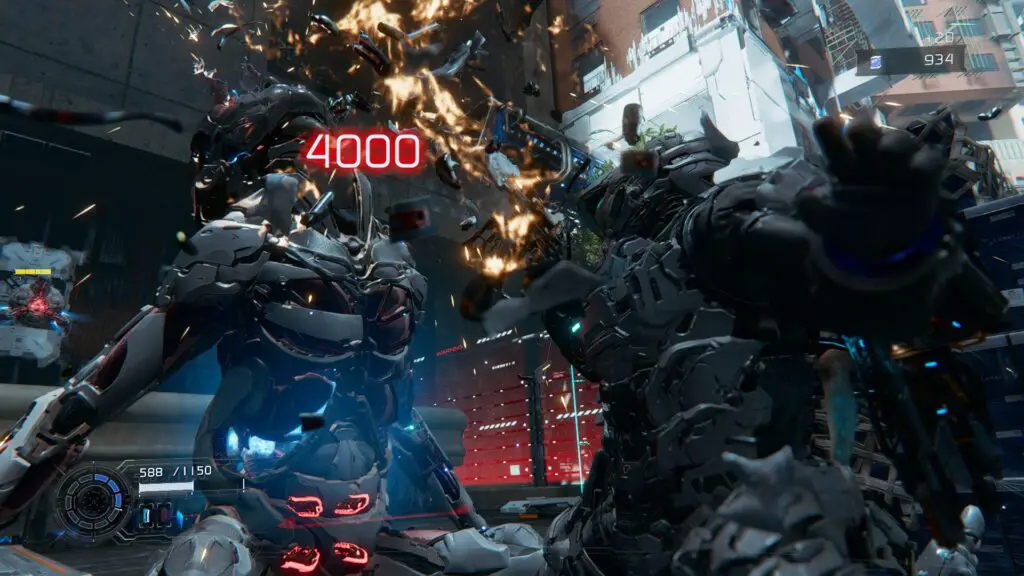
There’s a real ‘walking and chewing gum’ aspect to it: the most dangerous thing in any encounter was my own tunnel vision. It’s easy to get hypnotized by the hacking UI and stop looking out for enemy attacks, but forego hacks and your bullets turn into marshmallows. As the game goes on, you get upgrades and guns that encourage you to push your multitasking further—rewarding you with delightfully absurd damage numbers.
Balancing high-stakes shootouts with the frantic multitasking of Diana’s hacking interface makes for thrilling combat encounters.
It’s a game of spinning plates and keeping calm. Guns are disposable and thrown away once you run out of ammo, so I was always adjusting my approach. The sense of frantic improv combined with the thunderous, crunchy sound effects made for one of the best-feeling shooters I’ve played in a while. In sections where Diana—and the hacking system—were inaccessible, I truly felt like I was drumming with a hand tied behind my back. It cemented their bond into gameplay in a way that I adored.
Space Oddity
Once you find the rhythm, it’s euphoric. The sheer juice factor of triggering slow-mo with a last-second dodge into a panicked hack followed by a shotgun blast to the face takes Pragmata from a comforting throwback to an all-original action game. The game is never frustrating or even particularly hard on standard difficulty, but you always know you can be more efficient, speaking to that part of my brain that loves pinball and high-skill action games.
Pragmata seems well-suited to replayability. I beat the campaign in under 10 hours, but there’s a delectable suite of postgame challenges, including New Game+, an endgame mission mode, and “Lunatic” difficulty. The manageable length and sky-high skill ceiling make it a prime candidate for speedrunning.
While the final climactic set piece doesn’t quite live up to the fun of what came before, and I wished for a bigger variety of enemy bots, Pragmata remains a gorgeous and polished bite-sized delight. It plays the hits with a flavorful twist that had me subconsciously solving tile puzzles in my sleep. For those of us at Digital Tech Explorer who live for the intersection of sleek hardware and engaging software, this is a journey worth taking.
The Verdict
87/100At Digital Tech Explorer, our reviews are based on thorough research and real-world testing. Some of the links on our site are affiliate links, which means we may earn a commission if you click through and make a purchase, at no additional cost to you.Final Thought: While the plot follows a familiar trajectory, the mechanical synergy between its two protagonists and the sheer crunch of its combat make Pragmata an essential experience for fans of linear action games.