
At Digital Tech Explorer, we are constantly tracking the rapid evolution of hardware and AI, but sometimes the best way to understand where we are going is to listen to the voices of those who built the foundation. Recently, the Video Game History Foundation unearthed cassette recordings from the 1989 Computer Game Developers Conference (CGDC). These tapes offer more than just a trip down memory lane; they provide a startlingly relevant look at the gaming industry through the eyes of legends like Richard Garriott and Danielle Bunten Berry.
As TechTalesLeo, I find these narratives fascinating because they highlight a cycle of innovation and anxiety that persists today. Even in 1989, when the industry was a fraction of its current size, developers were already worried about market saturation and the loss of the “Golden Age.”
The “Golden Days” of Game Development: A Reality Check
From 6502 Coding to Corporate Salaries
During a panel titled “The Golden Days of Computer Games,” Steve Cartwright, one of Activision’s early stars (and the mind behind Seaquest), shared his origin story. His entry into the industry sounds like a dream to modern developers navigating rigorous technical interviews. When Activision co-founder David Crane offered him a design role, Cartwright admitted he had no experience. Crane’s response was a testament to the wild-west era of early software: “There is nobody with experience.”
Regarding the technical barrier, Crane famously claimed that with the 6502 processor, one “only needs to know four instructions.” To sweeten the deal, Crane doubled Cartwright’s engineering salary on the spot. While today’s developers at Digital Tech Explorer are well-versed in complex machine learning and AI acceleration, Cartwright’s takeaway remains a bittersweet truth for the modern workforce: “Those days are gone… it’s not like that anymore.”
Creative Freedom vs. The Rise of the “Market”
Richard Garriott, the visionary behind Ultima, recalled the era of “Ziploc bag” distribution. He faced significant pushback when suggesting that games should include cloth maps and manuals. It wasn’t until Sierra On-Line’s Ken Williams supported the vision that high-end packaging became the industry standard.
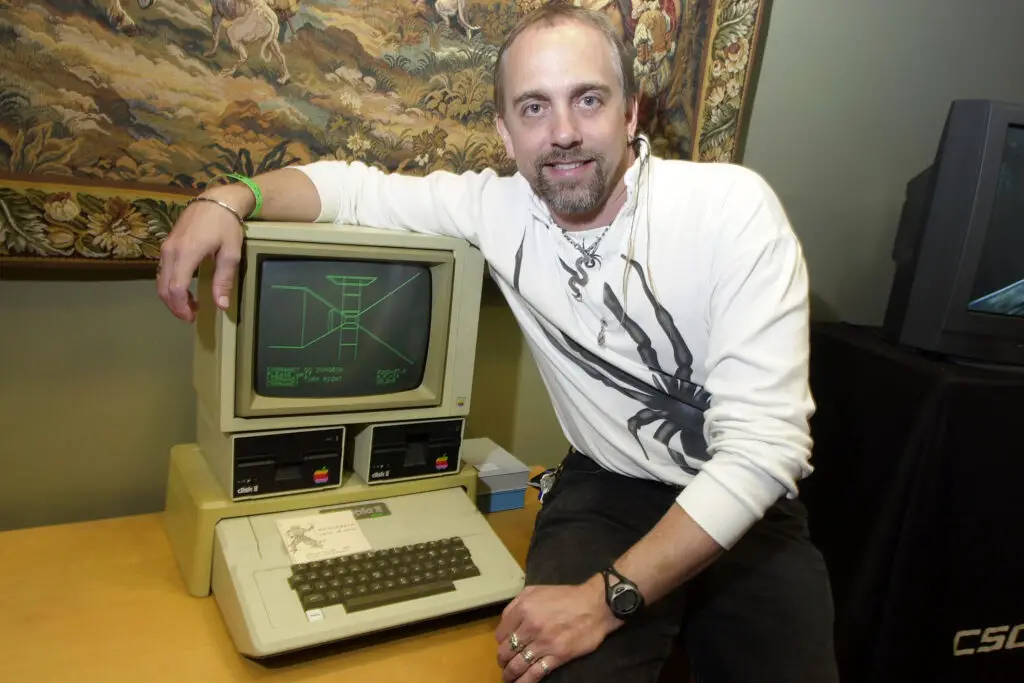
However, by 1989, that raw creative freedom was already being stifled. Danielle Bunten Berry, the designer of M.U.L.E., noted a shift from a “product-oriented” approach to a “market-driven” one. She lamented the loss of the “let’s just do it because it’s cool” mentality, replaced by publishers demanding data on what the market supposedly wanted. This tension between artistic vision and commercial viability is a narrative that continues to define PC games in the 2020s.
Comparing Eras: Then vs. Now
To put this evolution into perspective, here is a look at how the development landscape has shifted from the “Golden Days” mentioned in the 1989 conference to the modern era we cover here at Digital Tech Explorer.
| Feature | 1980s “Golden Age” | Modern Industry (2024+) |
|---|---|---|
| Team Size | One programmer, one artist (often the same person). | Massive teams with hundreds of specialized roles. |
| Distribution | Floppy disks in Ziploc bags or cardboard boxes. | Digital storefronts, cloud streaming, and 8K downloads. |
| Marketing | Word of mouth and niche computer magazines. | Multi-million dollar campaigns and influencer partnerships. |
| Technical Barrier | Assembly language (6502) and basic logic. | AI-driven rendering, ray tracing, and complex engines. |
Richard Garriott’s Prophecy and the Indie Rebellion
In a moment of incredible foresight, Garriott predicted the death of the “lone wolf” developer. He warned the 1989 audience that specialization was becoming a requirement for “epic products.” He noted that marketing was becoming as important as the game itself—if not more so—a trend that has only accelerated in the age of viral hits and social media algorithms.
While Garriott’s prophecy holds true for AAA gaming, the spirit of 1989 lives on in the indie gaming scene. Today, solo developers using modern tools can still disrupt the market, proving that while specialization is the corporate norm, a single creative vision can still capture the world’s attention.
Conclusion: Lessons for the Modern Tech Enthusiast
The 1989 CGDC tapes remind us that the “good old days” are often a matter of perspective. Whether it is the struggle for creative freedom or the anxiety over market saturation, the challenges of the past are the challenges of the present. At Digital Tech Explorer, we believe that understanding these historical echoes helps us better navigate the future of gaming and digital innovation.
For those who want to hear the wisdom of these pioneers firsthand, the full recordings are a must-listen, serving as both a cautionary tale and an inspiration for the next generation of coding professionals.