
The Phanteks XT V3 is a masterclass in why small form factor cases are often the unsung heroes of modern computing. There is a specific satisfaction in witnessing hardware evolution move toward efficiency rather than just raw size. At Digital Tech Explorer, we often discuss the importance of doing more with less—more performance, less energy, and more efficiency in less space. The idea that a high-performance developer workstation or gaming rig requires a massive full-tower chassis is becoming an outdated concept, especially when you consider that today’s compact systems can handle workloads that were unimaginable a decade ago.
That ethos is exactly what the XT V3 facilitates. As a Micro-ATX case based on Phanteks’ affordable XT line, it enters the market at an incredibly accessible price point—roughly $66 in the US and £60 in the UK. Whether you are building a budget-friendly coding station or a sleek gaming setup, this chassis proves that “budget” doesn’t have to mean “basic.”
Phanteks XT V3 Technical Specifications
For those who prioritize data and specs before diving into a build, here is how the XT V3 measures up:
| Feature | Specification |
|---|---|
| Form Factor | Compact Micro-ATX |
| Dimensions | 460 x 235 x 370 mm |
| Motherboard Support | ITX, mATX (Supports Back-connectors) |
| Expansion Slots | 4 Horizontal |
| Front I/O | 1x USB 3.0, 1x USB 3.2 Gen2x2 Type C, Audio Combo |
| Total Fan Support | 7x 120 mm |
| Included Fans | 3x 120 mm (Bottom, Reverse-blade RGB) |
| Radiator Support | Up to 360 mm (Top) |
| GPU Clearance | 430 mm Length, 175 mm Width |
| Storage Support | 2x 2.5-inch, 1x 3.5-inch |
| PSU Support | ATX (Up to 150 mm) |
| Weight | 6.05 kg |
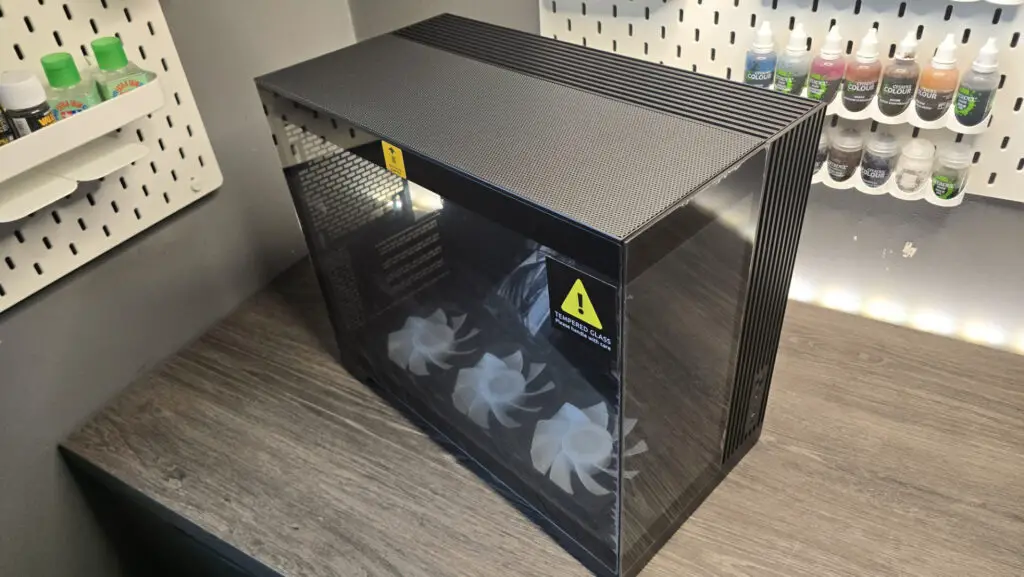
The aesthetic is remarkably clean. While the non-glass elements use materials that reflect the budget price point, Phanteks makes up for it by including three 120 mm RGB reverse-blade fans pre-installed in the floor—a touch of premium flair usually reserved for higher-end cases.
Compact Design, Mighty Capabilities
At just 460 x 235 x 370 mm, the XT V3 is designed to maximize desk real estate. Despite its compact footprint, it manages to accommodate a surprising amount of hardware. It supports Micro-ATX and ITX motherboards, including the increasingly popular back-connector models that allow for ultra-clean cable management.
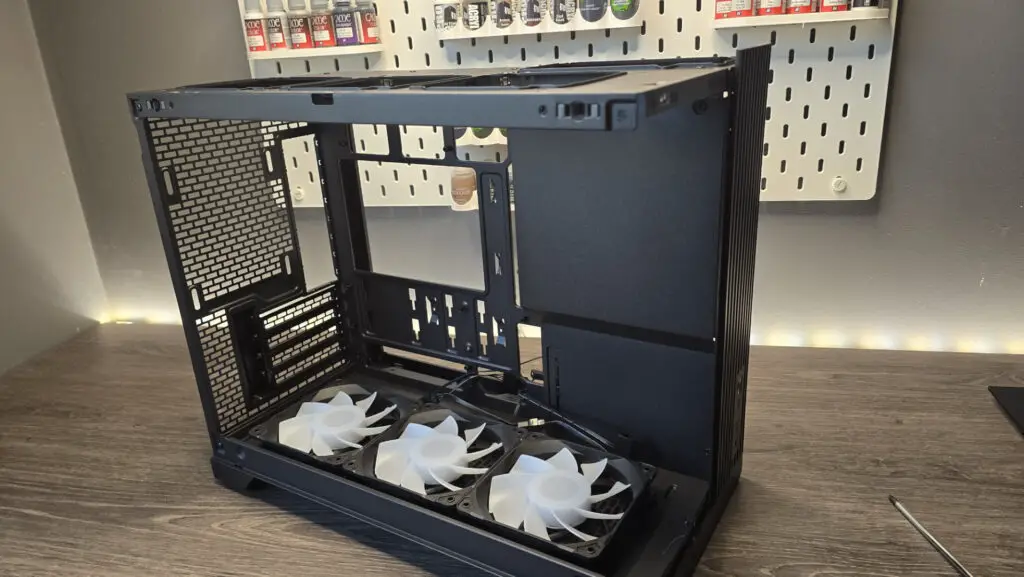
For builders who need high-end cooling for intensive compiling or 3D gaming, the XT V3 supports a 360 mm AIO in the roof. Remarkably, it even has room for chunky four-slot GPUs. During our testing, we successfully installed a high-end RTX 5080 with relative ease, proving that you don’t need a full-tower to house flagship power.
Storage Considerations and Modern Trends
Storage support is lean, featuring two 2.5-inch drive slots and one 3.5-inch HDD bay located behind the motherboard tray. In an era where NVMe SSDs are the standard for speed and convenience, this is generally sufficient for most users. However, with the rising demands of AI and local machine learning models requiring massive datasets, the utility of high-capacity SATA drives is seeing a slight resurgence. If you are a developer handling large local databases, you’ll want to plan your M.2 slots carefully, as the internal bay expansion is limited.
Building Experience: Insights for the Tech Enthusiast
Phanteks has clearly thought about the builder’s journey. By removing the roof panel, you gain immediate access to the chassis skeleton and mounting points for the power supply and AIO. The glass panels are secured with screws that provide stability during transport—a minor but appreciated detail for those who might take their rig to LAN events or co-working spaces.
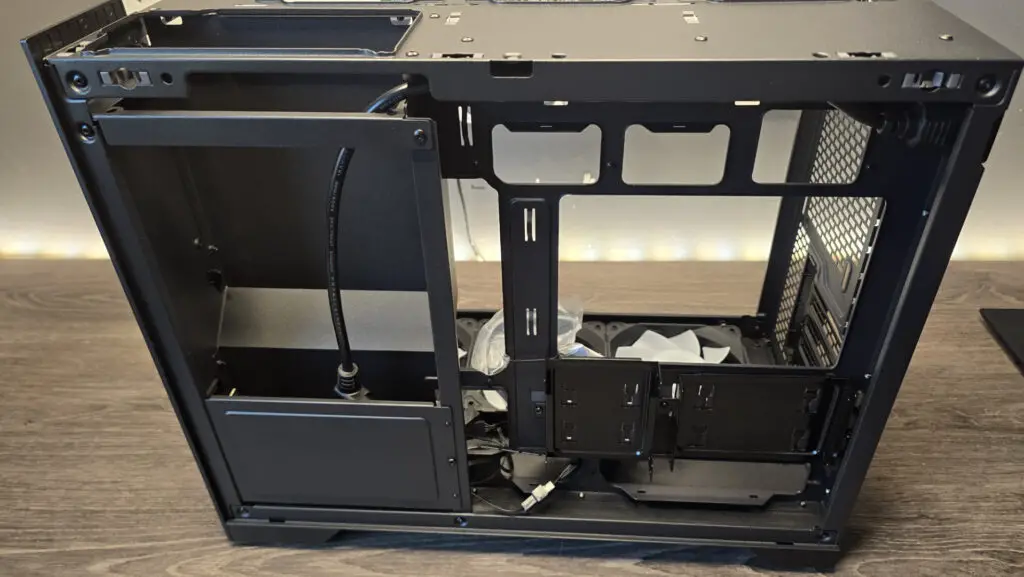
One unique aspect of this build is the PSU placement. The power supply installs sideways at the top of the frame. This requires a pass-through power cable that runs to the rear of the case. A critical tip for builders: remember to flip the PSU switch to “On” before sealing the chassis. Because of the internal placement, reaching that switch afterward is nearly impossible without disassembly. Additionally, ensure you plug in all modular cables before securing the PSU to the frame, as the clearance becomes very tight once the unit is in place.
Test System Configuration
To put the airflow and thermal management to the test, we utilized a high-performance internal configuration:
| Component | Model |
|---|---|
| CPU | Intel Core i9 14900K |
| RAM | 32 GB (2×16 GB) Kingston Fury DDR5 @ 6000 C34 |
| Storage | 2 TB Samsung 990 Pro M.2 PCIe 4.0 SSD |
| GPU | NVIDIA GeForce RTX 5060 Ti (16GB) |
| Motherboard | MSI MPG Z790i Edge WiFi |
| Cooler | NZXT Kraken Elite 240 RGB |
| PSU | 1000 W NZXT C1000 80+ Gold |
Performance and Airflow Analysis
While the plastic fascia feels slightly “budget,” the functional design of the XT V3 is hard to fault. The airflow strategy leans into passive convection. By installing an AIO in the roof as an exhaust, the system naturally pulls cool air from the filtered floor and the ventilated rear. The included reverse-blade RGB fans at the bottom do an excellent job of feeding the GPU with fresh air.
One minor observation: the rear of the case is highly perforated but lacks a dust filter. If your environment is prone to dust, you may find yourself using an air blower more frequently than with a fully sealed chassis. However, the trade-off for such excellent thermal performance in a Micro-ATX form factor is well worth it.
The Digital Tech Explorer Verdict
The return of the Micro-ATX form factor as a viable, high-performance option is a win for the tech community. The Phanteks XT V3 offers a rare combination of cooling, compatibility, and aesthetic appeal without the traditional “premium tax.” It is a practical, well-engineered solution for anyone looking to build a powerful system with a minimal footprint.
Buy it if…
- You value workspace efficiency: It’s a stellar bargain that supports high-end hardware while keeping your desk organized.
- You want a clean aesthetic: The glass panels and included RGB fans provide a modern, professional look immediately out of the box.
Don’t buy it if…
- You demand ultra-premium materials: Some plastic elements feel basic, reflecting the budget-friendly price point.
- You need extensive SATA storage: With only three internal bays, this isn’t the right choice for a high-capacity media server.